hironow/dotfiles: The Dotfiles Repo That Treats Humans and AI as Different Operators
A multi-OS control plane for Mac, Linux, dev containers, and cloud workspaces, with pinned toolchains, build-time provisioning, and explicit agent-aware shell behavior.
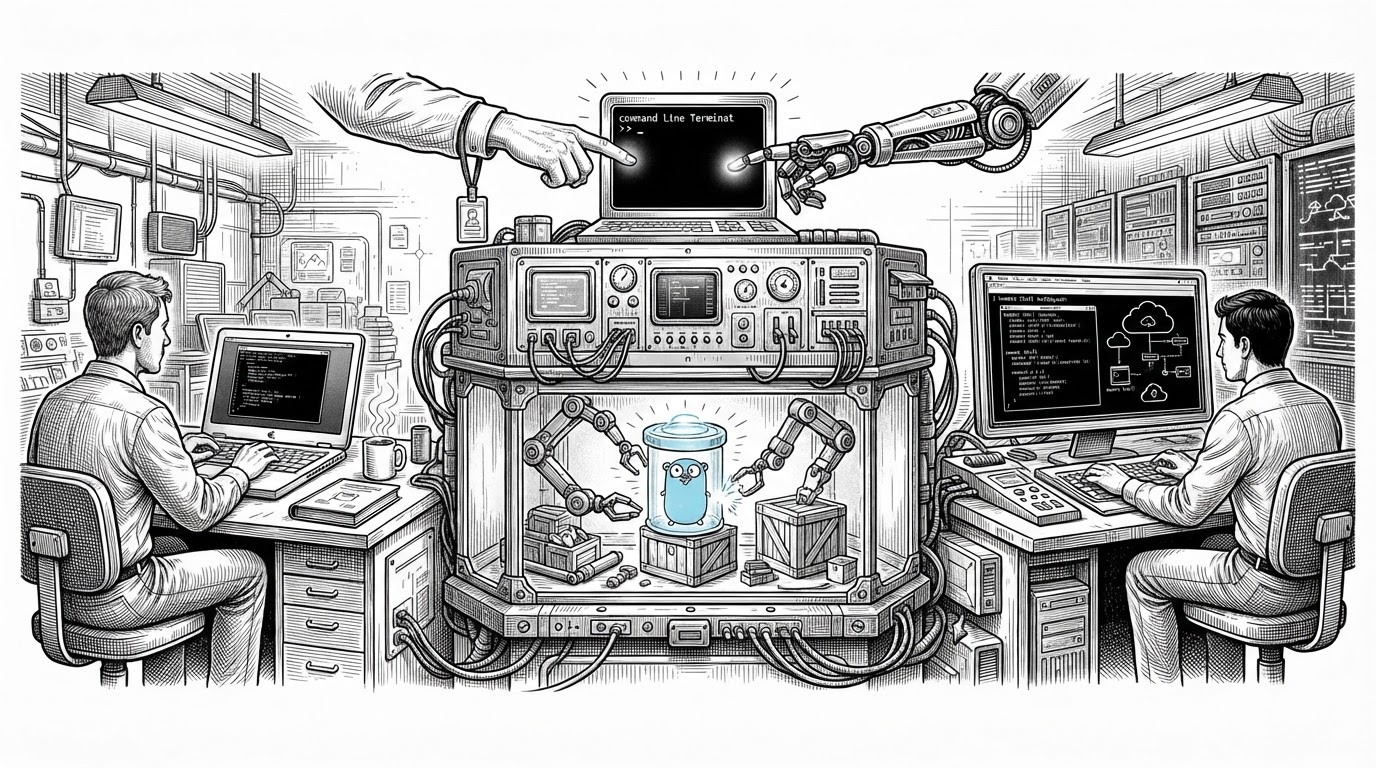
- This repo treats identity as part of environment management, so human operators and AI agents can follow different shell policies without fragmenting the toolchain.
- Its core promise is parity across Mac, Linux, dev containers, and remote workspaces, with one source of truth feeding every surface.
- The strongest engineering choice is build-time provisioning plus explicit pinning, which reduces drift before a container or workspace ever starts.
- Compared with traditional dotfiles, the repo behaves more like personal platform engineering than shell customization.
The shell knows who is typing
Most dotfiles try to make a laptop feel familiar. This one tries to make a person plus agent workflow behave predictably across machines. The unusual move is simple to miss: shell aliases can carry RUNOPS_ACTOR_TYPE=ai-agent, so downstream tools know whether the command came from a human or an automated operator.
I run a solo-operated, human-on-the-loop agentic engineering ecosystem: agents build, gates verify, a human approves. Most of what follows is its public surface.
That distinction matters because policy can now follow intent. Logging, prompts, or guardrails can branch based on actor type instead of pretending every shell session is the same. It is a small variable with a large design consequence.
Three environments, one truth
| Approach | Parity | Agent awareness | Supply-chain hardening | Learning curve |
|---|---|---|---|---|
| Traditional Bash/Stow dotfiles | Low | None | Usually manual | Low |
| chezmoi | Medium | Limited | Good secret handling | Medium |
| Nix/home-manager | High | Indirect | Strong declarative control | High |
| hironow/dotfiles | High | Explicit | Strong by default | Medium |
The point is not that every layer is duplicated. It is that the repo keeps a single mental model while letting the runtime differ. Host provisioning, container build steps, and workspace setup all converge on the same toolchain and shell behavior.
install.sh is a dispatcher, not a bootstrap dump
case "$DOTFILES_OS" in
  darwin)
    step_macos
    ;;
  linux)
    step_linux
    ;;
  mingw|msys)
    step_windows
    ;;
esac
That branch structure is the point. Instead of forcing one universal path, the installer respects the platform boundary and routes to the correct provisioning logic. It keeps host-level setup separate from container-level setup, which is exactly what you want when the same repo has to survive on macOS, Linux, and Windows native.
The architecture reads less like a script and more like a dispatcher. That is a better fit for a repo that expects multiple execution surfaces and multiple operator types.
Build-time provisioning beats startup-time drift
import_apt_key_with_fingerprint() {
  # verify the key fingerprint before trust
  :
}

gh attestation verify ...
sha256sum -c just.sha256
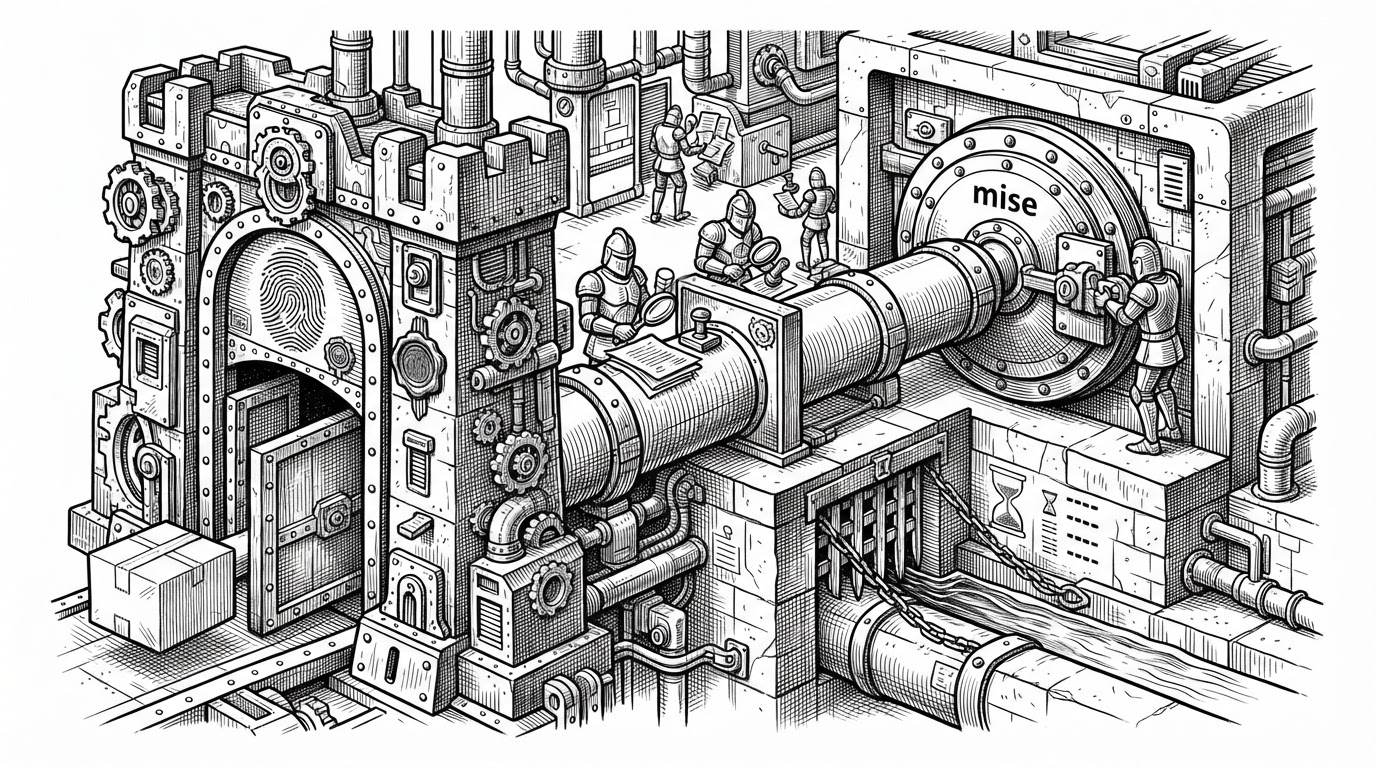
This is the repo's supply-side engine. Installing tools during docker build is more deterministic than waiting for container startup, and the fingerprint pinning plus attestation checks reduce the risk of pulling in the wrong binary at the wrong time.
For a personal setup, the hardening is unusually mature. It is trying to make the machine boring in the exact places where dotfiles usually become fragile.
mise is the version anchor
| Version strategy | Stability | Freshness | Agent tooling fit | Operational cost |
|---|---|---|---|---|
| System packages only | Medium | Medium | Low | Low |
| Ad hoc global installs | Low | High | Low | Low |
| mise with quarantine | High | Balanced | High | Medium |
| Pinned per-project binaries | High | Low | Medium | High |
The config/mise/config.toml file does more than select versions. It encodes a release policy, including a seven-day quarantine for newer releases and special handling for claude-code. That tells you the repo is optimized for active churn, not just frozen reproducibility.
Placing mise activate at the end of shell initialization matters because precedence matters. The last activator wins, which means the environment ends in the state the repo expects rather than the state some other installer happened to leave behind.
This repo hardens the personal supply chain
The strongest security story here is not one big feature. It is the accumulation of small controls: GPG fingerprint pinning, SHA sidecars, attestation verification, quarantined release policy, and careful package-manager choices that avoid orphan binaries. Together they shrink the surface area where a dotfiles repo can be surprised.
The workshop. dotfiles — the home base: distributes agent instructions hub-and-spoke across coding agents, ships vendored local emulator and telemetry stacks, and tests itself in a throwaway devcontainer sandbox
That quote is the clearest summary of the repo's posture. It is not just configuring a shell. It is protecting a workflow that installs a lot of executable tooling, then asks both humans and agents to trust it.
Why this is not just chezmoi, Nix, or a fancy shell setup
| Project | What it optimizes for | Where it differs |
|---|---|---|
| Traditional dotfiles | Convenience and personalization | Usually assumes one operator and one host |
| chezmoi | Templating and secret management | Less opinionated about agent identity and workspace parity |
| Nix/home-manager | Declarative reproducibility | Powerful, but steeper and more language-specific |
| hironow/dotfiles | Agent-aware parity across surfaces | Treats identity, trust, and environment as one system |
The contrast is not about winners and losers. It is about axis of optimization. This repo is narrower than Nix in some ways and broader than a shell setup in others, because it is solving for a specific reality: a single operator moving between host, container, and cloud while AI tools are part of the workflow.
That makes it feel closer to personal platform engineering than configuration management. The repo encodes policy, not just preferences.
The larger pattern: platform engineering for one
Seen as a whole, hironow/dotfiles is a personal platform layer. It binds identity, toolchain, and trust into one operating surface so the same work can happen on a MacBook, in a dev container, or in a remote workspace without re-learning the environment each time.
That is the useful pattern here. If you expect to work with both AI tools and multiple execution surfaces, the interesting question is no longer how to customize a shell. It is how to make the shell enforce the rules of your workflow.