FlowGuard: The Self-Hosted Traffic Gatekeeper That Wants to Own the Boundary
Transparent interception, HTTPS inspection, dynamic rules, and centralized control. FlowGuard turns traffic policy into an internal system, not a third-party dependency.
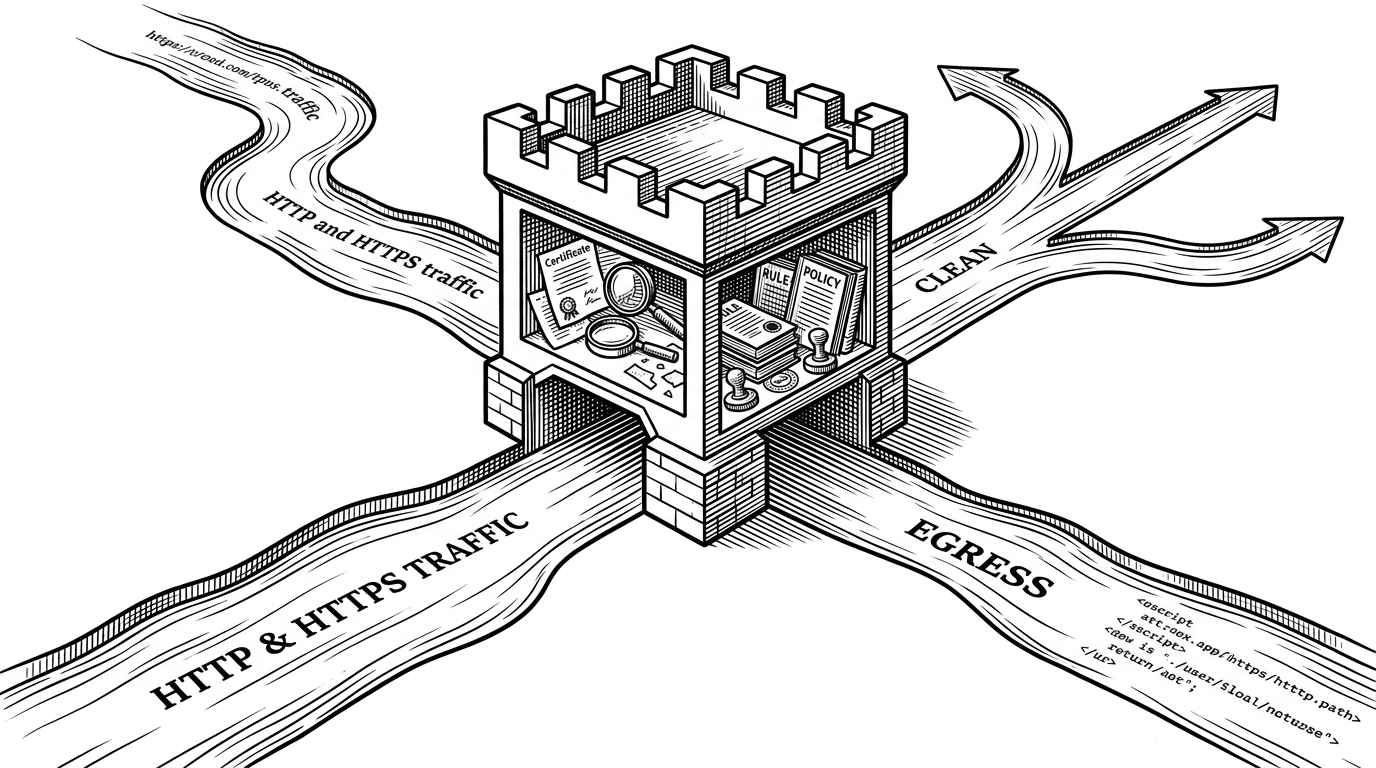
- FlowGuard treats traffic control as a trust boundary, not a pile of networking features.
- Its real advantage is policy enforcement at the proxy edge, where inspection and decisions stay inside your infrastructure.
- Transparent interception makes the system practical because teams do not need to rework applications to adopt it.
- The trade-off is ownership, since self-hosting also means you carry the burden of certificates, rules, and reliability.
FlowGuard is interesting because it tries to make traffic policy feel like a first-class internal system. Not a sidecar. Not a patchwork of modules. A controlled boundary where requests are inspected, judged, and either allowed to pass or stopped at the gate.
Your traffic never leaves your servers. The optional control panel manages configuration and logs. Processing and traffic happens on your infrastructure.
Why the boundary matters
The pitch is simple: if traffic policy is valuable, it should live where the traffic already crosses. FlowGuard puts interception, filtering, and inspection in one place so teams do not have to choose between visibility and control.
That is why the project reads less like a proxy and more like a private security operating layer. The value is not just what it blocks. It is that the decision point sits inside your own trust boundary.
Built in Go for minimal overhead and maximum throughput. Transparent interception means no application changes required. High performance IP lists and rules optimized for low latency. Scales easily to handle large volumes of traffic.
What FlowGuard actually sits between
FlowGuard works because it can sit in the path of HTTP and HTTPS traffic without asking applications to change. In practice, that means requests can be redirected into the proxy boundary, inspected, and then forwarded onward with policy already applied.
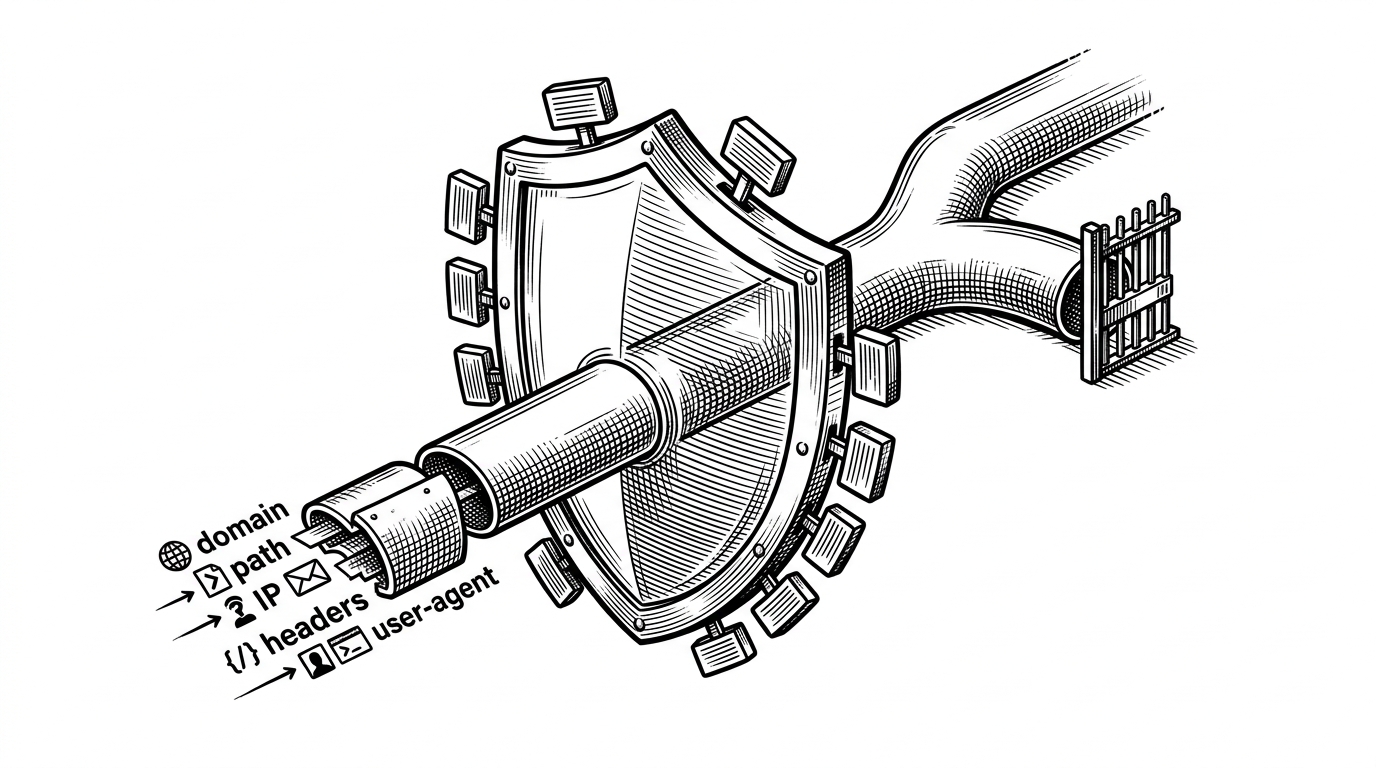
The policy engine is the real product
FlowGuard is not trying to win on raw proxy throughput alone. Its real product is the ability to express policy over the attributes that matter to an operator: domain, path, IP, ASN, geolocation, headers, and user-agent.
That gives it a different shape from a generic reverse proxy. The proxy moves traffic, but the policy engine decides what that traffic is allowed to become.
| Dimension | FlowGuard | Generic reverse proxy | NIDS or NIPS |
|---|---|---|---|
| Primary job | Policy-first traffic gatekeeping | Request routing and load handling | Detecting or preventing network threats |
| Transparent interception | Yes | Usually not the main focus | Often not the deployment model |
| Rule expressiveness | Domain, path, IP, ASN, geolocation, headers, user-agent | Mostly routing and header logic | Signature and anomaly centric |
| Control plane | Centralized and self-hosted | Usually operational, not policy centered | Security operations heavy |
| Best fit | Teams that want traffic policy inside their own boundary | Teams that mainly need a proxy or load balancer | Teams that want deep inspection across the network |
| Operational burden | Moderate | Moderate | High |
FlowGuard is intended for use by experienced system administrators and security professionals. Improper configuration may lead to service disruption.
Why it can stay fast
The speed story matters because an inline control layer has to earn its place on the path. FlowGuard leans on Go, low-overhead processing, fast IP lookups, and rate limiting so the policy layer does not become the bottleneck.
That is the balancing act. The system needs enough intelligence to be useful, but enough restraint to stay invisible when the rule set is simple. In that sense, speed is not a bonus feature. It is what makes the product believable.
incoming request
  -> transparent interception
  -> attribute extraction
  -> rule evaluation
  -> allow | block | rate-limit | inspect
  -> log and control panel update
Where it fits, and where it does not
FlowGuard is not a replacement for every security or networking tool in the stack. It sits in a specific niche: a self-hosted policy layer for traffic that needs to be controlled, observed, and kept in-house.
| Tool | What it is strongest at | Where FlowGuard differs |
|---|---|---|
| Nginx | High-performance web serving and reverse proxying | FlowGuard puts policy enforcement and traffic control at the center |
| HAProxy | Reliable load balancing and proxying | FlowGuard emphasizes inspection and rule-driven security decisions |
| Suricata | High-performance IDS and IPS | FlowGuard is proxy-bound and operator-facing rather than signature-first |
| Snort | Deep packet inspection and intrusion prevention | FlowGuard is narrower and more deployment-friendly for inline policy |
| Zeek | Rich network analysis and logging | FlowGuard is more about active enforcement than forensic visibility |
That trade-off is the point. If you want a clean, self-hosted boundary where traffic can be evaluated before it reaches your services, FlowGuard makes a strong case. If you want broad network forensics or a full IDS stack, it is not trying to be that tool.
The operational trade-off
Self-hosting buys privacy, control, and a tighter trust model. It also means you own the unglamorous parts: certificates, deployment, rule quality, observability, and failure handling.
That is why FlowGuard feels credible. It does not promise magic. It promises a place where traffic policy can live under your control, and then it forces you to decide whether that control is worth the operational work.