The Zero-Trust Bridge for Giant Models: Inside hf-mount-encrypted
How a high-performance Zig engine and the AEGIS cipher are turning Hugging Face repositories into secure, lazy-loaded local drives.
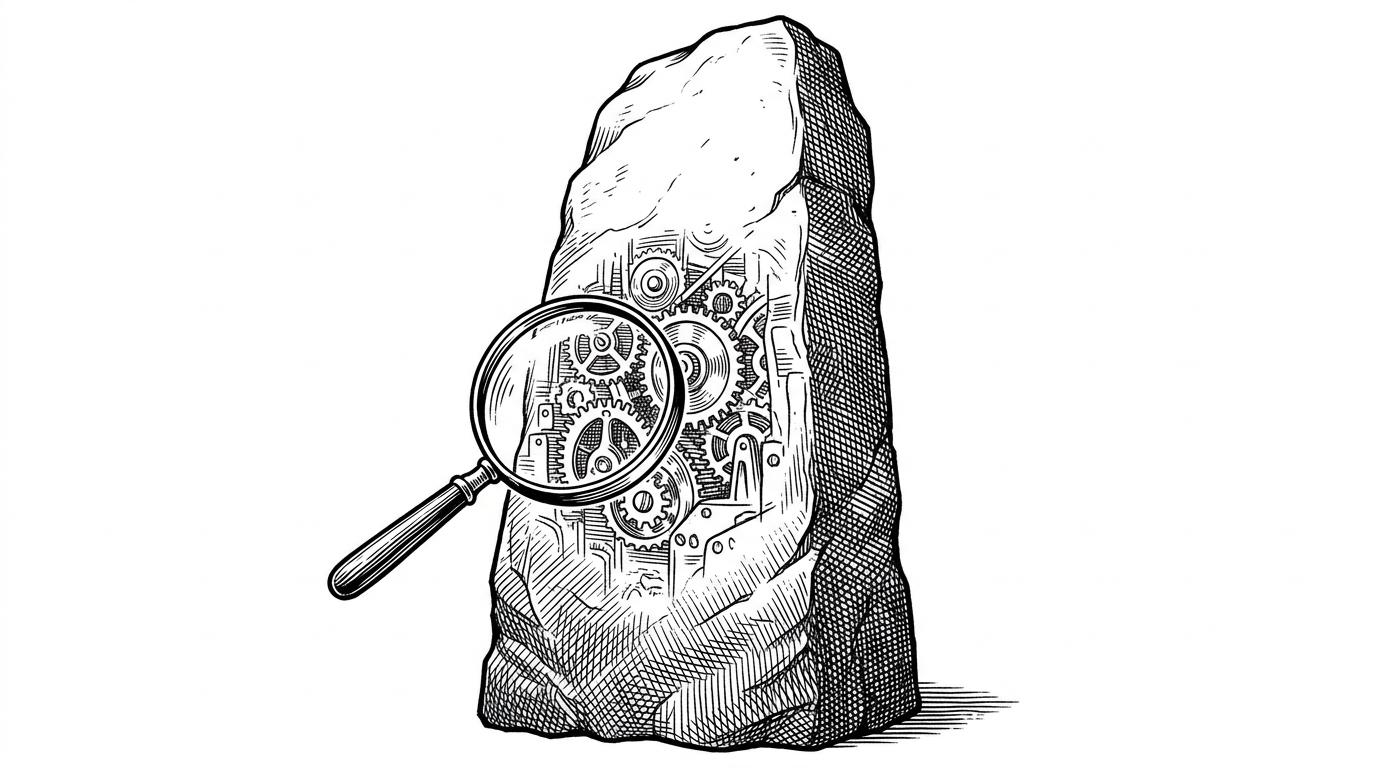

Just released `hf-mount-encrypted`: transparently mount Hugging Face repositories as an encrypted local FUSE filesystem. Keep your models and datasets safe!
- The hf-mount-encrypted tool secures local model caches by mounting Hugging Face repositories as encrypted FUSE filesystems.
- The AEGIS-128X2 cipher provides high-speed authenticated encryption that maintains near-zero latency for real-time model loading.
- A user-mode NFSv3 implementation allows the filesystem to run in restrictive edge environments without requiring kernel extensions.
- Lazy-loading and intelligent prefetching enable applications to access specific model layers without downloading hundreds of gigabytes of data.
The End of the Gigabyte Wait
The monolithic download era of machine learning is dead. As models balloon into the hundreds of gigabytes, the bottleneck is no longer just GPU compute. It is the friction of moving weights from the cloud to the edge. Traditional development workflows rely on complete file transfers. If an AI agent needs to inspect a single layer of a 100GB model, it must pull the entire file to local storage first.
The official Hugging Face utility introduced lazy-loading to solve this speed problem. It fetches only the specific tensor shards needed by the application. However, it leaves a massive security hole. Sensitive intellectual property sits in plaintext in local caches. The hf-mount-encrypted project addresses this exact vulnerability. It completely hardens the edge.
Breaking the Encryption Tax with AEGIS
Standard encryption protocols like AES-GCM are too slow for real-time model loading. When an inference engine demands gigabytes of tensor data per second, traditional ciphers become a debilitating bottleneck. The project abandons AES entirely in favor of the AEGIS family of authenticated encryption algorithms.
AEGIS-128X2 leverages modern CPU instructions to encrypt multi-gigabyte files with near-zero latency. It is significantly faster than AES-GCM on modern hardware. To maximize this throughput, the underlying encryption engine is written in Zig. This allows developers to treat the local filesystem as a zero-trust environment without sacrificing the read speeds required by PyTorch.
| Feature | hf-mount-encrypted | hf-mount (Official) | rclone |
|---|---|---|---|
| Native Encryption | Yes (AEGIS-128X2) | No | Yes (General) |
| Implementation | Rust / Zig | Rust | Go |
| Protocol Support | FUSE / NFSv3 | FUSE / NFSv3 | FUSE / VFS |
| Target Use Case | Secure AI Edge | General AI/ML | Cloud Storage |
The Ghost in the Filesystem
The architecture relies on a virtual filesystem implemented in userspace. It maps Hugging Face Hub repositories to local directories using either FUSE or a user-mode NFSv3 server. The NFS approach is particularly clever. It bypasses the need for kernel extensions, making the tool highly portable across restrictive edge environments.
When an application requests a file, the filesystem translates the remote Hugging Face object hierarchy into an inode-based structure. It tricks standard UNIX tools into seeing cloud storage as a local drive. An intelligent prefetcher anticipates sequential reads and scales its buffer window dynamically. It skips the disk cache entirely for small random reads, avoiding the overhead of downloading massive chunks when only a few kilobytes are needed.

Hardened Weights for the Edge
Security in machine learning is often an afterthought. Models are downloaded and left exposed on shared workstations or edge devices. This project treats the local disk as hostile territory. It guarantees that if a model file is tampered with on the remote server or in transit, it will fail to decrypt.
This prevents model poisoning attacks and protects proprietary intellectual property. The encryption parameters, including the algorithm and chunk size, are stored directly in the remote file's metadata headers. The client discovers how to decrypt the file dynamically. It is a robust, performance-first approach to securing the next generation of AI infrastructure.

Sources: