Book_Store-App: When a Bookstore Becomes a Workflow Engine
A Spring Boot and React project that turns checkout, returns, payments, and history into a tightly controlled system of state changes, not just a pile of endpoints.
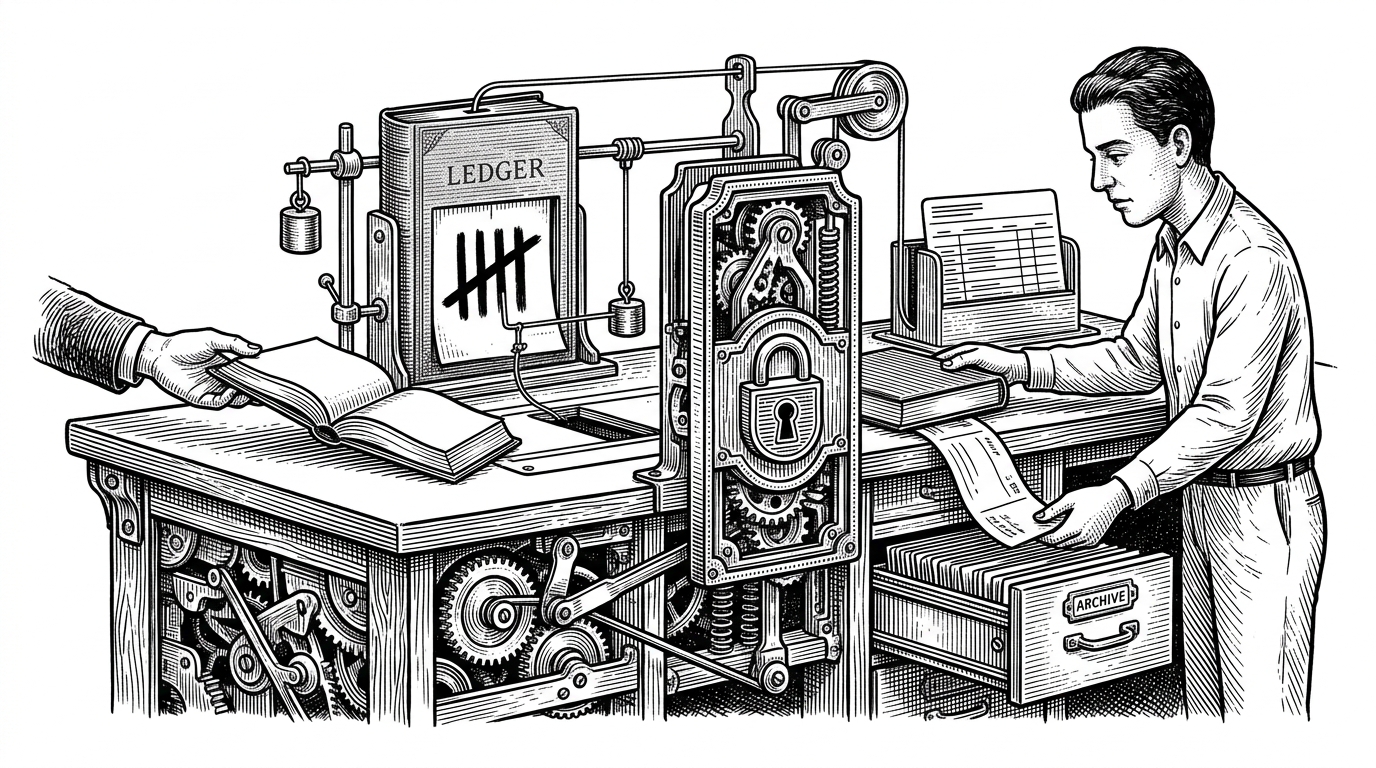
- Book_Store-App is most interesting when you read it as a workflow engine, because checkout, return, payment, and history are chained state changes rather than isolated CRUD calls.
- The backend earns its credibility by protecting those transitions with JWT security, validation, and exception handling, so the business rules do not depend on the frontend behaving nicely.
- DTOs and ModelMapper keep the public API separate from persistence details, which gives the React app a stable contract while the Java domain model keeps evolving.
- Testcontainers and OpenAPI push the repo past demo territory, because they make the system easier to trust, test, and reason about under real database conditions.
The Real Product Is the State Change
The app presents itself as a bookstore, but the more interesting product is the logic that controls what can happen next. A book can only move through a valid chain: available, checked out, returned, maybe fined, then archived in history. That is what gives the repository architectural weight.
This is why the project feels more serious than a catalog demo. The frontend can show books, but the backend decides whether a checkout is legal, whether inventory should drop, and whether a return becomes a payment event. In other words, the app models consequences.
Checkout and Return Are the Core Narrative
The strongest part of the repo is the lifecycle around checkout and return. Once a user checks out a book, the available copy count drops. When the book comes back, the system does not simply undo the action. It checks the timing, calculates any late fee, records payment if needed, and writes the event into history.
That sequence matters because it turns one user action into several durable effects. The book is no longer just an item on a shelf. It becomes a tracked asset with inventory, liability, and audit history attached to it.
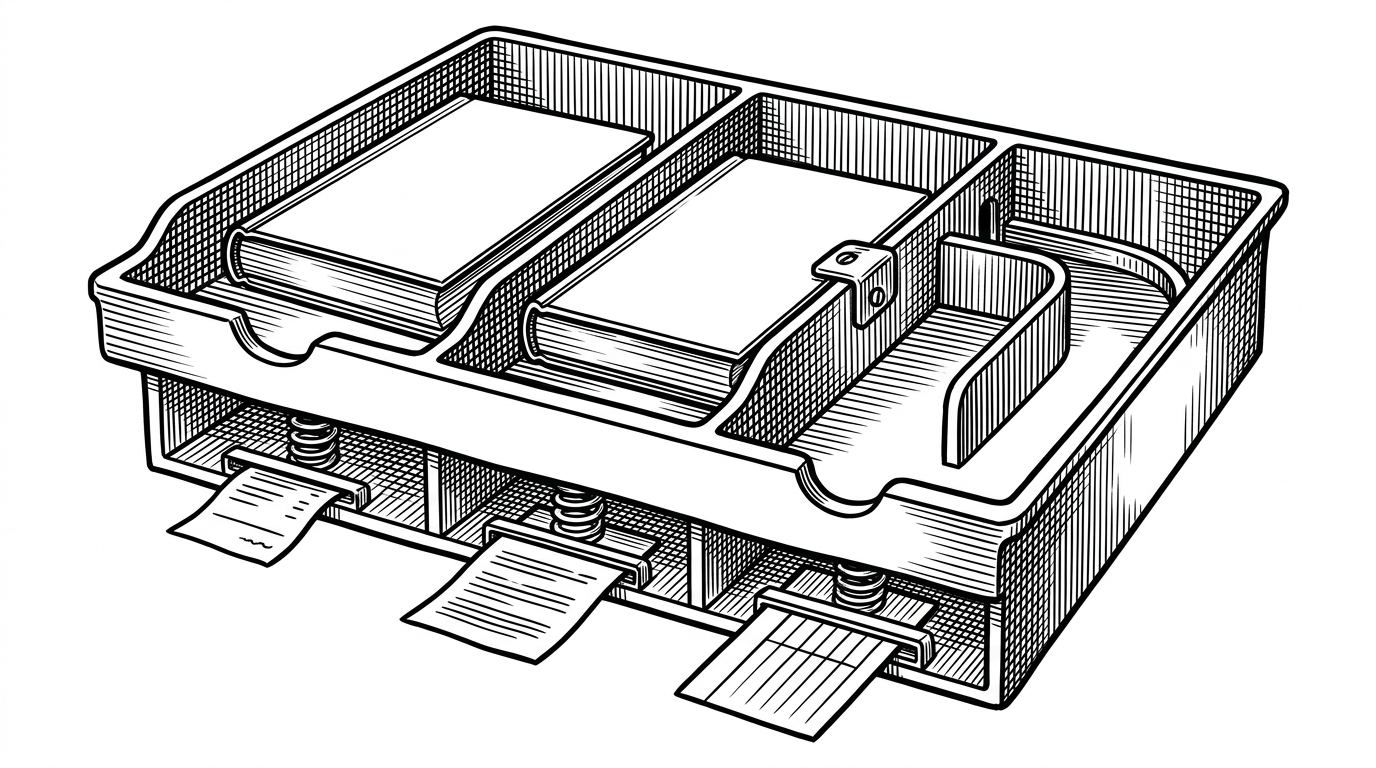
// Illustrative flow from the repo's backend behavior
if (book.getCopiesAvailable() <= 0) {
    throw new BookException("No copies available");
}

book.setCopiesAvailable(book.getCopiesAvailable() - 1);
checkoutRepository.save(checkout);

// On return:
// 1) compute late fee if overdue
// 2) create or update payment record
// 3) archive history
// 4) restore inventory
JWT Makes the Workflow Safe
The workflow only works if identity is attached to every request. This repo uses stateless JWT authentication, which means the server validates the token on each call instead of relying on a sticky session. That is the right shape for a system where checkout and payment need to be gated separately from browsing.
That boundary matters. Public routes can expose catalog data, while secure routes protect state-changing actions. The filter chain, token validation, and `SecurityContextHolder` setup make sure the backend knows who is acting before it lets the workflow proceed.
| Concern | Basic Session Login | This Repo's JWT Setup |
|---|---|---|
| Request identity | Stored in server session | Derived from Bearer token on each request |
| State-changing actions | Often mixed with browsing | Protected behind secure route matching |
| Failure mode | Session drift or silent dependence | Explicit token validation and auth rejection |
| Scaling behavior | Server must remember users | Server stays stateless between calls |
That does not make the app magically enterprise-scale. It does mean the author understood that checkout and payment are not decorative actions. They are privileged transitions, and the security model reflects that.
DTOs Keep the Frontend and Database from Colliding
The entity and DTO split is one of the quiet strengths here. Entities can stay optimized for persistence, relationships, and validation. DTOs can stay optimized for what the frontend actually needs to know.
This separation is easy to miss, but it is what keeps the React app from depending on table shape. ModelMapper sits in the middle and translates between internal state and public contract. That gives the backend room to change without forcing a frontend rewrite every time the domain model shifts.
| Layer | Purpose | What It Protects |
|---|---|---|
| Entity | Database and domain rules | Persistence details and relational structure |
| DTO | API contract | Frontend stability and transport shape |
| ModelMapper | Translation | Manual mapping drift and repetitive boilerplate |
| React UI | User interaction | Direct coupling to JPA entities |
Validation, Exceptions, and Tests Turn It Into a System
The repo does not stop at happy-path endpoints. Jakarta Validation blocks bad input early, custom exceptions make failure modes specific, and the global exception handler turns those failures into useful responses. That is the difference between code that merely runs and code that expects things to go wrong.
The testing story pushes in the same direction. Testcontainers means the integration tests are not pretending to be real. They hit an actual PostgreSQL instance, which is the only way to know the schema and SQL behave outside a toy environment.
| Capability | Demo Project | This Repo |
|---|---|---|
| Validation | Minimal or absent | Entity-level constraints and request checks |
| Errors | Generic 500 responses | Specific custom exceptions and handler logic |
| Database tests | Mocked or in-memory only | Testcontainers-backed PostgreSQL integration tests |
| API docs | Optional | Swagger/OpenAPI tagging and documentation |
That combination changes how you read the project. It is not just a feature list. It is a set of guardrails around a workflow that can fail in predictable ways.
Where It Sits in the Landscape
Compared with basic bookstore CRUD apps, this repo has much better operational shape. It does more than list products and accept form submissions. It tracks inventory, secures privileged actions, records financial side effects, and preserves history.
Compared with mature bookstore management platforms, it is still a small project. It does not try to be a full commercial system. Its value is narrower and arguably more useful for hiring or learning: it shows that the author can model workflow, not just pages.
| Project Type | Workflow Depth | Security | Testing | Best Use |
|---|---|---|---|---|
| Basic CRUD bookstore | Thin | Often weak or absent | Usually minimal | Learning the stack |
| This repo | Moderate to strong | JWT-gated actions | Integration-focused | Portfolio proof of backend discipline |
| Full bookstore platform | Deep | Role and workflow aware | Broad production test coverage | Operational business use |
Why This Repo Feels More Serious Than a Demo
The final impression is competence. JWT, Stripe, validation, DTOs, OpenAPI, and Testcontainers all point in the same direction: the author wanted a backend that behaves like a system, not a sandbox.
That is why the project stands out. It does not win by being flashy. It wins by treating a bookstore as a set of real business rules that must hold together under pressure.