sharing-app: The Self-Destructing File Service Built Like a Fail-Safe
A clean MERN-style app that uploads to Cloudinary, shortens the link, expires access twice, and turns a simple sharing flow into a lesson in defensive backend design.
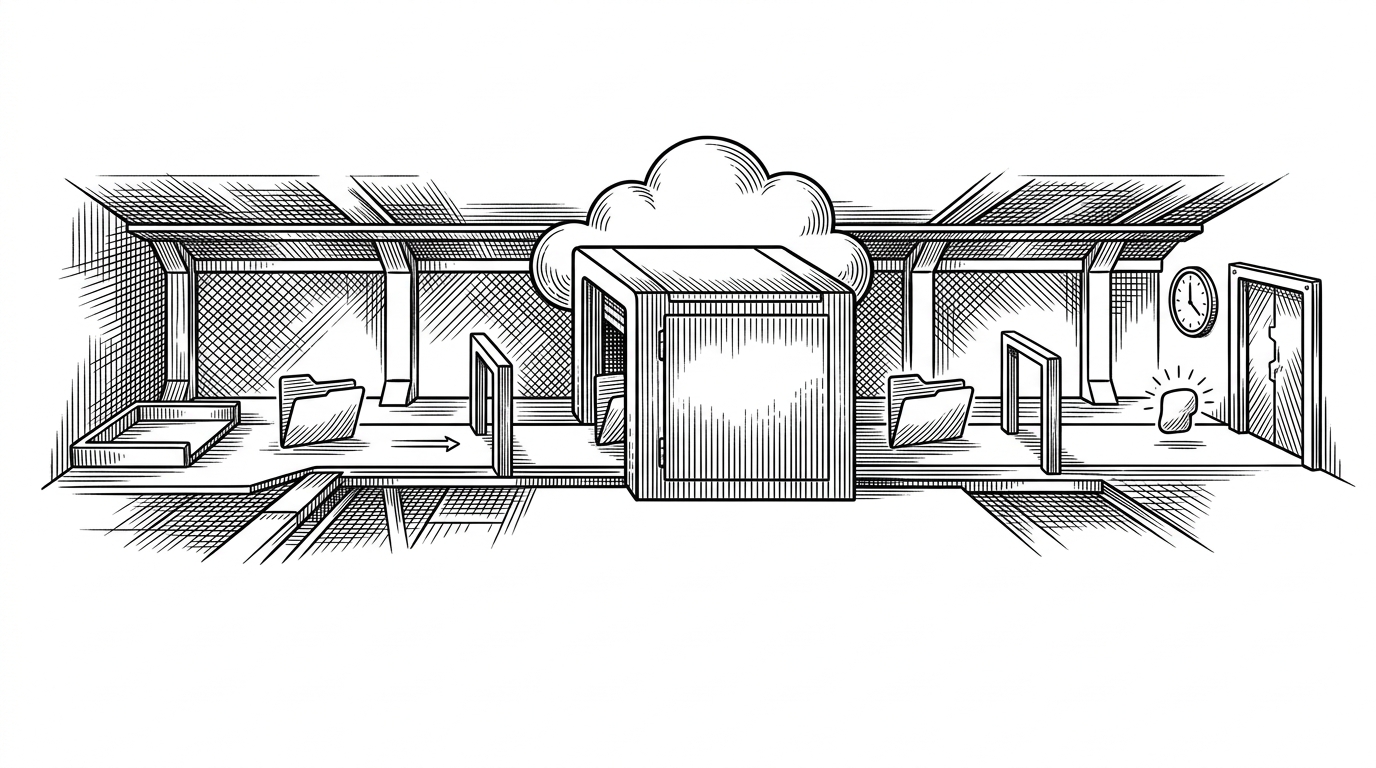
- The repo treats expiration as a fail-safe, not a suggestion, by enforcing it in both the cron job and the download route.
- Cloudinary is used as general file delivery infrastructure, not just an image host, which lets the app offload storage quickly and cleanly.
- The backend stays readable because the upload flow, cron logic, and URL handling are split across services instead of buried in one route file.
- The project is still young, and its missing rate limiting and file-size guards matter because the architecture is stronger than its hardening.
The file is gone even before the cron job wakes up
The sharpest thing in sharing-app is not the upload form. It is the refusal to trust a single expiry mechanism. A background cron job marks stale files as expired, but the download route checks the timestamp again before serving anything, which means access fails closed even if the worker is late.
That changes the whole reliability story. This is not a best-effort cleanup task with a polite reminder attached. It is a small backend that treats expiration like an enforced rule, not a scheduled hope.
What this app is actually for
This is a self-hosted file-sharing tool for temporary documents and images. You upload a file, get a short link, and can optionally notify someone by email. The product sits in the space between a disposable transfer service and a lightweight internal sharing tool.
| Capability | sharing-app | Generic upload app | Typical link-sharing service |
|---|---|---|---|
| Expiry enforcement | Cron job plus request-time check | Often none | Usually platform-controlled |
| Local file cleanup | Deletes temp files after cloud upload | Sometimes manual | Hidden from the user |
| External storage model | Cloudinary offload with short link | Often local disk or raw blob storage | Proprietary storage layer |
| Short link generation | Yes, via nanoid | Sometimes | Yes |
| Email notification | Built in | Often absent | Usually optional |
| Architecture clarity | Service and repository split | Frequently route-heavy | Not visible |
| Production hardening | Partial, with gaps | Varies widely | Typically stronger |

The upload pipeline, step by step
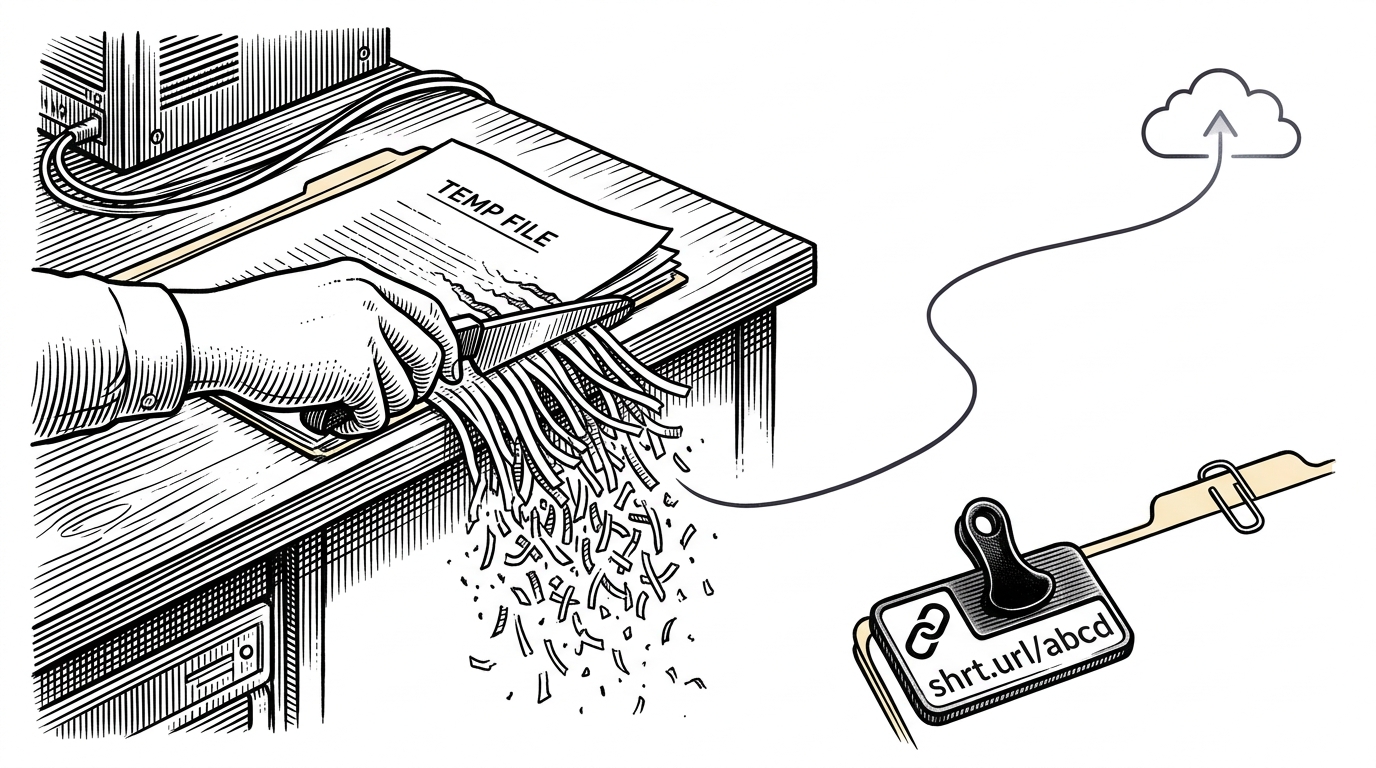
The route flow is disciplined. Multer receives the upload, the file lands in a temporary folder, Cloudinary becomes the durable storage layer, and the local copy is removed immediately after the cloud upload succeeds. Only then does the app generate a short identifier with nanoid and hand back a shareable URL.
// Simplified flow from the upload route
const upload = multer({ dest: 'uploads/' });

router.post('/upload', upload.single('file'), async (req, res) => {
  const result = await cloudinary.uploader.upload(req.file.path, {
    resource_type: 'auto'
  });

  fs.unlinkSync(req.file.path);

  const shortId = nanoid(6);
  // save file metadata, expiry, and short link
  res.json({ shortId, url: result.secure_url });
});
Why Cloudinary is the hidden trick
The cleverness is in resource_type: 'auto'. Cloudinary is usually discussed as an image service, but this repo treats it like general-purpose file infrastructure. That lets PDFs and other document types ride the same pipeline without special cases.
That choice matters because it keeps the backend simple. The app does not need a separate media stack for every file type it supports. It leans on one durable storage layer and spends its complexity budget on access control instead.
The backend is split cleanly enough to read
The structure is small, but it is not tangled. Configs isolate third-party integrations, models define the persistence layer, services handle cron and email behavior, routes stay focused on HTTP, and the server entry point remains thin. That is a real advantage in a project this size because it keeps the upload lifecycle legible.
Where the project is strong, and where it is still young
The strengths are easy to see. The app cleans up temporary files, offloads storage, shortens links, and enforces expiry twice. The gaps are just as clear: rate limiting is commented out, file size limits are missing, and a few unused or half-wired files suggest the repo is still maturing.
That honesty is part of the appeal. The project is not pretending to be a hardened production platform. It is a thoughtful prototype that already contains one genuinely useful idea: defensive expiration belongs in more than one layer.
| Design question | What the repo does | Why it matters |
|---|---|---|
| Can expired files still slip through? | No, because the download route re-checks expiry. | The system fails closed if background cleanup lags. |
| Does the server keep uploaded files forever? | No, temporary files are deleted after Cloudinary upload. | Local disk does not become the long-term bottleneck. |
| Is the architecture hard to follow? | No, responsibilities are split across routes, services, models, and configs. | The lifecycle stays readable as the app grows. |
A better mental model than “upload app”
The best way to think about sharing-app is as a lifecycle engine for temporary access. The UI is just the front door. The real product is the sequence: ingest, externalize, shorten, notify, expire, and verify again.
That is why this repo stands out. It turns a familiar utility into a compact lesson in backend discipline. The architecture matters because it makes time itself part of the security model.