dify-agentbox: The Docker image for agents that need to actually work
Dify AgentBox turns a polyglot, browser-ready sandbox into a reproducible build graph, so the environment is assembled from source instead of improvised by hand.
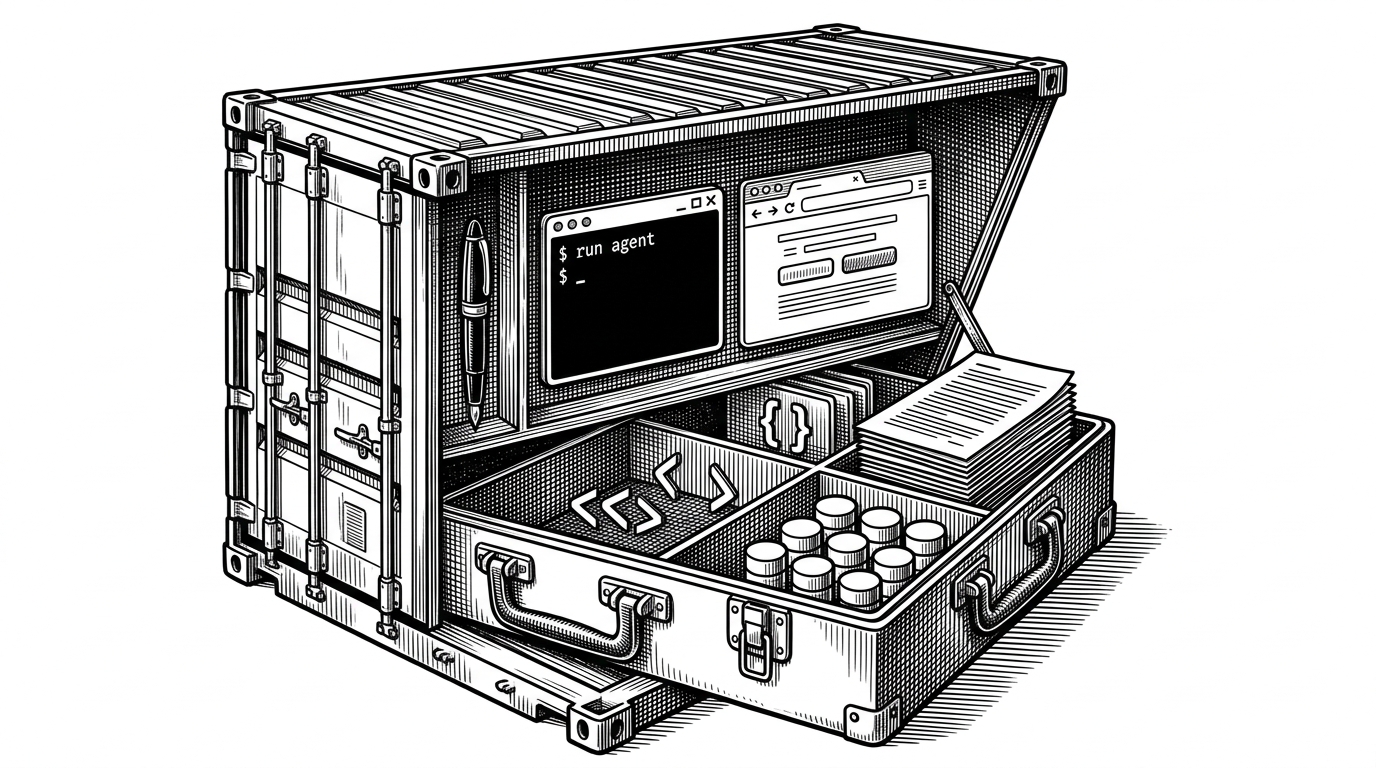
- AgentBox treats the agent sandbox as a compiled artifact, not a handcrafted container.
- Its main advantage is the build graph, which validates versions, templates the Dockerfile, and keeps the stack reproducible.
- Shared browser paths and a non-root default make Playwright usable without turning the image into a permission maze.
- The project is most compelling when one agent needs Python, Node, Go, Rust, Ruby, and browser automation in the same runtime.
Most agent projects stop at tool calling. AgentBox starts where the real work begins: a code interpreter that can run Python, Node, Go, Rust, Ruby, install documents and browser tooling, and do it without collapsing into dependency drift. If your agent needs to write code, launch a browser, and read files in one place, this is the kind of environment that makes the idea viable.
The real product is the build graph
The first thing that stands out is not a runtime, but a pipeline. A single versions.yaml file acts as the source of truth, then a Python build layer uses Pydantic to validate it before Jinja2 renders the final Dockerfile. That means dependency changes are checked as data, not discovered later during a broken image build.
That separation matters. The repo does not ask maintainers to edit one enormous Dockerfile by hand. Instead, shell scripts handle install phases, the renderer strips their shebangs and wraps them in heredocs, and the template stitches everything into a single image build. The result is easier to test locally, cleaner to review, and less likely to accumulate layer bloat.
Why the browser story is the hard part
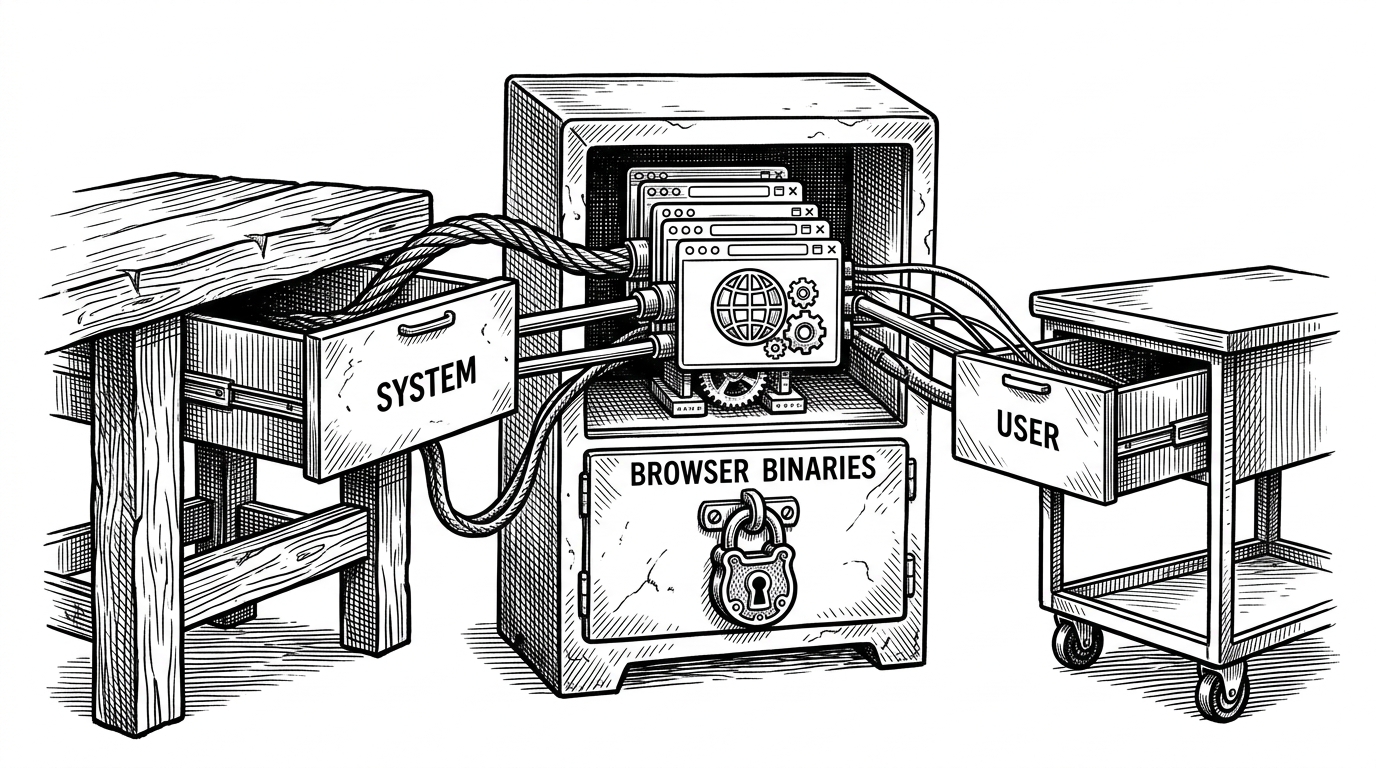
Browser automation is where many otherwise decent agent images fall apart. Playwright wants binaries, cache paths, permissions, and a predictable place to live. AgentBox handles that by moving browser assets into a shared location and wiring both the root setup and the agentbox user to the same store, which avoids the classic loop of permission errors and duplicate downloads.
That design is a clue to the repo's philosophy. Security is not bolted on after the fact, because the default runtime is already non-root. Convenience is not sacrificed either, because the browser path is shared instead of recreated for every user context.
How it compares
| Approach | What you get | Trade-off |
|---|---|---|
| Hand-written Dockerfile | Simple at first, direct control over every layer | Version drift, noisy diffs, and hard-to-reason install logic |
| Framework plus separate runtime services | Flexible application logic and familiar abstractions | You still assemble the sandbox, browser, and language stack yourself |
| AgentBox | A validated, polyglot, browser-ready sandbox with one source of truth | More upfront structure, but far less entropy later |
If you have ever watched an agent prototype turn into a pile of shell scripts, AgentBox is the opposite move. It is opinionated about the runtime, strict about versions, and boring in the best possible way. The repo is not trying to be the agent framework. It is trying to be the floor the framework stands on.
The broader Dify pattern
AgentBox also fits the larger Dify direction: ship the parts that are hardest to get right, then make them reusable. That includes sandboxed execution, shared skills, and a platform story that moves from prototype to production without asking teams to reinvent the plumbing each time. In that sense, AgentBox is less a side project than a pressure valve for the whole stack.