dify-marketplace-toolkit: The Gatekeeper Behind Dify’s Plugin Marketplace
A small Python repo that validates plugin PRs, boot-tests local installs, and hands only clean packages to Dify’s marketplace API.

- dify-marketplace-toolkit is not a generic publisher. It is a trust gate that blocks bad plugin submissions before they reach the marketplace.
- The repo's pipeline combines path checks, boot tests, and daemon-assisted packaging so failures happen early and cheaply.
- Its most brittle-looking choices, like scanning for a Flask startup string, are deliberate trade-offs that keep CI coordination simple.
- Compared with npm, twine, and vsce, the toolkit behaves more like customs than a package manager.
The tool's real job is to say no
If you read this repo as an uploader, you miss the point. It starts by rejecting plugin PRs that touch the wrong paths, then it boot-tests the plugin locally, then it packages only after the process proves it can stand up. The happy path is just the last step in a chain of refusals.
One checker reads PR_FILES from CI and blocks mixed plugin paths, so a pull request cannot smuggle unrelated plugin types through the lane. Another stage refuses to move on until the plugin can boot cleanly. That means the marketplace only sees submissions that are structurally clean, runnable, and packageable.
# Simplified gate flow\nif not pr_files_ok(pr_files):\n raise SystemExit("reject mixed plugin paths")\n\nif not boot_test(source_dir, timeout=20):\n raise SystemExit("reject plugin that never starts")\n\npackage = package_with_daemon(source_dir)\nupload_to_marketplace(package, forcely=forcely)Why Dify needed a separate publishing lane
Dify is not publishing generic libraries. It is curating a plugin ecosystem, which means the release lane has to know about plugin directories, .difypkg artifacts, and the marketplace API that accepts them. The Python wrapper stays thin on purpose. It delegates packaging to the dify-plugin daemon, then handles the CI-friendly parts around it.
Toolkit for CI to upload plugins to marketplace
That split matters. Python is doing orchestration, not invention. The tool manages sequence, validation, and transport, while the daemon owns the lower-level packaging work that the CI wrapper should not have to reimplement.
Inside the trust funnel
The pipeline is simple enough to fit on one screen: incoming source, path gate, boot gate, packaging gate, upload gate. But each stage answers a different question. Is this even the right kind of change? Can the plugin start? Is the package built correctly? Will the marketplace accept it?
That is the real value of the toolkit. It is not a single publish button. It is a funnel that narrows trust.
The brittle parts are deliberate
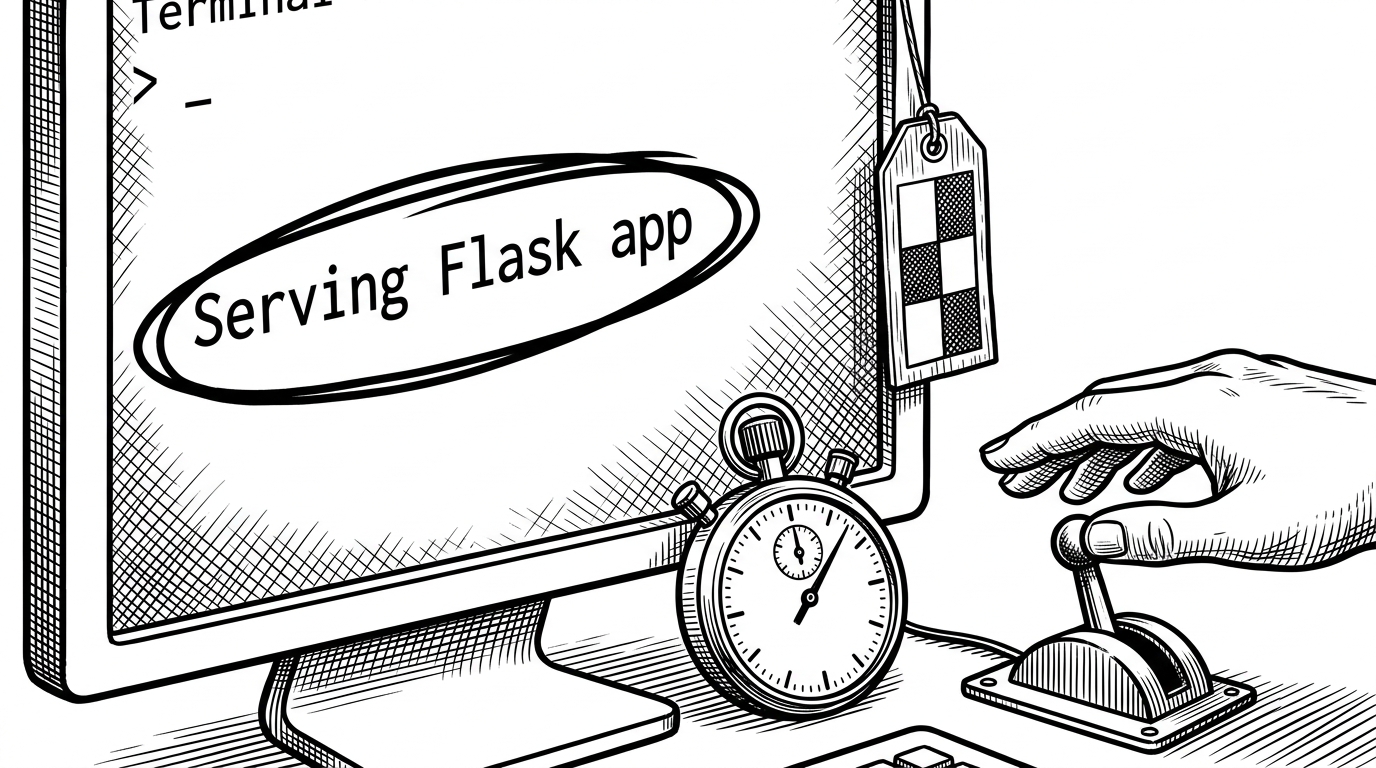
The validator is pragmatic to the point of being a little rough. It watches subprocess output for Serving Flask app, uses a semaphore and a watchdog thread, and leans on a hardcoded 8080 because the CI environment is standardized. That is not a failure of imagination. It is a preference for coordination that is cheap to reason about.
# Simplified startup check\nfor line in stdout:\n if \"Serving Flask app\" in line:\n ready.release()\n break\n\nif not health_check(\"localhost:8080\", timeout=20):\n raise SystemExit(\"plugin failed to boot\")What this looks like next to npm, twine, and vsce
The comparison is useful because it shows the boundary. npm, twine, and vsce all publish artifacts, but they do not sit in front of a platform-specific submission policy. dify-marketplace-toolkit does.
| Aspect | dify-marketplace-toolkit | npm publish | twine upload | vsce publish |
|---|---|---|---|---|
| Platform scope | Dify plugins only | JavaScript packages | Python packages | VS Code extensions |
| Validation before publish | PR path checks and a boot test happen before packaging | Mostly package-level checks | Build and metadata checks | Packaging checks plus marketplace rules |
| Packaging responsibility | Delegates to the dify-plugin daemon | The CLI packages the tarball | Twine uploads an existing distribution | The CLI creates the VSIX |
| Upload target | Dify marketplace inner-upload API | npm registry | PyPI | Visual Studio Marketplace |
| Trust model | A release gate with platform policy | A general package registry | A general package registry | A platform-specific extension marketplace |
| CI posture | Opinionated and narrow | Broad and scriptable | Broad and scriptable | Broad and scriptable |
If those tools are freight elevators, this one is a customs desk.
The larger lesson: marketplaces need boring infrastructure
The deepest insight here is not technical, it is organizational. Marketplaces do not scale on enthusiasm alone. They scale on repeatable checks, constrained inputs, and a release path that makes bad states obvious before humans have to review them.
That is why details like checksum formats, packaging daemons, and path rules matter. The Dify community already wants simpler identifiers, which is exactly what you see when a marketplace matures past ad hoc submissions and starts optimizing for reliability.
Since checksums can change even for the same version, we need to simplify this to use just `org/name:version` format.
The toolkit's job is to turn trust into a procedure. That is boring infrastructure, and it is the part that keeps the interesting stuff possible.