dify-plugin-daemon: Dify Plugin Daemon turns plugin chaos into a controlled sidecar
How Dify extends its platform without letting subprocesses, Python dependencies, and runtime isolation leak into the core server.
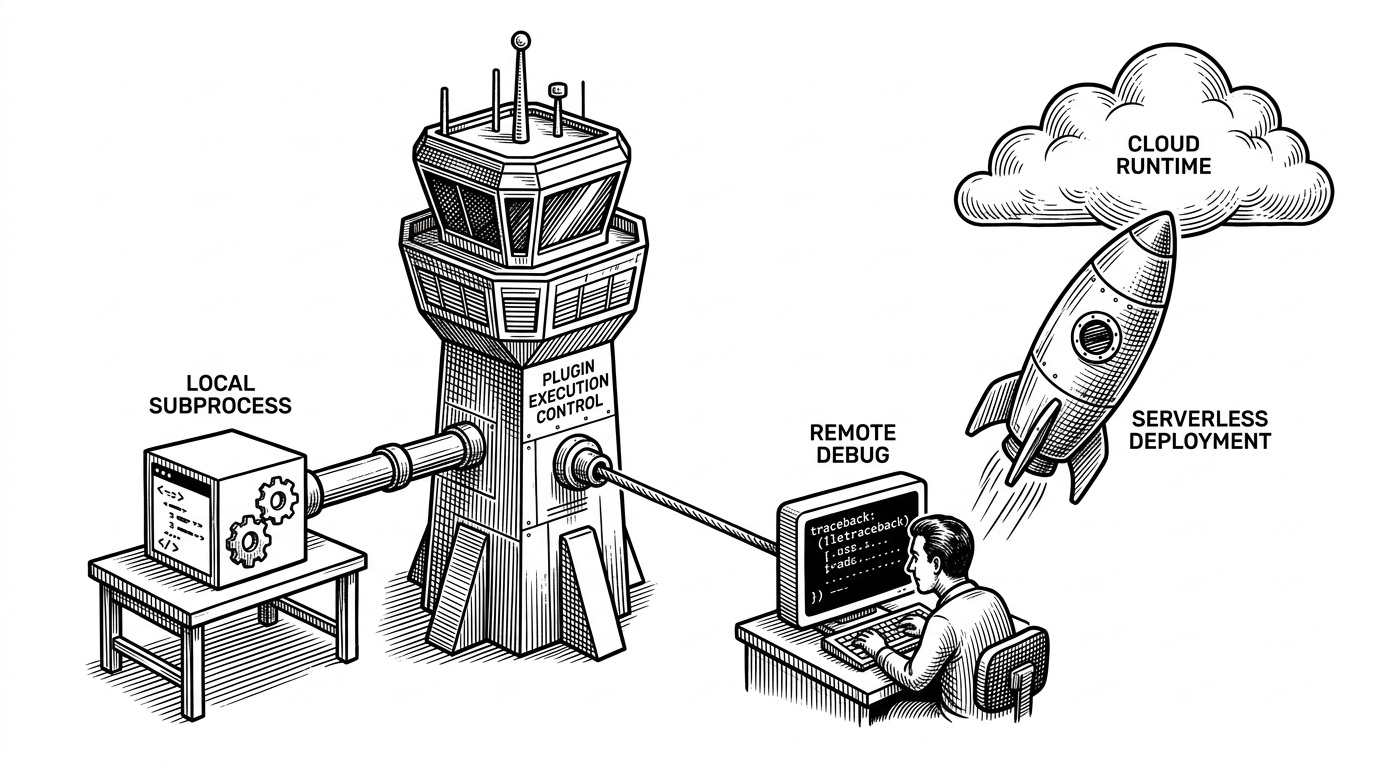
- Dify Plugin Daemon is a sidecar control plane that keeps plugin execution outside the core server while still making it feel native to the platform.
- Its most interesting design choice is not a new framework, but a pipe-level contract over STDIN and STDOUT that keeps local plugins lightweight and observable.
- The control panel adds the safety rails that plugin systems usually forget, including granular install locks, notifier fan-out, and restart backoff.
- Multi-runtime support gives Dify one plugin model that can move from local debugging to serverless deployment without rewriting the plugin itself.
The surprise here is not that Dify supports plugins. It is that it treats plugin execution like an operational problem, not a scripting convenience. Dify Plugin Daemon keeps the mess of runtimes, dependency management, and process lifecycle in a separate service so the platform can stay stable while extensions stay flexible.
Dify Plugin Daemon is a service that manages the lifecycle of plugins. It's responsible for 3 types of runtimes: 1. Local runtime... 2. Debug runtime... 3. Serverless runtime...
Why a plugin daemon exists
The repository is built around a simple fear: if plugins run too close to the core API server, they will inherit its blast radius. A broken dependency, a wedged subprocess, or a bad plugin restart loop should not take down the whole platform. The daemon exists to absorb that risk, then expose a narrower, predictable interface back to Dify.
That architectural split is why the project feels closer to a sidecar or control plane than a library. The daemon manages installation, launch, observation, and teardown. The API server gets the benefit of extensibility without having to own every edge case in the plugin runtime itself.
Three runtimes, one control plane
The three runtime modes are the point of the repository. Local runtime is for subprocess execution on the same machine. Debug runtime waits for a remote plugin to attach over TCP. Serverless runtime packages plugins for a hosted environment such as AWS Lambda. One daemon normalizes all three so the rest of Dify can speak a single language.
Daemon uses `uv` to manage the dependencies of plugins, before you start the daemon, you need to install uv by yourself.
The pipe is the protocol
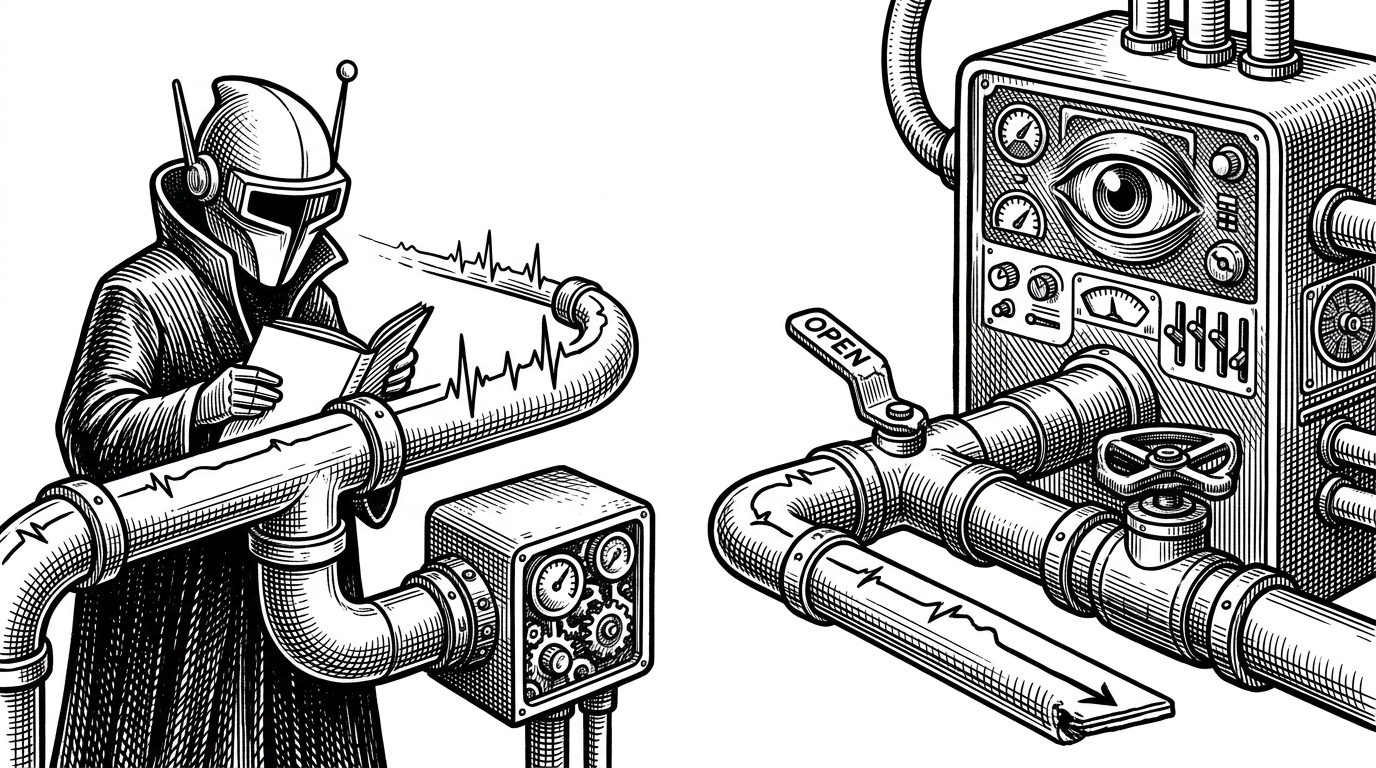
This is the most interesting implementation choice in the codebase. In local runtime, the daemon launches plugins as subprocesses and uses standard pipes for communication. That keeps the contract simple and efficient. It also means the daemon can treat a closed stdout stream as a failure signal, then kill and reap the process instead of leaving a zombie behind.
That pattern turns ordinary process IO into lifecycle management. The daemon is not only moving bytes. It is watching for heartbeats, logs, and execution results, then deciding whether the plugin still exists. The result is a lean transport with operational consequences.
What the control panel adds
The ControlPanel sits above the runtimes and acts like the daemon's nervous system. It manages install buckets, applies granular locks so plugin setup does not race itself, and fans out state changes through a notifier pattern. That separation matters because it keeps orchestration, reporting, and recovery from collapsing into the same code path.
There is also a visible bias toward resilience. Failure records keep a crashing plugin from hammering the host in a tight restart loop. The code reads like a team that expects plugins to misbehave and has decided to make misbehavior cheap to contain.
This PR brings concurrency in handling local plugins, which speeds up the plugin launching time dramatically, especially for a new empty plugin-daemon instance.
The repository's docs also lean into machine-readable structure. Files under docs/claude/ and the presence of CLAUDE.md suggest a project that expects AI assistants to work on the codebase without guessing its style. That is a small signal, but a revealing one. This is infrastructure built for repeated extension, not one-off hacks.
How it compares
| Approach | Strength | Trade-off |
|---|---|---|
| Dify Plugin Daemon | One contract across local, debug, and serverless runtimes. | Adds a dedicated service layer that must be operated and maintained. |
| In-process custom tools | Fast to prototype and easy to wire into a UI. | Tight coupling makes isolation and crash containment much harder. |
| Generic orchestrators like Kubernetes or Nomad | Flexible enough to run almost anything. | They do not understand Dify's plugin lifecycle, so you end up writing glue code. |
| Flowise or LangFlow style extensions | Convenient for low-code experimentation. | They usually stop short of the daemon's runtime isolation and packaging model. |
The comparison is not really about who can execute code. It is about who understands plugin semantics. Dify's daemon knows about installation, lifecycle, communication mode, and failure behavior. General-purpose tooling can imitate pieces of that stack, but it does not arrive with the platform's assumptions already encoded.
That is why the project feels more durable than a simple extension runner. It is an operating layer for plugins, not just a process launcher. For Dify, that distinction is the difference between a feature and a platform primitive.