Test: Team38 OMS: The Retail System That Knows the Shelf, Not Just the Store
A clean Go and React monorepo for inventory, transfers, and purchase orders, built around one smart idea: retail software should point a worker to the exact location of an item.
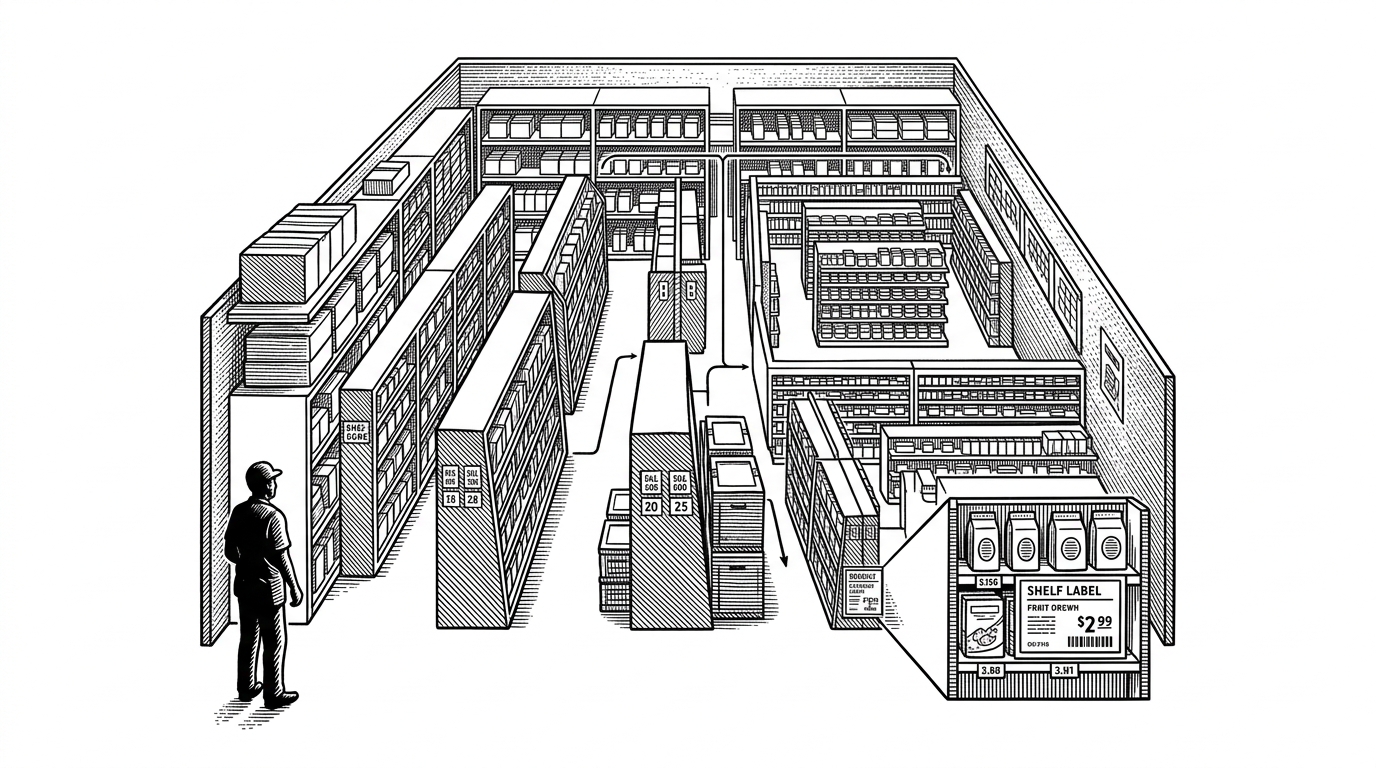
- This OMS treats retail inventory as a spatial problem, not a counting problem.
- Its hierarchy of store, zone, location, and inventory turns a building into an addressable map.
- Transfers are modeled as staged work, which makes the system feel operational instead of decorative.
- The repo looks like a serious MVP because the contract, schema, UI, and infrastructure were designed before every data path was fully wired.
Why in stock is not enough
Most inventory systems stop at the wrong abstraction. They can tell you that a SKU exists in a store, but not whether it is in the back room, on the sales floor, or on shelf B2. That gap is where time gets wasted, and it is the gap this OMS tries to close.
The interesting thing about lock44/Test is that it treats retail as a physical search problem. The software is not just counting T-shirts. It is helping someone find the one they need, fast.
The hierarchy that makes the system useful
The schema is the heart of the repo. Instead of flattening everything into a store-level count, it builds a hierarchy: store, zone, location, inventory. That is a small design choice with a big consequence. It gives every item an address.
| Simple inventory app | Team38 OMS |
|---|---|
| Store, product, quantity | Store, zone, location, product, quantity |
| Answers what is in stock | Answers where the item physically sits |
| Good for counts | Good for finding and picking |
| One flat view of inventory | A map of actionable places |
That contrast is the article in miniature. One model counts inventory. The other helps a worker move through space.
Transfers are modeled like real work
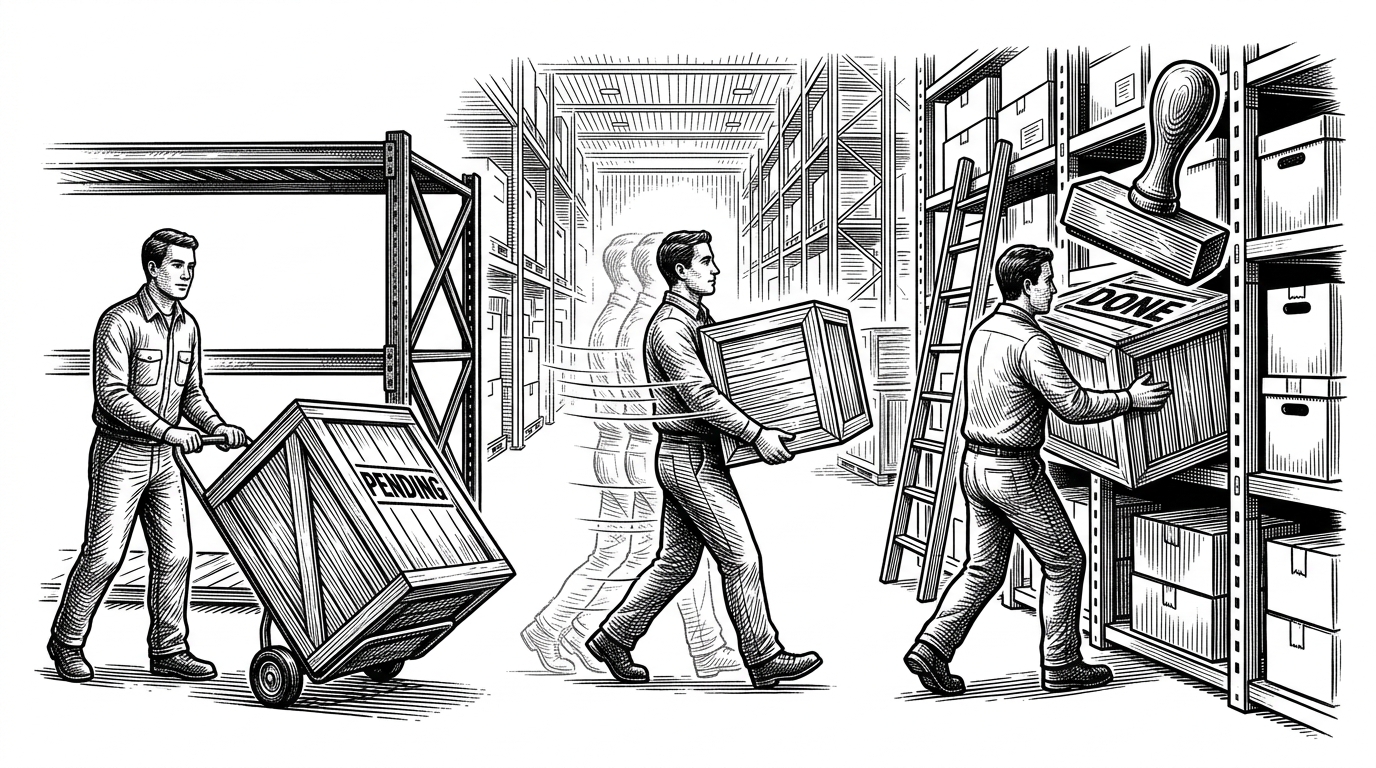
The movement workflow is more than CRUD. In the backend, a transfer is created in PENDING, then executed into DONE. That mirrors how operations actually work: plan first, move second, confirm after the physical step is complete.
// Conceptual shape of the movement flow
movement := CreateMovement{
    ProductID: 42,
    FromLocationID: 7,
    ToLocationID: 12,
    Status: "PENDING",
}

// Later, after the pick and move happen
ExecuteMovement(movement.ID)
// status becomes DONE
That staged model matters because it keeps the software honest. A transfer is not complete when the record is written. It is complete when the item is in the new place.
A Go backend without framework drag
The backend keeps to the Go standard library, using native HTTP routing instead of a heavier web framework. That choice keeps the service small, but it also forces discipline. Handlers do one job, migrations define the schema, and CORS is handled explicitly instead of hidden behind middleware magic.
| Design choice | What it buys |
|---|---|
| net/http routing | Less framework overhead and clearer request flow |
| golang-migrate | Schema changes stay versioned and repeatable |
| Manual CORS handling | Cross-origin behavior stays explicit |
| Dockerized Postgres | The local setup matches the app’s assumptions |
This is not minimalism for its own sake. It is a practical backend shape for a team that wants control over behavior without dragging in a large dependency stack.
The frontend behaves like a purpose-built tool
The React app does not lean on a generic routing setup. Instead, it uses a custom page state model that passes navigation context forward, including the path back to where the user came from. That makes the UI feel closer to an internal operations console than a public website.
export type Page =
  | { name: 'dashboard' }
  | { name: 'location-items'; storeId: number; locationId: number }
  | { name: 'item-detail'; itemId: number; from: Page }
That shape is a strong fit for warehouse and store workflows. People are not browsing. They are drilling down, checking one thing, then returning to the previous view with context intact.
Design-first, even before every handler is finished
The repo feels professional because the contract came first. OpenAPI defines the shape of the system, Swagger UI makes it inspectable, and the folder structure cleanly separates backend, frontend, API docs, and reports. Even where some handlers still return mocked data, the boundaries are already in place.
| Prototype habit | This repo’s habit |
|---|---|
| Build screens first, define data later | Define the contract, then wire behavior |
| Let the UI drift from the API | Keep OpenAPI and the app aligned |
| Hide progress in ad hoc notes | Document structure in repo-level artifacts |
| Ship a demo shell | Ship an MVP scaffold that can harden over time |
That is the real maturity signal here. The system already has the shape of a tool people could trust, even if some plumbing is still catching up.
What this repo is really teaching
The lesson is not about retail alone. It is about modeling work at the level where the work actually happens. In this case, that level is a shelf, a zone, and a path a human can follow.
Team38 OMS shows how to build an internal tool that stays coherent: spatial data model, staged operations, small backend surface area, and a frontend tuned to task flow. That combination is what makes a repository feel like an operating system for a business process instead of a dashboard with tables.