LoongClaw: The Paranoid Kernel for AI Agents
How a strictly governed Rust workspace and WASM sandboxing are turning fragile LLM wrappers into mission-critical enterprise infrastructure.
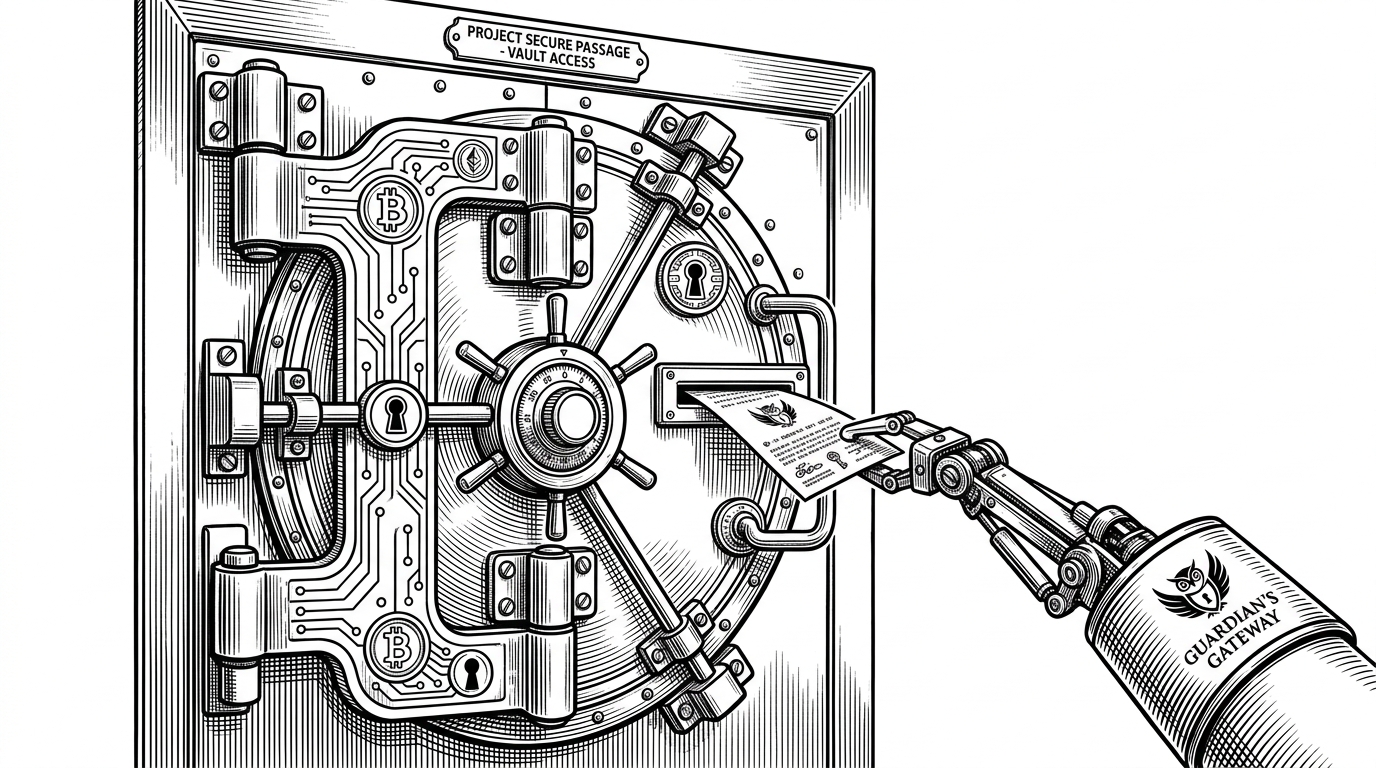
- LoongClaw uses a deterministic L1 policy kernel to intercept and authorize every tool call an AI agent attempts.
- The framework's strict Rust architecture denies all panics to prevent mid-task crashes in mission-critical environments.
- Untrusted plugins are isolated in a WASM sandbox to protect the core agent infrastructure from arbitrary code execution.
- A multi-channel dispatch system normalizes inputs from over 20 enterprise platforms into a single secure pipeline.
The L1 Security Gate
Giving a large language model raw access to a shell or an API is a massive liability. Most agent frameworks prioritize ease of use over security. They allow models to execute Python scripts or system commands with minimal oversight. In an enterprise environment, this approach is entirely unacceptable.
LoongClaw takes the opposite path. It implements a kernel-first design centered around a deterministic L1 Policy layer. Before an agent can execute any tool, it must possess a specific capability token. The kernel audits every request against a strict ledger, ensuring that a requested action aligns with explicitly granted permissions.
The No-Panic Guarantee
Building an AI agent that handles complex, long-running state requires absolute stability. If the runtime crashes mid-task, it can leave connected enterprise systems in an inconsistent state. To solve this, LoongClaw is built on a seven-crate Rust workspace with an acyclic dependency graph.
The engineering culture behind the project is uncompromising. The workspace enforces incredibly strict rules at compile time. Developers are forced to handle every possible error path explicitly.
[workspace.lints.clippy]
unwrap_used = "deny"
expect_used = "deny"
panic = "deny"
indexing_slicing = "deny"
This no-panic philosophy is rare even in high-quality Rust projects. It ensures that the agent infrastructure acts as a resilient, crash-proof foundation.
Sandboxing the Unknown
Extensibility is a core requirement for any useful agent framework. However, allowing third-party code to run natively introduces severe security risks. LoongClaw mitigates this by integrating Wasmtime.
Plugins in LoongClaw are treated as untrusted binaries running inside a WebAssembly sandbox. This creates a hard trust boundary. The community can build tools in any language that compiles to WASM while the Rust kernel remains completely isolated from potential vulnerabilities.
The Enterprise Switchboard
An agent is only useful if it can reach the humans who need it. LoongClaw features a multi-channel dispatch system capable of hooking into dozens of enterprise platforms. It uses a bridge pattern to normalize inbound messages from Feishu, Slack, Matrix, and other protocols.
This abstraction layer turns the messiness of disparate chat APIs into a single standard format. The kernel processes standardized messages, completely decoupled from the transport layer.
We chose Loong deliberately. Loong refers to the Chinese dragon. In our context, it is less about conquest or aggression and closer to a form of strength shaped by vitality, balance, imagination, and coexistence.
The Two Paths of Agentic AI
The agent landscape is currently dominated by two divergent philosophies. On one side are consumer-focused tools designed to manage personal digital lives. On the other side is the rigid infrastructure required for team collaboration.
Frameworks like OpenClaw function as local-first background daemons with direct access to your shell and browser. They are highly versatile but inherently risky in corporate settings. LoongClaw is explicitly designed as a server-side, multi-tenant workspace.
| Feature | OpenClaw | LoongClaw |
|---|---|---|
| Target Audience | Consumer / Personal | Enterprise / Team |
| Architecture | Local-first background daemon | Server-side multi-tenant workspace |
| Primary Interface | iMessage, WhatsApp | Feishu, Slack, Matrix |
| Execution Model | Direct shell and browser access | WASM Sandboxed plugins with Capability Tokens |
By prioritizing security, strict coding standards, and deterministic execution, LoongClaw provides a realistic path for deploying autonomous systems inside corporate firewalls.