OpsPilot: The Measured Agent That Refuses to Trust Itself
A deep dive into the open-source triage system that normalizes, validates, audits, and escalates before an LLM can turn a message into work.
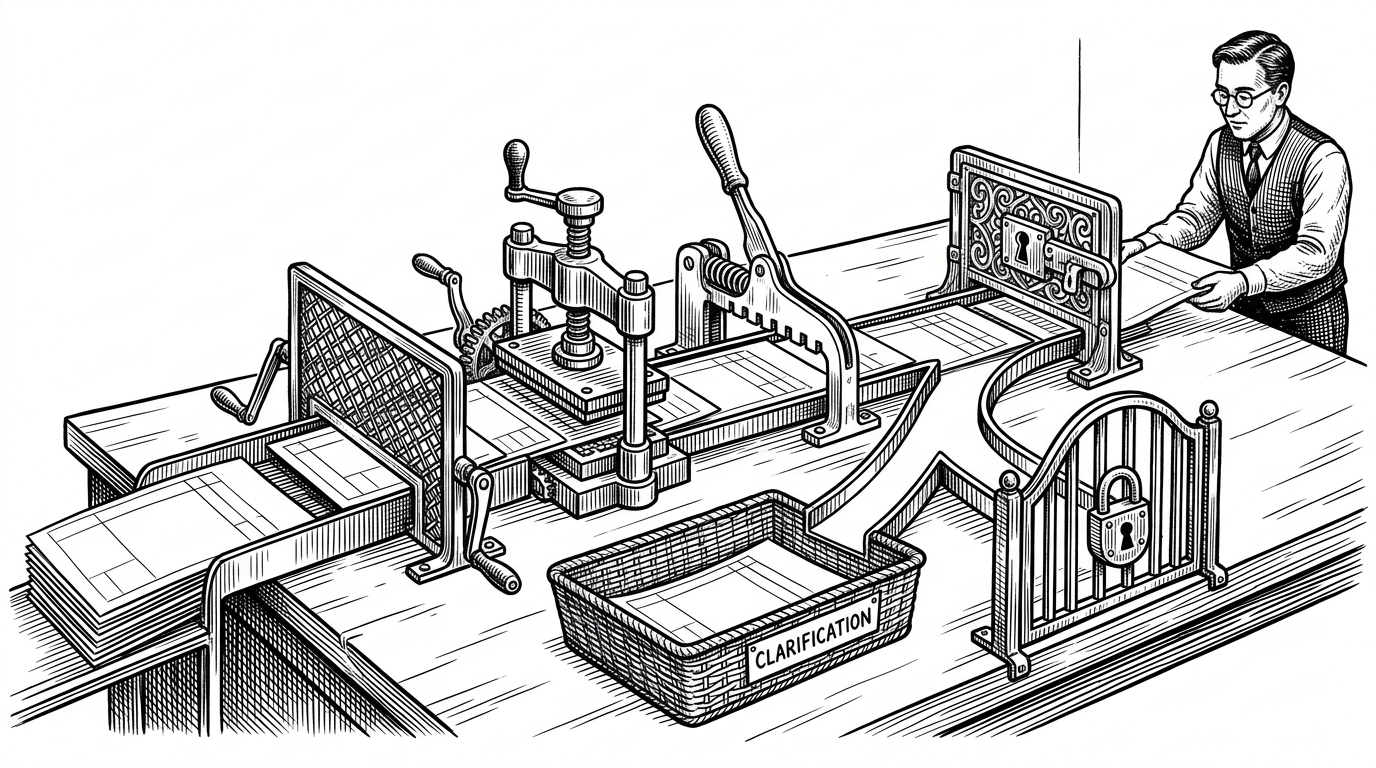
- OpsPilot’s core idea is not autonomy, but restraint: deterministic rules get the first and last word when the model is uncertain.
- Its normalization layer is the surprise, because it can override LLM guesses, filter out praise, and force known signals into fixed categories.
- The planner, executor, evaluator, and approval queue form a trust funnel that keeps bad input from turning into customer-facing output.
- The project’s real value is philosophical as much as technical, since it treats human review and regression testing as product features rather than fallback states.
Most agent demos celebrate motion. OpsPilot is interesting because it celebrates brakes. The repo describes itself as an open-source alternative to observability platforms, but the deeper story is how it handles messy text: not by asking the model to be brilliant, but by building a system that can say no, ask for help, or force a safer category before anything moves forward.
The model is not the boss
The sharpest idea in the codebase is the deterministic normalization layer. It does not treat an LLM output as truth. It treats it as a proposal that can be overridden by rules, regexes, allowlists, and hard-coded categories when the input is obviously security-related, clearly praise, or too ambiguous to trust.
That matters because most AI systems fail in the same boring way: they are confident at the wrong moment. OpsPilot is built around the opposite instinct. If the system cannot justify a clean action, it degrades into clarification instead of improvising a pretty answer.

The pipeline that earns trust
The pipeline is simple enough to read, but disciplined enough to matter. Incoming text goes through intent routing, extraction, normalization, planning, execution, evaluation, and approval. Each stage is another chance to lower confidence, demand context, or divert the item away from automation.
The design is easy to miss if you only look at the frontend. The point is not a dashboard. The point is that the system has multiple chances to fail safely. A weak intent guess can become clarification. A noisy extraction can get normalized away. A risky evaluation can send the case to humans.
Why the executor is a security boundary
The planner-executor split is where the repo stops feeling like a demo and starts feeling like infrastructure. The planner can propose a course of action, but the executor validates that proposal against safe tool names and required context before anything runs. That is the boundary that keeps “agent” from becoming “arbitrary code path.”
SAFE_TOOL_NAMES = {"create_ticket", "draft_reply", "route_to_approval"}

if planner_decision.tool_name not in SAFE_TOOL_NAMES:
    raise PermissionError("Tool not allowlisted")

required = TOOL_REQUIRED_CONTEXT.get(planner_decision.tool_name, set())
missing = required - available_context.keys()
if missing:
    return route_to_clarification(missing)

trace = AgentExecutionTrace(
    status="running",
    result_summary="Executor validated tool and context",
    error_message=None,
)
That snippet captures the philosophy well. The executor is not a generic tool runner. It is a sandbox with receipts. Every call becomes traceable, and every trace is useful later when something is weird, risky, or simply wrong.
The hidden product is regression testing for LLMs
The `benchmarks/` directory is easy to underestimate, but it is one of the clearest signals that this project takes reliability seriously. Prompt injection cases, expected-output checks, and regression fixtures turn model behavior into something closer to a software contract.
| Layer | What it protects | Failure it catches | Why it matters |
|---|---|---|---|
| Benchmarks | Prompt behavior | Regression and prompt injection | Prevents good prompts from going stale |
| Evaluator | Output quality | Missing fields and risky terms | Stops weak outputs from shipping |
| Approval queue | Business risk | Cases that need a human | Keeps escalation explicit rather than accidental |
This is where the project feels mature. It is not asking whether the model is smart enough. It is asking whether the model is stable enough to be tested, scored, and changed without guesswork.
Human review is the feature
OpsPilot does not pretend the approval queue is a temporary inconvenience. It treats human sign-off as part of the product shape. The evaluator can flag risky language, the planner can downgrade to clarification, and the queue exists to make that handoff visible instead of hidden.
| Model | Strength | Failure mode | Human role | How OpsPilot differs |
|---|---|---|---|---|
| Unconstrained agent wrapper | Fast demo velocity | Overconfident automation | Only rescues disasters | OpsPilot adds rule gates before action |
| Traditional workflow software | Predictable process | Too rigid for messy text | Manual triage everywhere | OpsPilot keeps the workflow adaptive |
| OpsPilot measured agent | Controlled automation | May escalate more often | Human approval when risk rises | It optimizes for safe completion, not maximum autonomy |
That trade-off is the whole product argument. Some systems win by removing people from the loop. OpsPilot wins by making the loop legible, auditable, and hard to bypass when the model is shaky.
Where OpsPilot fits in the market
The repository’s public positioning leans toward observability alternatives, but the more interesting comparison is philosophical. Unconstrained agents try to look magical. Workflow software tries to look dependable. OpsPilot tries to look cautious, and in this category caution is a feature, not a bug.
That makes it a useful case study for the post-hype phase of AI tooling. The next wave will not be won by systems that do the most. It will be won by systems that know when to stop, when to ask, and when to hand the decision back to a person.
What this project says about the next wave of AI tooling
OpsPilot is a measured agent. It refuses to trust itself too early, and that refusal is the product. The repo’s best ideas are not the flashiest ones. They are the ones that make confidence conditional, execution bounded, and human review normal.
That is a better template for serious AI systems than another promise of full autonomy. The useful agent is not the one that speaks first. It is the one that can survive scrutiny before it acts.