LevelUp---AI-Productivity-Web-App: LevelUp: The AI Productivity App That Treats Goals Like Code
Inside a gamified system that refuses to coach, decomposes ambitions into quests, and uses RPG mechanics to keep people moving when motivation fails.
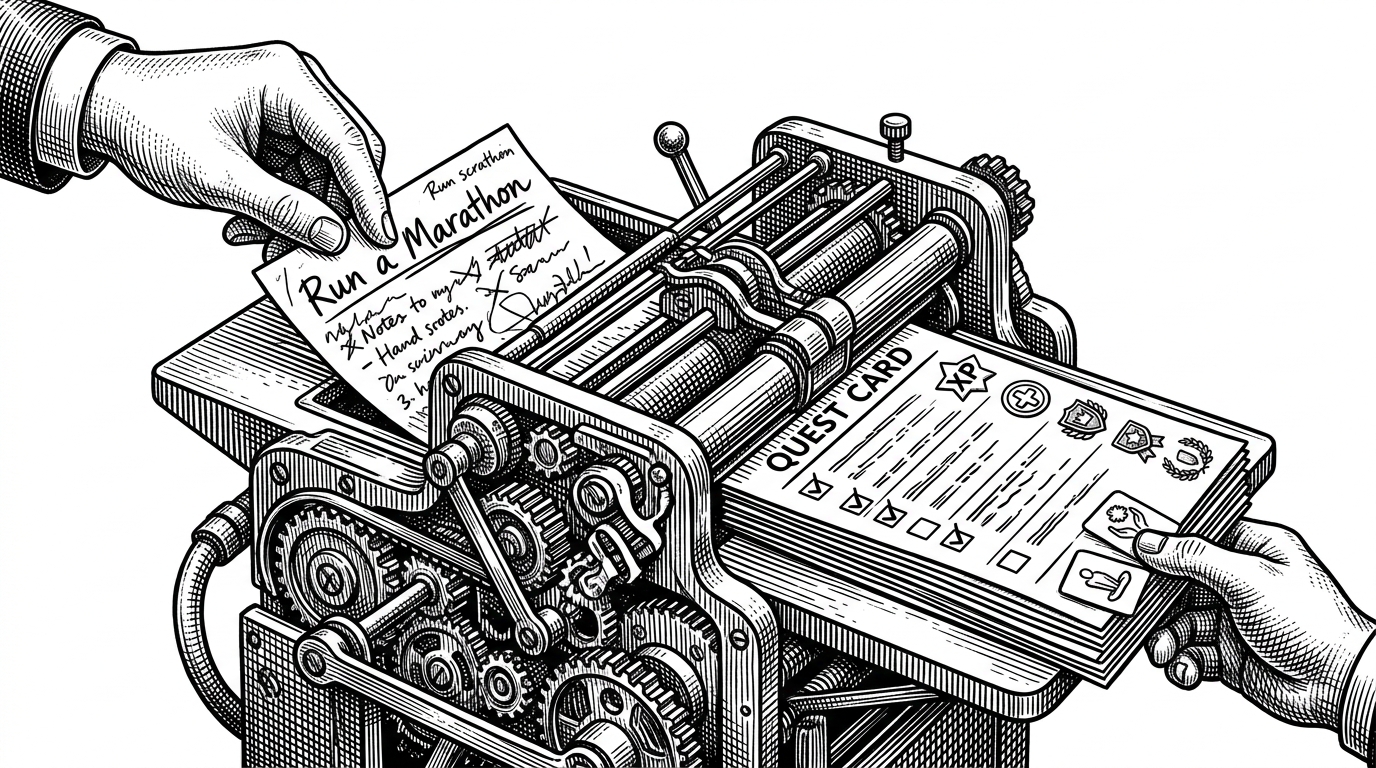
- LevelUp’s novelty is not chatbot-style assistance. It treats an LLM as a compiler that turns goals into structured quests.
- The RPG layer is the retention engine, not a cosmetic skin. XP, ranks, penalties, and recovery mechanics make the plan survive contact with real life.
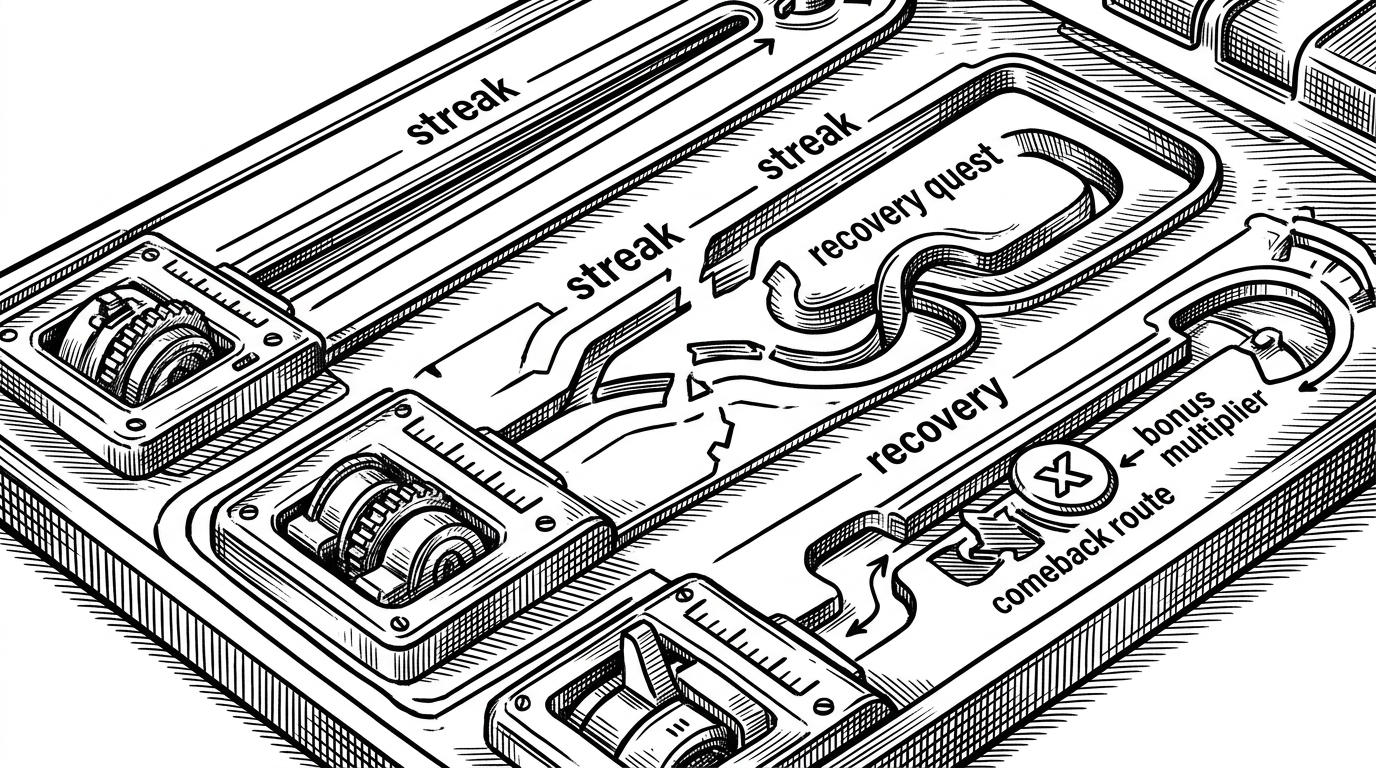
- Missed work is not treated as failure. The app is designed to generate a softer reentry path so users can return without restarting from zero.
- The backend matters because the behavior loop spans prompt, persistence, cron jobs, and leaderboard sync, not just UI.
The Goal Compiler Hidden Inside a Fitness App
LevelUp looks like another AI fitness app until you read the prompt philosophy. The system does not want a conversation. It wants an execution artifact. That is why the most interesting thing in the repo is not the dashboard or the styling. It is the pipeline that turns a broad goal into a batch of quests the app can actually run.
Why the Prompt Is the Product
The project’s most opinionated code lives in `server/services/gemini.js`, where the system instruction forces the model into an anti-coach role. No motivational language. No clarifying questions. No fuzzy advice. The prompt exists to produce specific JSON that can be persisted, scored, and scheduled. In other words, the LLM is not being asked to be helpful in a general sense. It is being asked to be deterministic enough to support a workflow.
// Conceptual shape of the system prompt
const GOAL_EXECUTION_SYSTEM_INSTRUCTION = `
You are not a coach.
Do not motivate.
Do not ask clarifying questions.
Convert the user's goal into a structured quest plan.
Return strict JSON with concrete, time-bound tasks.
`;

// Goal text -> generated quest batch -> database records
That choice changes everything downstream. If the model produces a plan instead of a conversation, then the app can treat each quest like a game asset with its own state, timing, and outcome. The prompt is not a thin wrapper around the AI. It is the first layer of product logic.
The RPG Layer Is Not Decoration
Once goals become quests, the rest of the RPG system stops looking like garnish. The user schema tracks stats such as strength, intelligence, agility, and vitality. Rank bands turn progress into something legible. Streak freezes and comeback bonuses turn retention into a set of explicit rules. This is not a habit tracker wearing a fantasy costume. It is a behavioral model expressed as a character sheet.
The point of the game layer is not fun for its own sake. It is state management. Rank, XP, penalties, and bonus windows give the app a way to react to user behavior without collapsing into a binary completed or failed model.
Recovery Mechanics Are the Real UX
The smartest part of the system is how it handles lapses. Missed quests do not simply disappear or reset the user to zero. They can trigger recovery work, soften reentry, and preserve momentum. That matters because the real enemy of habit software is not failure. It is the psychological cost of returning after failure.
| Product type | Input style | Output style | Retention model | What LevelUp does differently |
|---|---|---|---|---|
| Conventional habit tracker | Manual checklist | Completion badges | Streaks and reminders | Treats missed work as a simple loss |
| Mainstream AI productivity tool | Freeform chat | Advice or drafts | Session-based assistance | Keeps the interaction conversational |
| LevelUp | Goal text plus constraints | Quest JSON with XP and recovery | Ranks, bonuses, penalties, comeback paths | Treats the AI as a planner and the app as an execution engine |
That is a meaningful design choice. A system that expects lapse can respond to lapse. A system that only rewards success tends to break the first time a user misses a week.
How the Full Stack Keeps the Game Alive
The architecture in the repo supports that behavioral loop end to end. Express handles the API surface. MongoDB stores the character sheet, goals, and quests. Services own the AI decomposition and leaderboard logic. Cron jobs handle resets and penalties. WebSockets keep ranking changes live. Stripe gates capability. PostHog watches what people actually do. None of that is flashy on its own. Together, it makes the game persistent.
That is what separates a demo from a product. The front end can sell the idea. The backend decides whether the idea can survive the second day, the missed workout, and the quiet week when motivation vanishes.
What It Replaces, and What It Actually Competes With
LevelUp does not really compete with one thing. It sits between three categories. Traditional habit trackers are too static. General-purpose AI assistants are too conversational. Generic gamified apps often add points without creating a meaningful recovery system. LevelUp tries to combine the planning strength of an AI system with the persistence mechanics of a game.
| Alternative | Strength | Weakness | LevelUp advantage |
|---|---|---|---|
| Habit tracker | Simple and familiar | Too linear for real behavior | Adds adaptive recovery and ranks |
| AI assistant | Flexible and expressive | Talks more than it executes | Forces structured quest output |
| Gamified app | Motivating visuals | Often skin-deep | Connects reward logic to actual planning |
That is also why the project feels opinionated. It is not trying to be the most empathetic assistant in the room. It is trying to be the system that still works after the pep talk fails.
A Prototype With a Strong Opinion
LevelUp is an unusually clear example of how to use LLMs in product design. The model is not the interface. It is the transformer. The real invention is the decision to make language a compiler input, then use game mechanics to keep the generated plan alive. That is a strong product thesis, even if the repository reads like an early-stage build.