Cove: The Local AI Agent Runtime That Treats Every Thread Like a Living Process
A deep dive into the warm pool, session durability, Markdown memory, and approval gates that turn stateless model calls into inspectable, stateful agent sessions.
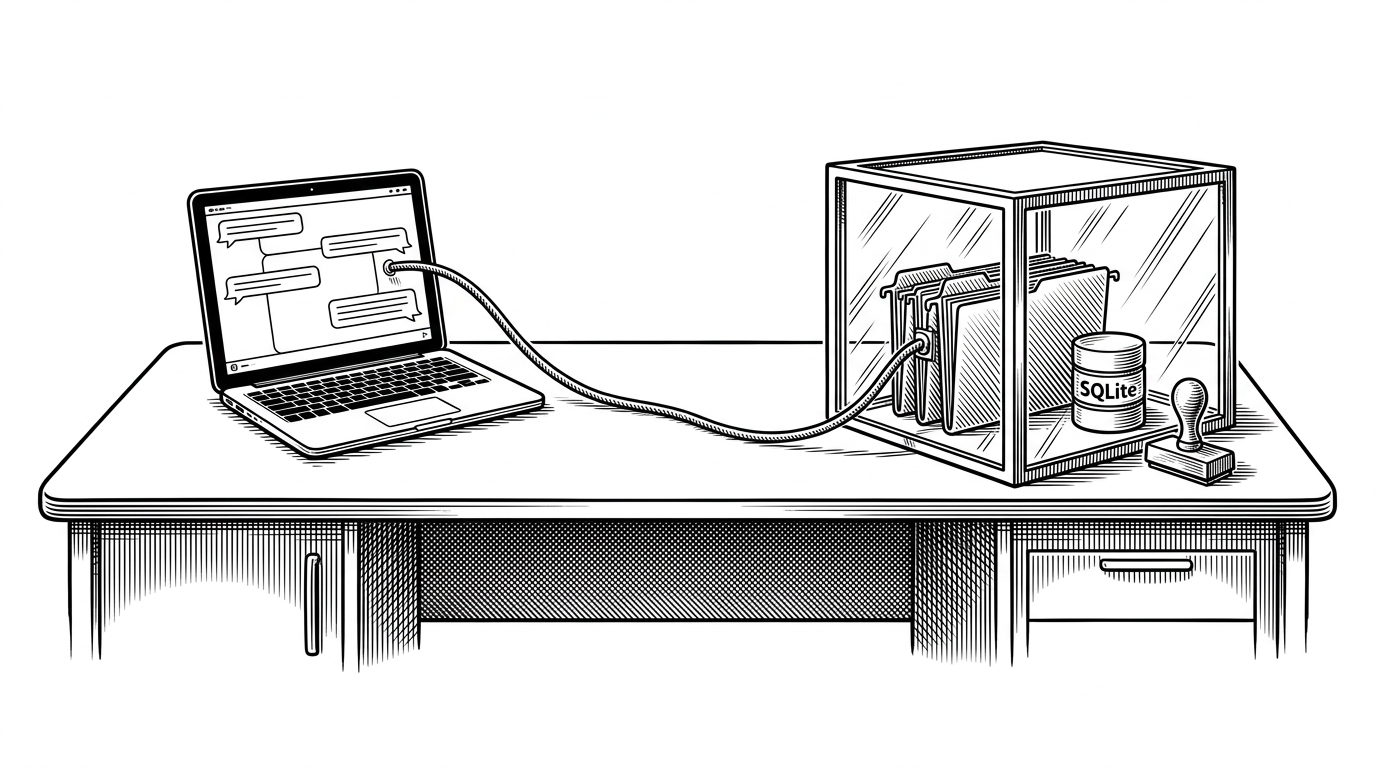
- Cove treats an AI thread like a durable local process, not a disposable chat response.
- Its warm pool turns Docker startup cost into a ready-to-serve substrate for agents.
- Markdown files and SQLite make the agent's memory inspectable, editable, and owned by the operator.
- The OpenAI-compatible API is only a bridge, while approvals keep local autonomy from becoming local chaos.
Most agent products start with the model and work backward. Cove starts with the workspace. The thread, the filesystem, the container, and the approval gate are the real product. The chat interface is just the front door.
That shift matters because it changes the unit of continuity. In a normal assistant, context lives in prompts and transcripts. In Cove, context lives in a local runtime that can sleep, wake up, and keep its shape.
Why Cove Feels More Like a Runtime Than a Chat App
Cove maps a conversation thread to a persistent session, then binds that session to a container and a host-side directory. The result is simple to describe and easy to miss: when you come back, you are not reconstructing an agent. You are re-entering one.
That makes the system feel closer to a small operating environment than a chatbot. The model is still central, but it no longer owns the whole experience. The runtime does.
The Session Is the Product
The simplest way to read the architecture is as a chain: thread_id to session to container to session file to SQLite. That chain is what makes a return visit meaningful. The agent does not rebuild its world from scratch each time.
This is also why the system is inspectable. The session is not hidden in a vendor blob. It is visible as a local object with a directory, a database record, and a running process attached to it.
How the Warm Pool Cheats Cold Start
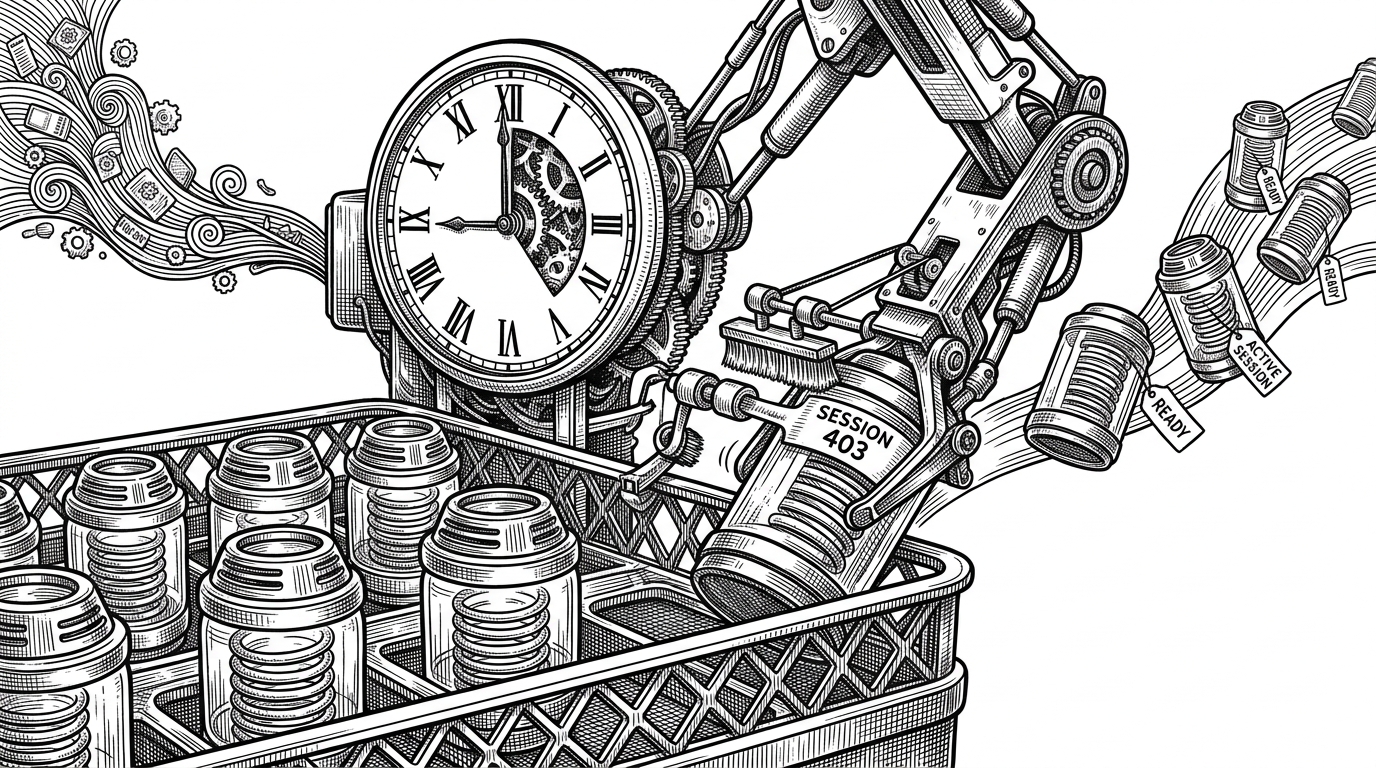
This is the move that makes Cove feel responsive. Instead of spawning a new container every time a session wakes up, it keeps a pool of ready ones on hand. When a request lands, a warm container can be adopted into the session quickly.
| Problem | Cold start model | Cove's warm pool |
|---|---|---|
| Latency on resume | Container startup slows the first turn | A pre-spawned container is already waiting |
| Session binding | A new process must be assembled | A running container is adopted into a named session |
| Operator experience | Feels like booting a tool | Feels like reopening a workspace |
| System cost | Every request pays setup overhead | Setup is amortized across ready capacity |
That design does not remove complexity. It just moves it to a place where the latency cost is predictable. For a local operator, that trade-off is often worth it because the first-token experience becomes usable instead of awkward.
Cove's Memory Is a Folder You Can Open
The memory layer is intentionally boring in the best way. Markdown-backed knowledge and SQLite persistence make the agent's state something you can open, edit, diff, and back up with normal tools. That is a much stronger story than a hidden memory service.
The important consequence is trust. If an agent remembers the wrong thing, you do not have to file a ticket into an opaque platform. You can inspect the file, change the note, and keep moving. Memory becomes a workspace artifact, not a mystery.
| Memory approach | What you can inspect | Who owns the edits |
|---|---|---|
| Opaque vendor memory | Usually nothing beyond chat history | The platform |
| Vector store behind an API | Index behavior, not the content shape | The application |
| Markdown plus SQLite | The actual notes and records | The operator |
That is especially appealing for developers who already think in files. A folder of Markdown is not fashionable. It is legible. And legibility is a feature when the thing doing the remembering can also execute commands.
The API Is a Bridge, Not the Brain
The OpenAI-compatible layer is useful because it lowers the adoption barrier. Existing clients can talk to Cove without learning a new shape. But that surface should not be mistaken for the architecture itself.
Under the hood, the proxy materializes transcript context, injects persona settings, and routes execution into the local session. The interface looks familiar. The execution model is the point.
Approvals Are the Real Safety Valve
Local autonomy sounds great until the agent gets shell access and starts acting faster than you can read. Cove answers that with an approval gate. It gives the human a chance to pause execution before a sensitive action lands.
That is the right instinct for this category. If you are going to give an agent a filesystem, credentials, and process-level reach, you need a governance layer that is lighter than policy theater and stronger than hope.
| Safety model | Strength | Weakness |
|---|---|---|
| No approvals | Fast and frictionless | Easy to regret |
| Manual review on every action | Very safe | Too slow for real work |
| Targeted approval gates | Balanced control | Still requires attention |
Cove is not trying to make danger disappear. It is trying to make danger visible enough that a single operator can manage it. That is a practical safety model, not a decorative one.
What Cove Replaces, and What It Does Not
Cove is a strong fit for people who want ownership of the agent's memory, workspace, and execution boundary. It is not trying to be the biggest cloud platform or the most abstract orchestration framework. It is optimizing for control, visibility, and local durability.
| Alternative | What it optimizes for | What Cove does differently |
|---|---|---|
| Hosted assistants | Convenience and managed infrastructure | Keeps state and execution local |
| Generic orchestration frameworks | Composable workflows | Makes the session itself durable |
| Ephemeral chat apps | Low-friction conversation | Turns a thread into a persistent process |
That makes the trade-off clear. Cove asks you to carry the operational burden of containers, SQLite, and approvals. In return, you get something far more interesting than a chat app: a local runtime you can understand, resume, and inspect.