Good Cop, Bad Cop: Unpacking openai/codex-plugin-cc
How an official OpenAI plugin turns Anthropic's terminal agent into an adversarial, multi-model workspace.
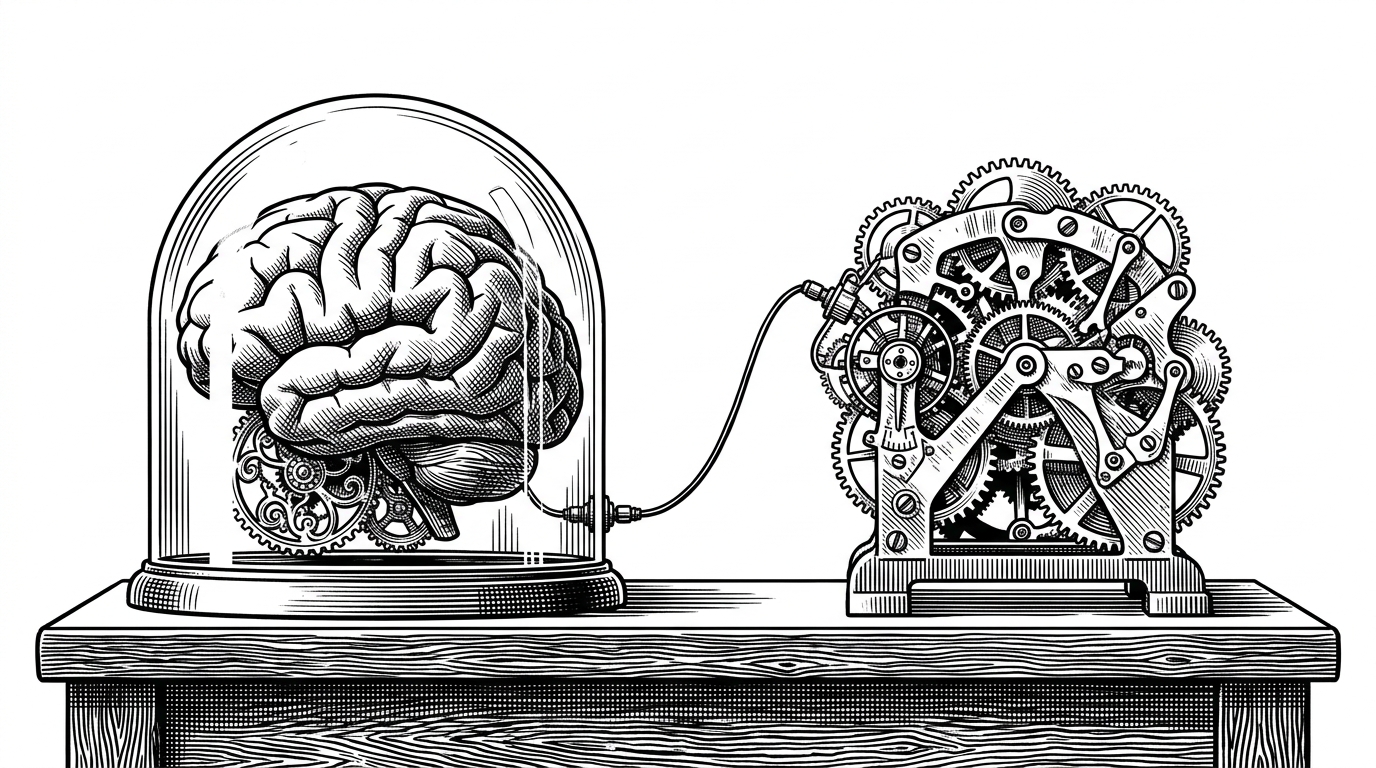

We love an open ecosystem and Codex should work with you wherever you are. Whether that's in our apps, in Xcode, JetBrains, OpenCode, Pi or even Claude Code.
- The Codex plugin introduces a Quality Gate that actively blocks developers from closing their terminal session if an adversarial model detects subpar code.
- A sophisticated JSON-RPC multiplexer manages concurrency, allowing two massive AI daemons to share local resources without locking up the user interface.
- The rescue protocol establishes a new meta-agent pattern where a generalist orchestrator delegates highly specific debugging tasks to a specialized subagent.
The Terminal Quality Gate
Imagine trying to exit your terminal, only to be blocked by an AI auditor. This is the visceral reality of the stop-review-gate-hook.mjs file. The plugin hooks directly into Claude Code's session lifecycle to intercept the exit command. It forces OpenAI's Codex to review the entire session's output before allowing the user to leave.
If Codex prepends a BLOCK: token to its assessment, the developer stays in the seat. This shifts the paradigm from AI as a pair programmer to AI as adversarial middle management. You are no longer just collaborating with an agent. You are answering to a second, competing model.
Orchestrating the Rivalry
Running two powerful AI agents locally creates massive concurrency issues. The solution lives in app-server-broker.mjs. The Broker acts as a traffic controller for a persistent Codex background process.
The system utilizes a JSON-RPC multiplexer. It tracks active requests and streams, immediately returning a BROKER_BUSY_RPC_CODE (-32001) if Claude attempts to interrupt an ongoing Codex operation. It switches between Unix Sockets on macOS and Linux, and Named Pipes on Windows, ensuring robust Inter-Process Communication (IPC) across all environments.
The Rescue Protocol
Delegation is the next frontier of agentic workflows. The /codex:rescue command formalizes this. When Claude struggles with a specific bug, it can hand off the broken codebase to a specialized Codex subagent.
State management within lib/state.mjs ensures these jobs persist. The background task runs quietly while the user continues working in Claude. The developer can check progress with /codex:status or pull the solution with /codex:result.
The Adversarial Advantage
Why run two models at all? The answer lies in the /codex:adversarial-review command. Standard AI code reviews hunt for syntax errors. The adversarial review is prompted specifically to attack design choices, hidden assumptions, and architectural tradeoffs.
No single model is perfect. By pitting Claude's long-context reasoning against Codex's implementation scrutiny, developers achieve a level of rigor previously reserved for senior engineering teams.
| Feature | Single-Agent Workflow | Adversarial Workflow (with Plugin) |
|---|---|---|
| Primary Function | Generation and Chat | Generation paired with strict Critique |
| Error Catching | Self-correction prompting | Cross-model auditing |
| IPC Overhead | None (Single Process) | Managed via Unix Sockets / Named Pipes |
| Quality Gate | Voluntary manual review | Hard terminal exit block |
/plugin marketplace add openai/codex-plugin-cc
/plugin install codex@openai-codex
/codex:setup