openai/gpt-oss-safeguard: The Moderation Model That Reads the Rulebook First
A new safety system treats policy as input, not an afterthought. That makes moderation more transparent, more adaptable, and much harder to mistake for a fixed classifier.

- gpt-oss-safeguard turns moderation into a policy-reading task, so the model evaluates content through rules that can change without retraining.
- Its real advantage is not harsher filtering, but faster policy iteration and a clearer audit trail for trust and safety teams.
- The Harmony format and the SP0 to SP4 policy ladder make the decision path legible, but they also add operational complexity.
- The model sits between keyword filters and custom classifiers, which makes it most useful when a platform needs different rules for different communities.
Moderation, but the policy comes first
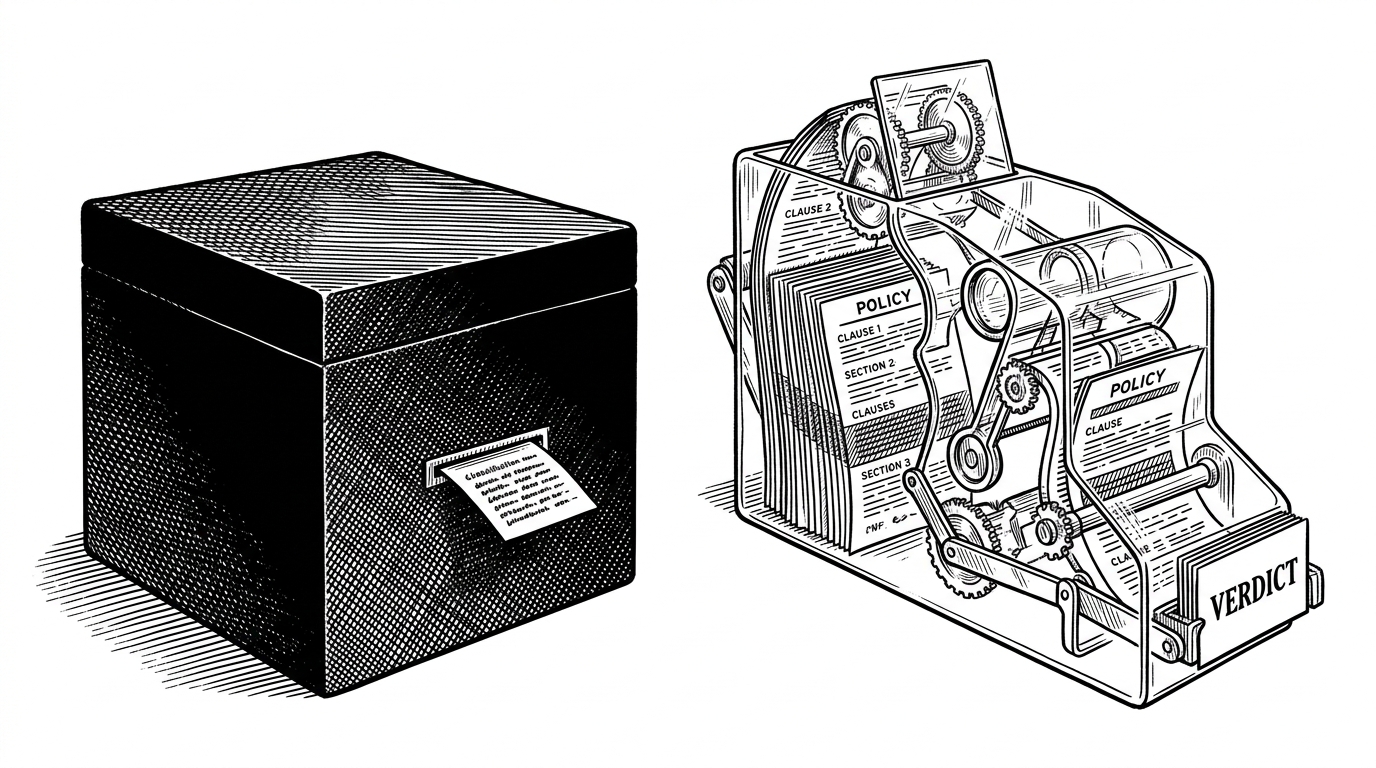
Most moderation systems start with an answer. This one starts with a rulebook. gpt-oss-safeguard reads a policy document and the content being judged at the same time, then reasons to a label instead of forcing every decision through a baked-in filter.
That subtle shift changes the product. OpenAI is not just shipping another safety classifier. It is shipping a way to make policy a runtime input, so a platform can swap rules without retraining the model or rewriting the stack.
Why this is a different kind of safety system
The appeal is not only flexibility. It is governance. A forum, a marketplace, and a game community can all use the same base model, then attach different standards for spam, harassment, cheating, or fake reviews. The rule changes live outside the weights, which makes them easier to audit and easier to revisit.
That matters because the repo is not trying to replace every moderation tool. It is trying to replace the rigid part of the stack with something more adaptable. The smaller 20B model is aimed at lighter deployment, while the larger 120B model gives teams more headroom when policy traffic is heavy.
How the model thinks through a policy
The mechanism is the story. The model takes two inputs, policy text and content, and emits a structured answer in Harmony format. That matters because the reasoning path is visible enough to inspect, while the final label still stays machine-readable.
- Depiction, or D, means the text is showing spam, abuse, or another harmful act.
- Request, or R, means the text is asking the model to produce that harmful act.
- If the policy is ambiguous, the model is told to step down one severity level.
The spam example makes the idea concrete. The policy separates depiction from request, so a post describing spam is not treated the same as a prompt asking for spam. If the case is fuzzy, the policy tells the model to move one severity level down, which pushes the system toward conservative but explainable decisions.

What changes when policy is not baked in
| System | Policy source | Output | Auditability | Customization | Best fit |
|---|---|---|---|---|---|
| gpt-oss-safeguard | Developer-written policy at inference time | Label plus reasoning trail | High | High | Teams that need policy control and reviewable decisions |
| Llama Guard | Policy baked into weights | Label | Medium | Low to medium | Open-weight moderation with a fixed policy set |
| GPT-4o moderation | Fixed OpenAI moderation policy | Label and category scores | Medium | Low | Managed moderation inside OpenAI's stack |
| Custom fine-tuned classifier | Training data and labels | Label | Low to medium | Medium | Narrow domains with stable rules |
| Keyword filters | Handwritten rules | Match or block | Low | High but brittle | Simple guardrails and obvious spam |
This is why the repo sits in a narrow but important slot. Keyword filters are cheap and blunt. Custom classifiers are tuned but rigid. gpt-oss-safeguard is slower and more operationally demanding than both, but it gives trust and safety teams a living rulebook instead of a frozen label space.
That trade-off makes sense when the policy itself is the product. If you need the same moderation logic to adapt across communities, languages, or business models, a policy reader is more useful than a one-shot classifier. If you need raw throughput and very low cost, the simpler tools still win.