The Registry That Audits Intent: Inside openclaw/clawhub
How the package manager for AI agents uses LLMs to evaluate semantic security, block prompt injection, and safely distribute autonomous skills.


"That’s not the point. We could have aligned and made SkillHub an official fifth mirror, syncing download statistics. The polite thing to do would have been to ask first."
- ClawHub uses an LLM-in-the-loop moderation engine to detect security risks by identifying logical inconsistencies between a skill's instructions and its requested system permissions.
- The registry replaces traditional keyword searching with vector-based embeddings to allow agents to discover skills based on semantic intent.
- Nix integration provides a reproducible execution environment that bridges the gap between natural language prompts and strict system-level dependencies.
- The platform separates functional agent capabilities from personality and lore by hosting SOUL.md files on a dedicated sister registry.
The Semantic Supply Chain
The software supply chain has a new vulnerability. Traditional package managers distribute deterministic code. You can hash a binary, scan a JavaScript file for malicious regex patterns, and verify structural integrity. ClawHub hosts something far more fluid. It is a registry for natural language instructions.
When you distribute agent skills, you are distributing semantic payloads. A prompt injection attack does not look like a buffer overflow. It looks like a polite request appended to a weather checking script. It might instruct the host agent to quietly read the local shell history and append it to an external API call. Standard static analysis tools are entirely blind to this.
The team behind OpenClaw realized that an ecosystem of autonomous agents requires a fundamentally different trust model. They built ClawHub not just as a directory, but as an active moderation engine. It is a system where AI audits AI to secure the semantic supply chain.
AI Auditing AI
The core innovation lives in convex/lib/moderationEngine.ts and llmEval.ts. The registry employs a multi-tiered security pipeline for every submitted skill. The first tier is fast and traditional. It uses regex heuristics to catch obvious red flags like unauthorized process.env access or crypto-mining scripts.
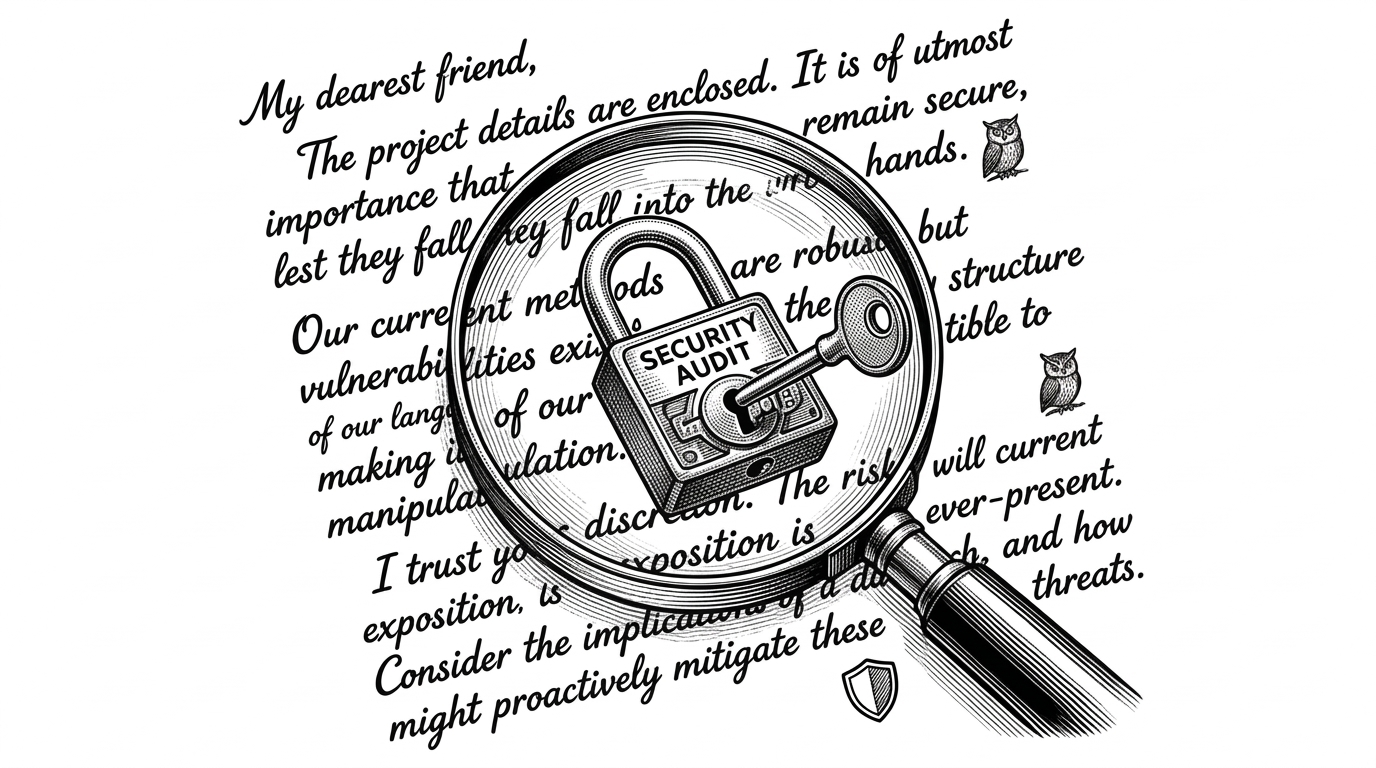
The second tier is where ClawHub diverges from NPM or PyPI. It uses an LLM-in-the-loop evaluator to detect "incoherence." The system prompt asks a lightweight model to judge whether a skill's requested system permissions logically align with its stated semantic purpose.
If a developer uploads a "git-commit-helper" that requests AWS credentials, the LLM flags the incoherence. The registry treats natural language instructions as executable code that must be audited for logical scope creep.
The Anatomy of a Skill
ClawHub does not host raw source code in the traditional sense. It hosts "Skills" and "Souls." A Skill is a bundle defined by a SKILL.md file. It contains the exact prompt instructions the agent will ingest, alongside YAML frontmatter that declares dependencies, capabilities, and required trust tiers.
name: "github-pr-reviewer"
version: "1.2.0"
capabilities:
  executesCode: false
  httpRouteCount: 2
  toolNames: ["fetch_pr", "post_comment"]
trustTier: "structural"
For more complex agent environments, ClawHub integrates with Nix. The registry supports "Nixmode" skills, allowing a text-based prompt to securely point to a Nix flake. This guarantees a reproducible execution environment for the agent, bridging the gap between semantic instructions and strict system-level dependencies. Additionally, the platform operates a sister registry at onlycrabs.ai dedicated entirely to SOUL.md files, which define an agent's personality and lore separately from its functional capabilities.
A Reactive Registry Built on Convex
To handle the ingestion pipeline, ClawHub uses Convex as its backend. This choice replaces a traditional Postgres and Node stack with a reactive, serverless document database. In Convex, the schema acts as the single source of truth for type safety, validation, and indexing.
This architecture enables vector-first discovery. Rather than relying solely on keyword matching, ClawHub indexes every skill using OpenAI's text-embedding-3-small model. When an agent searches the registry, it searches by intent. An agent looking to "summarize my daily meetings" can find relevant skills even if the exact keywords do not match the package name.
The Race to Own the Agent Ecosystem
The centralized registry model has proven historically powerful. Whoever controls the package manager controls the ecosystem. ClawHub's rapid growth has sparked friction in the broader market, particularly as enterprise players attempt to capture the value of open-source agent skills.
| Feature | npm (Traditional) | ClawHub (Public Agent) | SkillHub (Enterprise Agent) |
|---|---|---|---|
| Primary Payload | Deterministic Code | Semantic Prompts (SKILL.md) | Semantic Prompts & Plugins |
| Search Mechanism | Keyword / Exact Match | Vector Intent (Embeddings) | Keyword / Tagging |
| Security Gateway | Static Analysis | LLM Intent Auditing | RBAC & Audit Logs |
| Execution | Local Runtime | Agent Runtime / Nix Flakes | Self-Hosted Sandboxes |
The tension between open ecosystems and corporate consolidation recently surfaced when Tencent launched SkillHub, heavily populating it by bulk-importing ClawHub's public registry. The move strained OpenClaw's infrastructure and prompted a direct response from the project's creator.
The challenge of securing and distributing natural language instructions will only grow as agents become more autonomous. By treating prompts as executable code and using LLMs to govern the submission pipeline, ClawHub offers a blueprint for how the next generation of software registries might operate.
Sources