Packet_analyzer: The C++ DPI Engine That Turns Five-Tuple Hashing Into a Fast Path
A deep look at how this repository parses raw packets, tracks state per flow, extracts TLS SNI from encrypted traffic, and keeps every connection pinned to one worker thread.
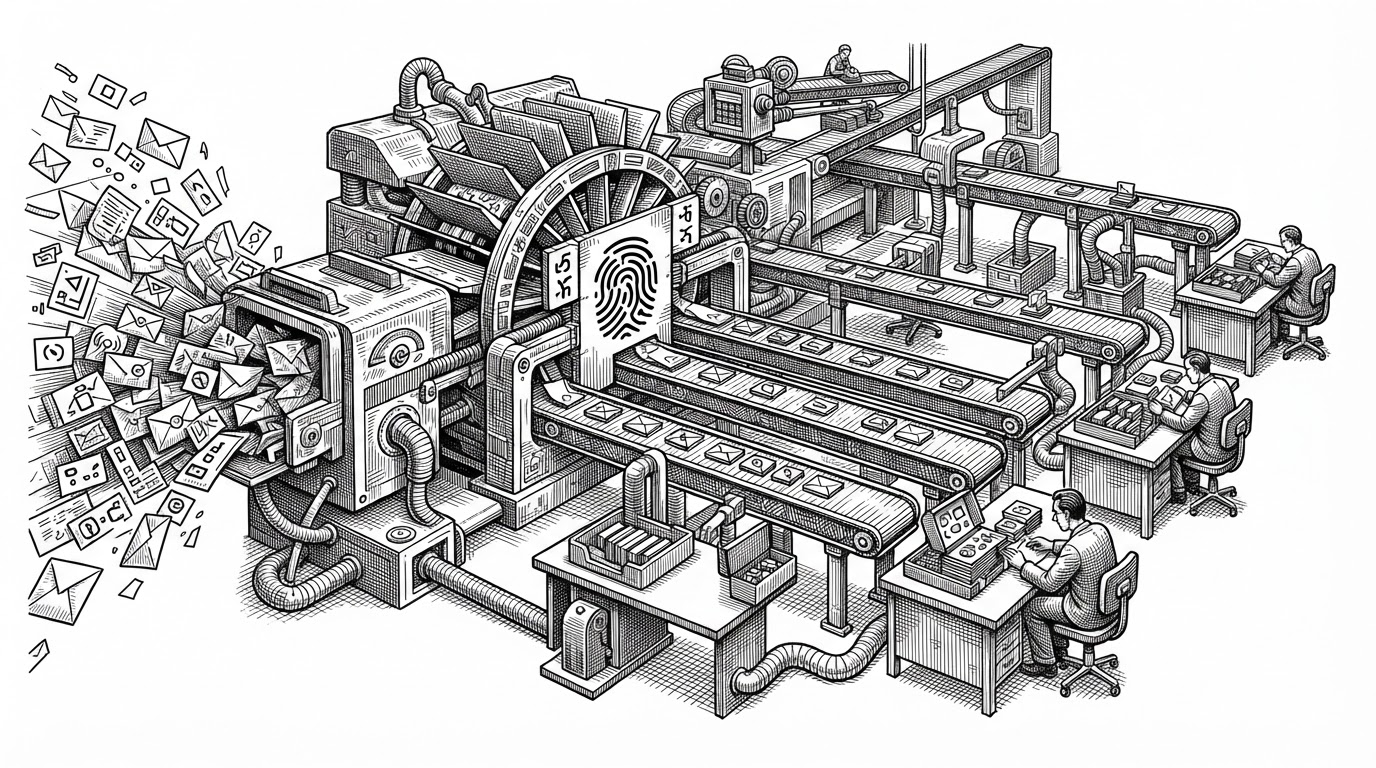
- Packet_analyzer makes deep packet inspection feel like a flow-routing problem, not a brute-force parsing problem.
- Its core performance trick is thread affinity: each five-tuple hashes to one worker, which keeps connection state local and avoids a global lock fight.
- The repo is most interesting where low-level protocol parsing meets concurrency design, especially in TLS SNI extraction and rule-based classification.
- It sits closer to a transparent teaching engine than a production IDS, which makes the architecture easier to read and reuse.
Why DPI Becomes a Flow-Distribution Problem
Deep packet inspection is only simple when packets are treated as independent. They are not. A flow remembers what came before, and memory is where concurrency gets expensive.
That is the clever move in Packet_analyzer: it does not just inspect packets, it decides where each packet should live. The unit of sharding is the connection, identified by the five-tuple of source IP, destination IP, source port, destination port, and protocol.
struct FiveTuple {
    uint32_t src_ip;
    uint32_t dst_ip;
    uint16_t src_port;
    uint16_t dst_port;
    uint8_t protocol;

    FiveTuple reverse() const {
        return {dst_ip, src_ip, dst_port, src_port, protocol};
    }
};
The Engine’s Core Shape: Reader, Load Balancer, Fast Path
The architecture is legible because it is strict. One reader ingests packets, a load balancer assigns them, fast-path workers inspect them, and an output writer emits the traffic that survives policy.
| Layer | Job | Why it matters |
|---|---|---|
| Reader | Pull raw packets from input | Keeps capture separate from inspection |
| Load balancer | Hash the five-tuple to a worker | Preserves thread affinity and flow state |
| Fast path | Parse, classify, and apply rules | Does the expensive work without central contention |
| Writer | Serialize allowed traffic | Makes the pipeline end in one predictable place |
This is not generic task scheduling. It is a network pipeline built around locality. Once a flow lands on one worker, the worker can keep a private connection tracker and make decisions without asking a global table for permission every time.
Five-Tuple Hashing Is the Secret Sauce
The five-tuple is enough to define a conversation, which makes it enough to define ownership. If packet A and packet B belong to the same flow, they should not wander across threads looking for the same state.
That is why FiveTuple::reverse() matters. Bidirectional traffic should collapse into one tracking record, not split into two half-flows that disagree about what stage the connection is in.
Flow key = hash(src_ip, dst_ip, src_port, dst_port, protocol)
Reverse key = hash(dst_ip, src_ip, dst_port, src_port, protocol)
Same connection state, same worker thread
The payoff is simplicity under load. Once the shard choice is deterministic, the rest of the engine can stay stateful without paying the usual cost of a shared connection table.

How the Engine Sees Through Encryption
Deep Packet Inspection (DPI) is a technology used to examine the contents of network packets as they pass through a checkpoint. Unlike simple firewalls that only look at packet headers (source/destination IP), DPI looks inside the packet payload.
The useful part is not that encryption is defeated. It is that encryption still leaves structure behind. TLS SNI gives the engine enough signal to recognize a domain class, which is often enough for policy, analytics, or coarse filtering.
That is a practical DPI lesson. You do not always need full decryption to make a useful decision. Sometimes the handshake metadata is the whole game.
The Parser: Raw Bytes, Nested Headers, Real Consequences
Under the hood, the parser has one job: turn a byte buffer into protocol structs fast enough that the rest of the pipeline can keep moving. That means Ethernet, IPv4, TCP, and higher-layer fields are handled manually rather than hidden behind a thick abstraction.
// Pseudocode shape of the parser flow
EthernetHeader* eth = reinterpret_cast<EthernetHeader*>(buffer);
IPv4Header* ip = reinterpret_cast<IPv4Header*>(buffer + ethernet_len);
TCPHeader* tcp = reinterpret_cast<TCPHeader*>(buffer + ethernet_len + ip_len);

// Then inspect payload for TLS or HTTP signals
This kind of code is unforgiving, but that is the point. If you want speed and control, you usually accept more protocol knowledge at the edge.
Rules, Wildcards, and Shared Locks
The policy layer is built for many readers and few writers. That is why a shared mutex makes sense: workers can check rules concurrently, while updates stay rare and controlled.
| Policy style | What it looks like | Trade-off |
|---|---|---|
| Exact match | Block one domain or IP | Simple and precise |
| Wildcard match | Block a family like *.facebook.com | Broader coverage, more careful rule checks |
| Shared-read access | Many workers consult the same rules | Fast reads, serialized updates |
The interesting part is the combination. Wildcards expand the policy surface, while thread-safe reads keep the fast path from slowing down every time a packet asks a question.
Where This Sits in the Open-Source Landscape
Packet_analyzer is not trying to be Wireshark, Suricata, or Scapy. It occupies a narrower and more teachable category: a transparent C++ implementation of the ideas behind high-speed DPI.
| Project | Language | Threading model | Best for |
|---|---|---|---|
| Packet_analyzer | C++17 | Reader plus worker pipeline | Learning flow-affine DPI design |
| Wireshark | C | Capture plus GUI analysis | Interactive protocol investigation |
| Suricata | C and Rust | Production multi-threaded IDS | High-volume detection and prevention |
| Scapy | Python | Mostly single-threaded | Flexible packet crafting and exploration |
That category matters. Production tools hide complexity because they have to. Educational engines expose it because the reader needs to see the trade-offs.
Why This Repo Feels Educational and Serious at Once
The maturity signals are real. CMake support, Windows setup notes, atomics, thread-safe queues, and multiple entry points all point to a project that understands systems boundaries, not just demo code.
At the same time, the code stays readable enough to teach from. That combination is rare. A lot of networking repos are either toy examples or opaque production systems. This one sits in the useful middle.