RubiksCubeSolver: The C++ Trick Is Not the Search, It’s the State
A close look at how this solver turns a cube into arrays, then bitboards, then a search engine that treats every move like a cheap register operation.
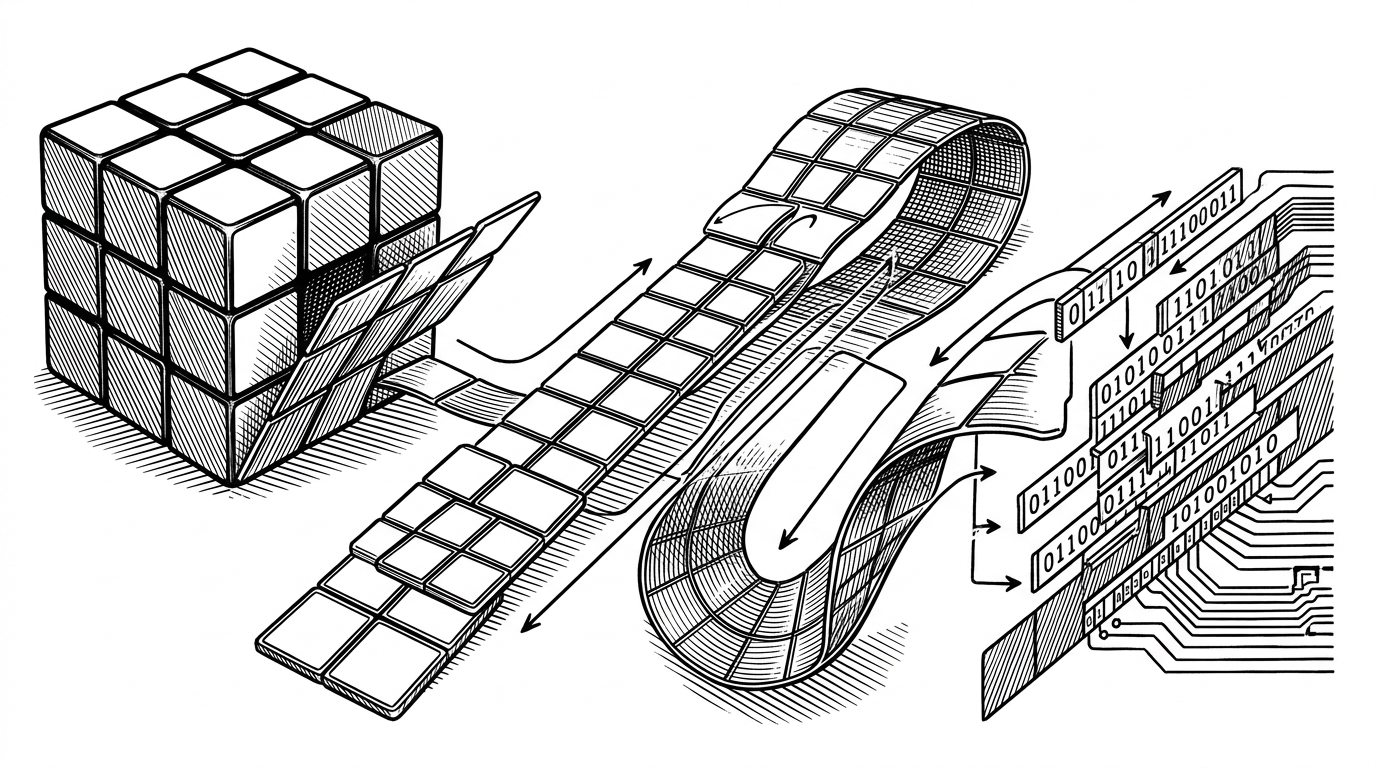
- This repository’s real advantage is not a cleverer search routine, but a cheaper way to represent every cube move.
- The codebase is a study in abstraction pressure, where 3D arrays, 1D arrays, and bitboards each buy a different kind of speed.
- Templates let the same solver logic run across multiple models, which keeps the architecture flexible without paying for virtual complexity in the hot path.
- Pattern databases turn IDA* from blind exploration into informed search by giving each state an immediate lower-bound estimate.
The most interesting thing about RubiksCubeSolver is not that it solves a cube. It is that it keeps asking a better question: what if the cost of a move were almost nothing? In a search problem, that is often the difference between a toy and an engine.
The repository treats the cube as a modeling problem first. That sounds abstract until you see the progression: a readable 3D array, a cache-friendlier 1D array, and then a bitboard where face turns collapse into shifts, masks, and wraps. Each step strips away a layer of overhead.
The Cube That Became a Bitboard
The 3D array model is the obvious place to start. It is easy to inspect, easy to debug, and easy to explain. But it is also expensive when the solver has to repeat the same operation millions of times.
// Conceptually: rotate a face by moving packed sticker bits
uint64_t side = bitboard[ind];
side = side >> (8 * 6);  // extract overflow
bitboard[ind] = (bitboard[ind] << 16) | side;  // shift and wrap
That tiny bit manipulation captures the project’s bias. Instead of shuffling individual stickers through nested loops, the bitboard version moves packed data with hardware-friendly operations. The cube is still a cube, but it behaves more like a register file than a grid.
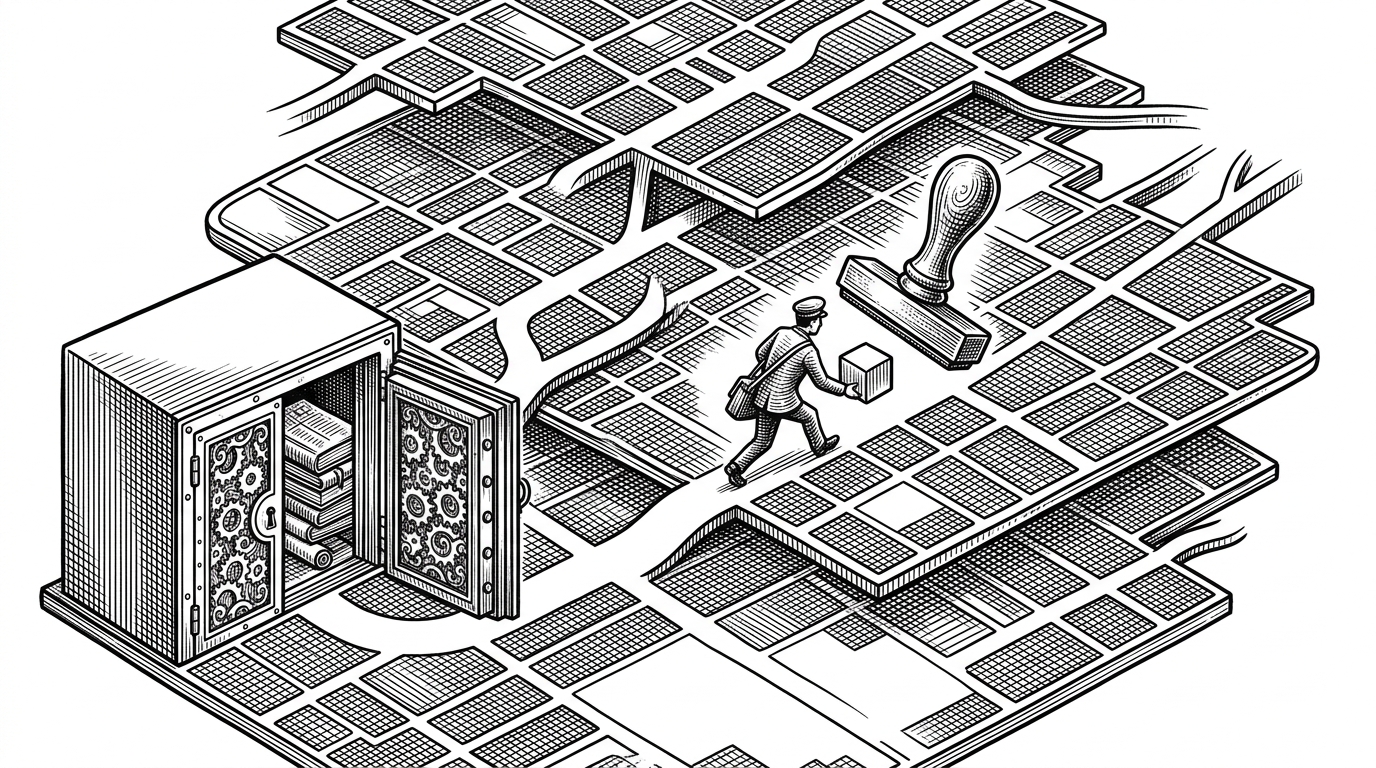
Three Ways to Store the Same Puzzle
The repository’s storage ladder is a clean lesson in trade-offs. The 3D array is the most legible, the 1D array improves locality, and the bitboard is the fastest once the representation is fully packed. None of these choices is cosmetic.
| Model | Strength | Cost | Best use |
|---|---|---|---|
| 3D array | Most intuitive to read and debug | Nested indexing and weaker locality | Teaching and validation |
| 1D array | Compact and cache-friendlier | Still moves bytes, not bits | Middle ground for solver code |
| Bitboard | Moves become masks and shifts | Harder to reason about by eye | Hot search loops and repeated turns |
That progression is what makes the codebase feel deliberate. It is not one clever data structure. It is an experiment in how far the same puzzle can be compressed before the search stops caring about the representation overhead.
One Solver, Many Cube Models
The solver layer is built to stay separate from storage. BFS, DFS, IDDFS, and IDA* are templated so they can work against different cube models without rewriting the search logic each time. That is a classic zero-cost abstraction move: keep the interface stable, swap the internals.
template <typename T, typename H>
class Solver {
public:
    // Works with any cube model that satisfies the contract
    std::vector<MOVE> solve(T cube);
};
That design matters because the hot path is the hot path. If the solver had to know whether it was talking to a 3D array or a bitboard, the abstraction would leak into the search itself. Here, the structure lets the algorithm stay focused on branches and depth, not on storage mechanics.
Why IDA* Needs Memory to Beat Brute Force
IDA* is the project’s payoff because it combines depth-first discipline with heuristic guidance. It does not just search harder. It searches with a lower bound on how far the cube still is from solved.
That lower bound comes from the pattern database. Instead of evaluating the full cube state every time, the solver looks up a precomputed distance for a subset of the problem, often corners. The result is blunt but powerful: whole branches can be rejected before they become expensive.
The Indexing Trick That Makes Heuristics Fast
The hard part is not storing the table. It is making every relevant cube configuration map to one stable address. That is what the indexing layer exists to do. A permutation indexer turns a corner arrangement into an integer, and that integer becomes an O(1) database lookup.
| Step | What happens | Why it matters |
|---|---|---|
| Permutation indexing | A corner configuration becomes a unique integer | The heuristic can be fetched instantly |
| Pattern database lookup | The integer points into a precomputed table | The solver gets a lower-bound estimate |
| IDA* pruning | Branches beyond the bound are skipped | Search effort drops sharply |
This is where the project becomes more than a brute-force solver. It is part data structure, part search theory, and part memory management. The cube is no longer just being manipulated. It is being recognized.
What This Project Is Really Teaching
The broader lesson is simple and useful. Performance often comes from moving work earlier, packing state tighter, and teaching the algorithm what not to do. In this repository, those ideas show up in the representation ladder, the template-based solver, and the pattern database pipeline.
That makes RubiksCubeSolver a strong C++ example even for people who do not care about cubes. It shows how a good engine is built: not by one breakthrough, but by a stack of small decisions that keep the CPU doing less useless work.