Awsome_AI_Agents: The Repo That Turns Agent Design Patterns Into Code
A cross-framework masterclass in reflection, planning, skill loading, and memory, showing how to build AI systems that behave like software, not prompts.
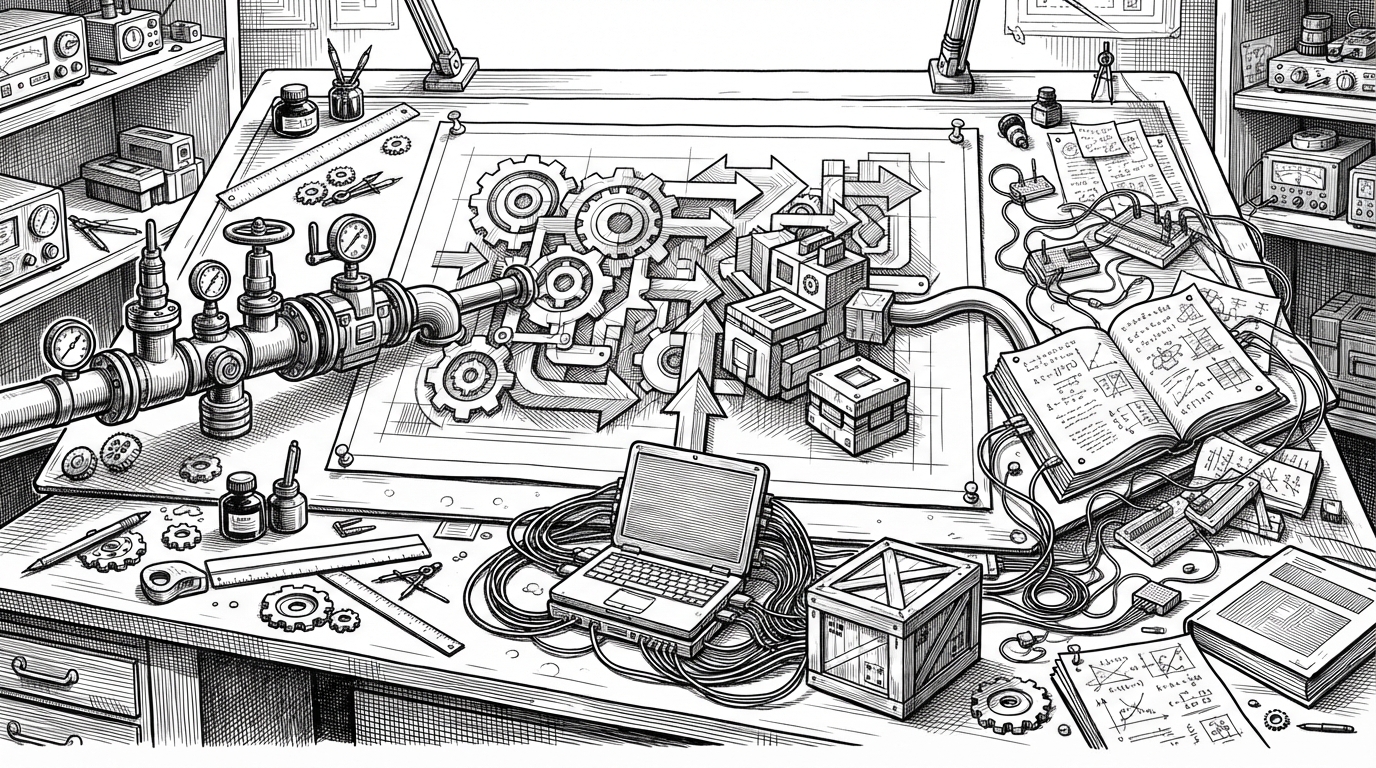
- Awsome_AI_Agents is less a gallery of demos than a pattern library for composing agent behavior into reusable software.
- Its most useful lesson is that reflection, planning, memory, and skills can be treated as modular system parts, not prompt trivia.
- The repo’s value grows because it shows the same ideas across ADK, Agno, Swarm, and AutoGen, which makes the abstractions feel portable.
- The strongest sections connect local reasoning and SaaS architecture, proving that agent design patterns can scale from notebook to production stack.
The real product is the pattern, not the prompt
The easiest mistake is to read Awsome_AI_Agents as a big folder of agent demos. That misses the point. The repo is really a curriculum for turning agent behavior into reusable software patterns.
That shift matters. Once you stop thinking in terms of a single clever prompt, the interesting design space opens up: reflection, planning, skill injection, memory, retrieval, and orchestration. The repository keeps showing those moves in different stacks until they stop feeling like tricks and start looking like engineering.
From fixed rules to self-correcting loops
The repo’s conceptual anchor is Agents_DesignPatterns.ipynb. It walks from a simple program to a responsive program to an AI agent, then lands on the pattern that makes everything click: a reflection loop.
That loop matters because it makes the model critique its own work, revise, and try again. In other words, the agent is not just generating. It is evaluating and correcting, which is a far more durable mental model than “ask a model a question.”
Skills are the new prompt variables
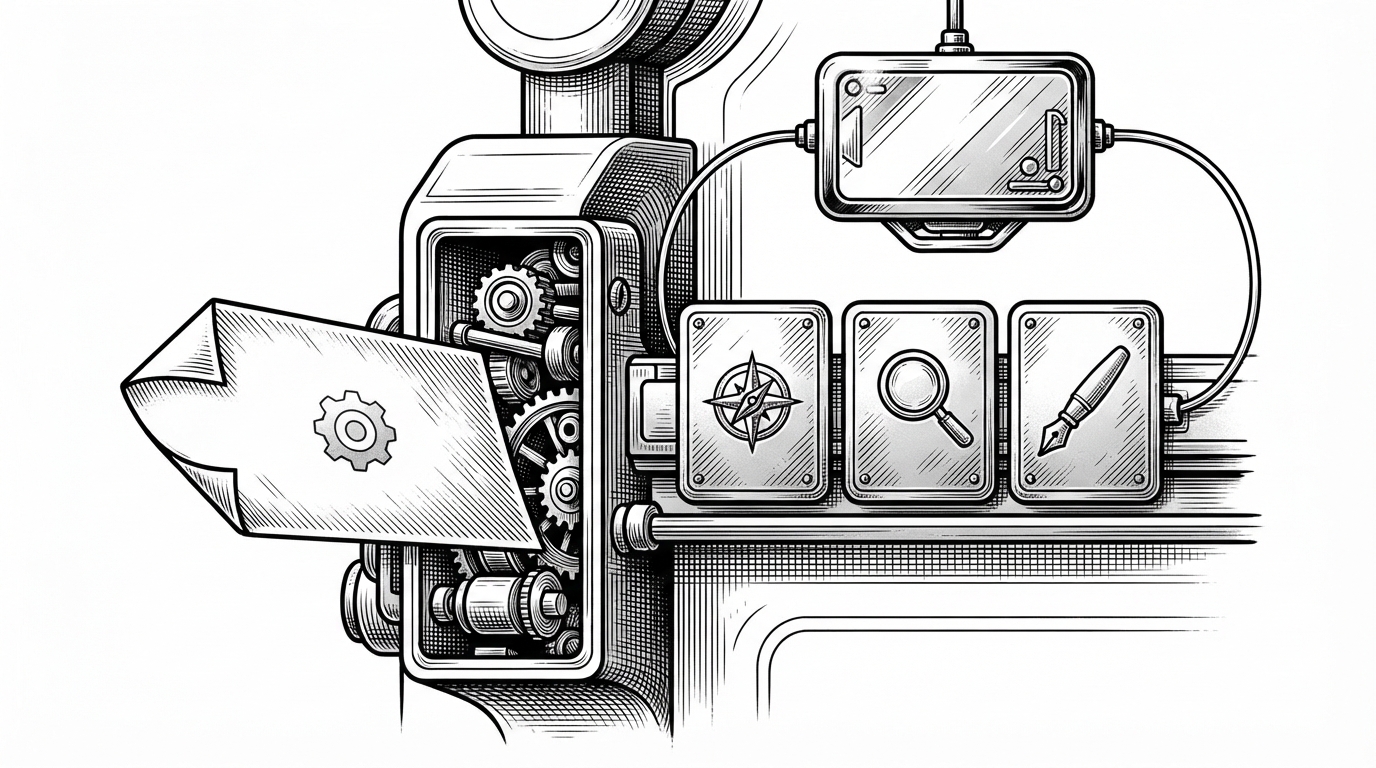
This is one of the repo’s smartest ideas. Instead of hardcoding every instruction as an ad hoc string, the code uses skill files such as SKILL.md and a loader like load_skill_instructions to inject behavior into agent prompts. That turns capability into a file you can edit, version, review, and reuse.
The effect is bigger than prompt hygiene. A skill file becomes a portable contract between intent and execution. It lets the planner, researcher, and writer share a common operating system while still specializing their behavior.
def load_skill_instructions(skill_path):
    with open(skill_path, "r", encoding="utf-8") as f:
        return f.read()

planner_prompt = base_prompt + "\n\n" + load_skill_instructions("skills/planner/SKILL.md")
writer_prompt = base_prompt + "\n\n" + load_skill_instructions("skills/writer/SKILL.md")

# The skill file is treated like an instruction module,
# not a one-off prompt string.
That is why the repo feels less like a notebook dump and more like a system design handbook. You can see the same pattern across roles, frameworks, and domains without losing the underlying logic.
If someone studies this repository carefully, they are not just learning prompts. They are learning how to build companies powered by agents.
The production stack under the hood
The ADK SaaS section is where the repo stops teaching by example and starts showing how to ship. The pipeline chains a planner, researcher, and writer. Around them sit the things production actually needs: auth, rate limiting, session state, and memory persistence.
| Layer | What it does | Why it matters |
|---|---|---|
| Planner | Breaks the task into steps | Creates structure before generation |
| Researcher | Collects supporting context and tool output | Reduces blind answering |
| Writer | Turns inputs into final prose or action | Separates synthesis from exploration |
| Memory store | Persists useful session knowledge | Makes the system improve across runs |
That separation of duties is the point. A single agent doing everything tends to blur intent, evidence, and style. A pipeline makes each stage legible, testable, and replaceable.
The repo also shows the difference between short-term and long-term memory. Session state handles the immediate conversation, while a persistent store can ingest finished work so later runs have more context than a blank slate.
Why local reasoning matters here
The local-agent examples are a useful corrective to cloud-first hype. In the Gemma and DeepSeek paths, the repo combines local models, ChromaDB retrieval, and a web-search fallback when the retrieval score is too weak.
That matters because it changes the product shape. The system can stay useful on modest hardware, degrade gracefully when retrieval is uncertain, and keep internal reasoning hidden from the user interface with a simple <think> filter.
| Approach | Strength | Trade-off |
|---|---|---|
| Cloud-first orchestration | Easier access to strong frontier models | Depends on external APIs and budget |
| Local RAG plus fallback | Lower cost and better control | More moving parts to tune |
| Pure prompt chat | Fast to prototype | Weak structure and poor reuse |
This is the repo at its most pragmatic. It does not treat model choice as the whole story. It treats retrieval, visibility, and fallback paths as part of the user experience.
Why this repo is not just another awesome list
Most awesome lists point outward. This one points inward, then outward. It gives you actual implementation patterns, then shows how those patterns map across ADK, Agno, Swarm, and AutoGen.
| Project type | What you get | What you do not get |
|---|---|---|
| Curated awesome list | Links and discovery | A working curriculum or architecture |
| Framework repo | A runtime and API surface | Domain-specific examples across stacks |
| Awsome_AI_Agents | Patterns plus implementations | A single narrow recipe |
That is why it stands out. It is educational, but it is not vague. It is practical, but it is not locked to one framework. It gives readers a reusable mental model and enough code to make the model real.