The Markdown Database: How clawchief Turns OpenClaw into a C-Suite Assistant
By rejecting vector databases and headless browsers in favor of cron jobs and local text files, this framework builds a reliable autonomous agent you can actually trust.
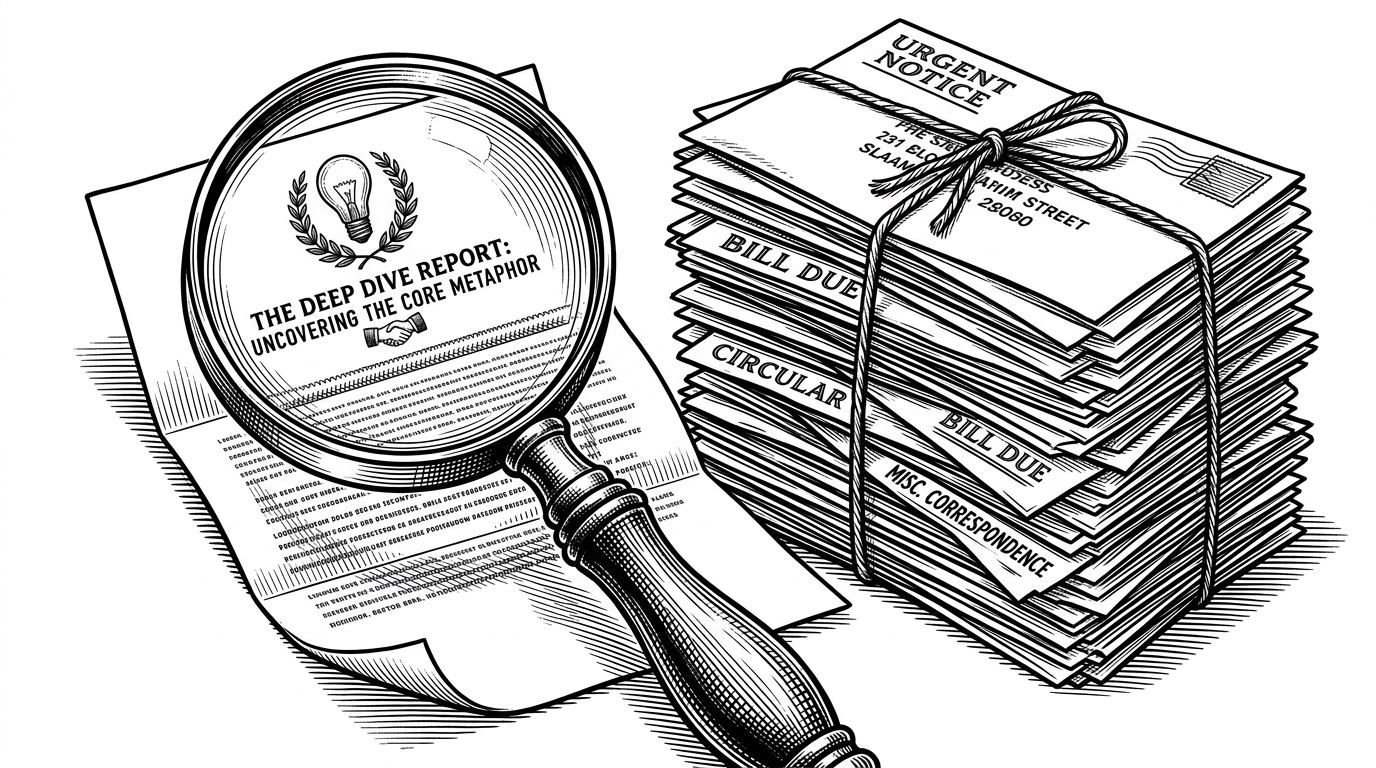 message-level search and thread-level metadata." data-prompt="Create an editorial illustration rendered entirely in black ink on a pure white background. The image depicts a close-up of a heavy brass magnifying glass focused entirely on a single, opened letter. Next to it sits a massive, messy stack of envelopes tied tightly together with thick twine, deliberately ignored. The artist uses tightly packed crosshatching lines layered at different angles to build up shadow and form, with clean open areas of white for highlights. The line work has the quality of a classic metal engraving, precise and deliberate, with varied line weights where bold contour lines define shapes and finer interior lines create tonal depth. The overall style evokes vintage newspaper editorial illustrations from The Economist or Wall Street Journal. No color, no gradients, no grey fills. Only black lines on white. The background MUST be pure white #FFFFFF. No paper texture, no cream, no off-white, no noise, no grain. Perfectly clean flat white background." loading="lazy">

Clawchief is designed to bridge the gap between a raw OpenClaw instance and a truly useful, high-level Chief of Staff agent. It pre-configures skills and workflows specifically for executive-level support.
- clawchief uses a single canonical Markdown file instead of a complex vector database for state management.
- The framework relies on precise CLI tools for data retrieval, bypassing the latency and brittleness of headless browser automation.
- A cron-driven heartbeat system transforms the agent from a reactive chatbot into a proactive, background process.
- Strict operational boundaries and human-in-the-loop escalation protocols are baked into the core skills.
The State Machine is Just a Text File
The AI industry loves complex architectures. Vector databases, sophisticated retrieval-augmented generation (RAG) pipelines, and distributed memory systems are the default for building agents. clawchief takes the exact opposite approach. It builds a highly capable "Chief of Staff" by relying on the most battle-tested, boring technology available: a single Markdown file.
Instead of abstracting state away into a database, clawchief forces the OpenClaw agent to read and edit workspace/tasks/current.md at the start of every turn. This file acts as the canonical source of truth. Moving a task from "Backlog" to "Today" isn't a database transaction; it's an atomic text replacement. The LLM must explicitly delete the old entry and write the new one. This manual implementation of state updates ensures total auditability. If you want to know what the agent is thinking, you just open a text file.
The Battle Against Thread Metadata
Building an autonomous agent for an executive requires solving specific, unglamorous problems. One of the most fascinating technical nuances in clawchief is its insistence on "message-level" search. The executive-assistant skill forces the agent to use the gog CLI to search Gmail messages rather than threads.
Generic AI agents often fail because they rely on thread summaries. When an LLM looks at thread metadata, it frequently misses crucial, nuanced inbound replies buried deep in a long email chain. By forcing message-level search via a strict CLI tool, clawchief bypasses this failure mode entirely. It also avoids the latency and brittleness of headless browser scraping, allowing the agent to "see" data as structured JSON.
The Autonomous Pulse
An assistant that only acts when commanded is just a glorified search engine. clawchief transforms OpenClaw into a proactive partner through a cron-driven heartbeat loop defined in HEARTBEAT.md.
This file is a prioritized decision tree. The agent wakes up, checks Gmail for urgent blockers, scans the calendar for upcoming meetings, and reviews the canonical task list. If the queue is empty, the agent is programmed to issue proactive "marketing nudges," actively pushing the user toward high-level goals instead of waiting passively.
Engineering Trust at the Boundary
Autonomy is dangerous without strict boundaries. The skills/ directory in clawchief functions as a set of Standard Operating Procedures (SOPs). The executive-assistant skill, for example, handles multi-calendar conflict resolution by checking up to six different calendars but only writing to one.
The framework uses Slack as the primary human-in-the-loop interface. The agent is instructed to be decisive but explicitly required to escalate when ambiguity or high stakes demand it. This creates a clear boundary, building trust through predictable behavior.
Constraint vs. Chaos
The difference between clawchief and open-ended agent frameworks like AutoGPT is the difference between a loom and a tangled ball of yarn. While open-ended agents rely on zero-shot prompting and often hallucinate actions, clawchief enforces strict constraints.
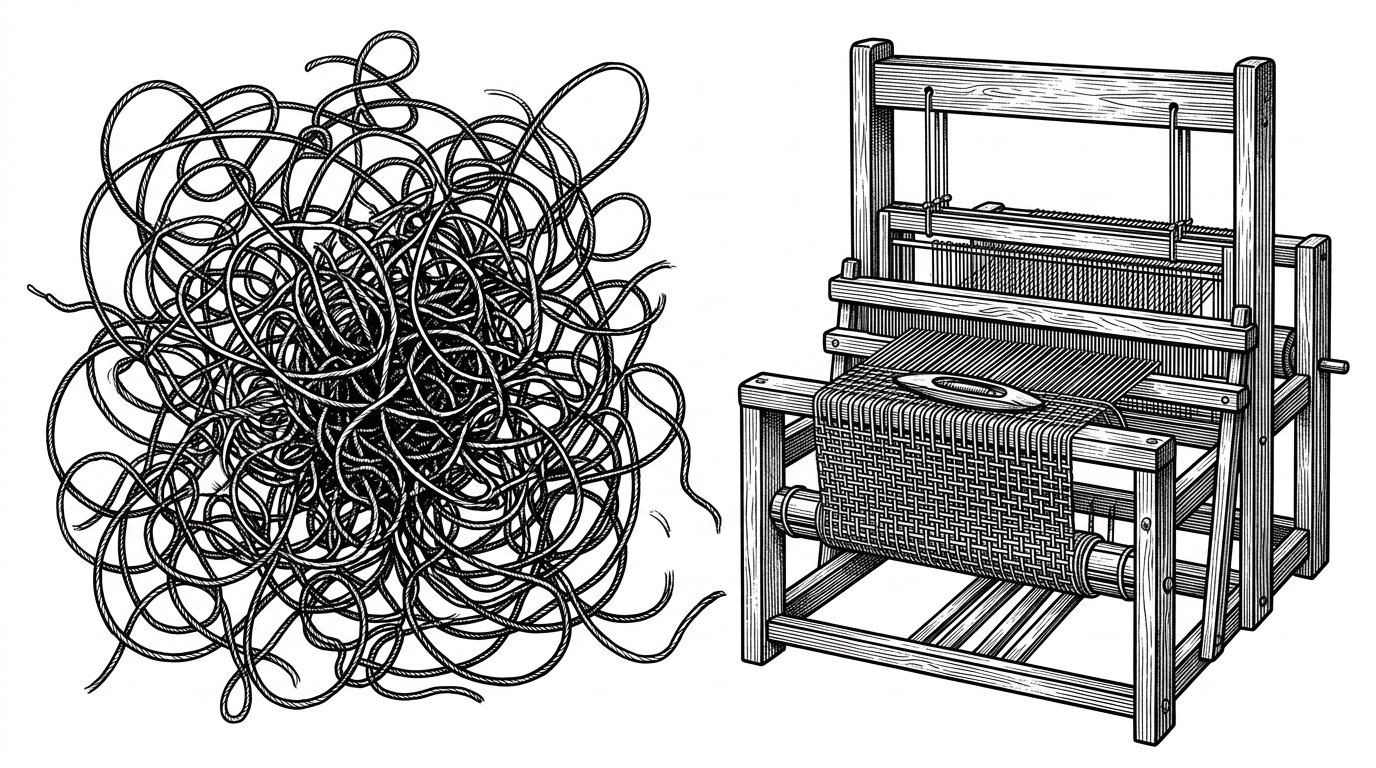
| Feature | Traditional Agents | clawchief Approach |
|---|---|---|
| Memory | Vector DB / RAG | Canonical current.md File |
| Data Access | Headless Browser Scraping | Structured CLI tools (gog) |
| Execution Loop | Open-ended, Reactive | Cron-triggered Heartbeat |
| Failure Mode | Hallucinated actions | Slack escalation |