awesome-onchain-agents: The Stack That Gives AI a Wallet, Permissions, and Reputation
A curated map of the standards, tools, and protocols that turn onchain agents from chatty scripts into economic actors.
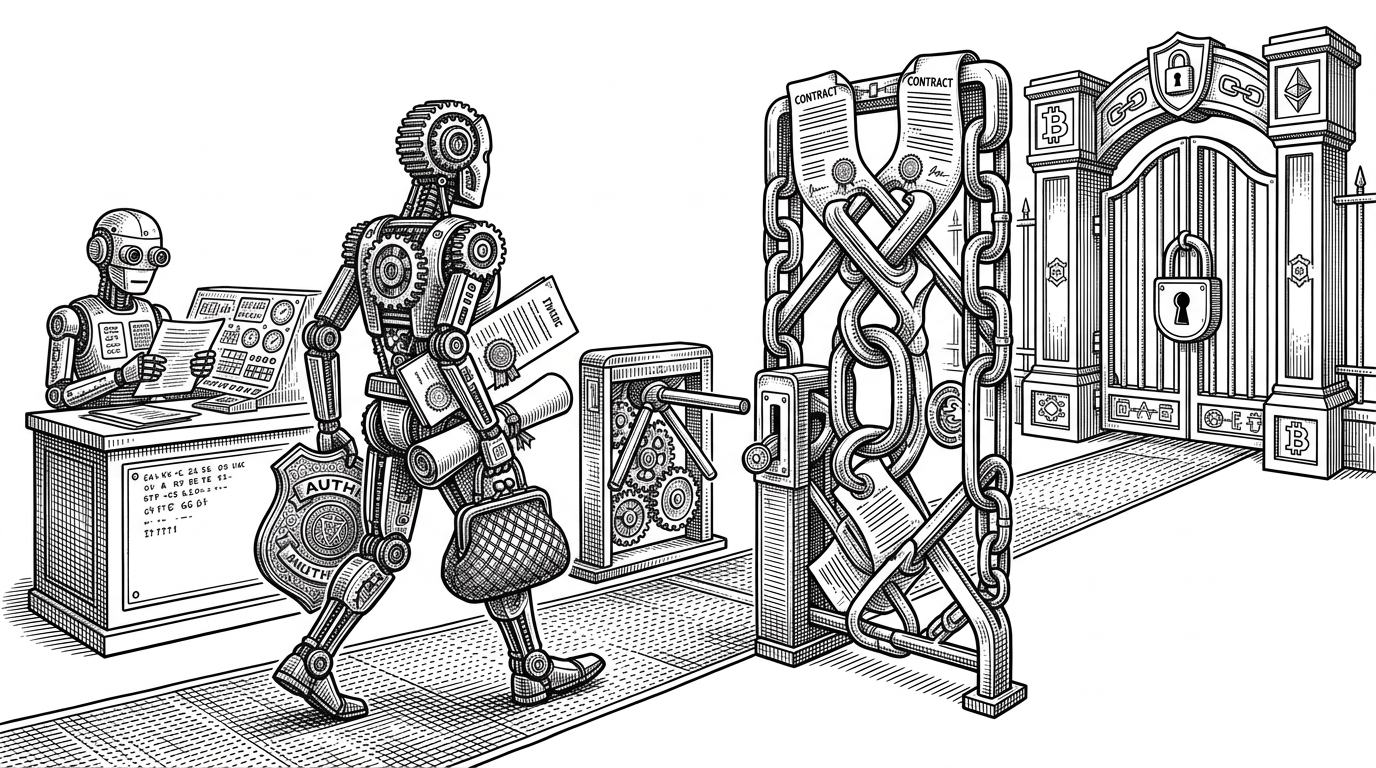
- The repo treats agent autonomy as an infrastructure problem, not a model problem.
- Its value is the way it stitches identity, delegated authority, and payment into a builder-ready map.
- MCP matters here because agents need a standardized way to perceive chain state before they can act on it.
- The list is narrower than generic agent catalogs because it focuses on trust, access, and execution.
Most AI agent lists stop at orchestration. sodofi/awesome-onchain-agents starts where the interesting failure modes begin: when software needs to prove who it is, ask for permission, pay for a resource, and leave an onchain trace.
The missing stack for agent autonomy
The hard part is not the model. It is the rails around it. This repository is useful because it maps the pieces that let an agent act like a participant in a system instead of a script that only talks about action.
A curated list of resources for building AI agents on Ethereum. For Ethereum-specific skills and knowledge, see Ethskills.
What awesome-onchain-agents actually curates
This is an awesome list, but it is not a junk drawer. The README separates frameworks, standards, MCP servers, developer tools, and examples, which makes the project read like a shipping guide rather than a bookmark folder.
README.md
  Frameworks
  Standards
  MCP servers
  Developer tools
  Examples

CONTRIBUTING.md
CODE_OF_CONDUCT.md
That shape matters. It says the ecosystem is no longer just about trying things out. It is about reducing the distance between a good idea and something a builder can actually ship.
Identity, permissions, and payments are the real breakthrough
The deepest insight in the repo is that onchain agents do not become interesting when they get better prompts. They become interesting when they can establish identity, receive bounded authority, and settle small transactions without a human signing every step.
Three standards capture that shift. ERC-8004 gives agents a trust and identity story. ERC-7710 makes delegation narrow enough to be safe. x402 lets a machine pay over HTTP when a service needs compensation.
- ERC-8004: identity and reputation for agents.
- ERC-7710: delegated permissions with bounded authority.
- x402: machine payments over HTTP 402.

That trio is the difference between a demo and a dependable system. A model can suggest an action. These rails decide whether the action is allowed, whether it can be paid for, and whether it can be trusted later.
MCP is the sensory layer
The list gives heavy weight to the Model Context Protocol because agents need a standard way to perceive the world before they can change it. MCP servers like eth-mcp and ens-mcp-server turn chain data, balances, and contract interfaces into something an agent can query without brittle custom glue.
That is the quiet unlock. Standard perception lowers the cost of building reliable action. Without it, every agent is forced to reinvent the same fragile adapters.
The agent transaction loop
Read the diagram as a sequence, not a pile of parts. The agent perceives through MCP, checks whether the requested action fits the delegated permission, pays if a service is involved, executes the onchain action, and then leaves behind a trust signal that can shape the next interaction.
That loop is why the repository matters. It is not documenting a single tool. It is mapping the contract between an autonomous system and the economic environment it wants to operate in.
Why this list is narrower, and better, than broader agent catalogs
General agent catalogs are useful if you want breadth. This repository is better if you want to understand the final mile. It is tuned for builders who care about trust, access, and execution, not just frameworks with nice demos.
| Repository | Primary focus | Identity | Delegated permissions | Machine payments | MCP | Distinctive value |
|---|---|---|---|---|---|---|
| sodofi/awesome-onchain-agents | Ethereum-native agent execution stack | Yes | Yes | Yes | Yes | A narrow map of the parts needed for safe autonomy. |
| 0xNyk/awesome-agent-cortex | Broader sovereign agent stack | Partial | Partial | Partial | Yes | Wider coverage of memory, observability, and adjacent infrastructure. |
| Generic AI agent list | General agent tooling | Rarely | Rarely | Rarely | Rarely | Good survey material, weak on trust and payments. |
That is the editorial choice this repo makes. It does not try to be exhaustive. It tries to be decisive, and that makes it more useful to builders who need to cross from clever automation into accountable action.
Who built this, and why curation matters
The value here is not just that someone collected links. It is that the maintainer imposed a thesis on a noisy space. The list favors infrastructure that changes what agents can do, which is a more demanding filter than simply tracking whatever is new.
That kind of curation matters because the space is crowded with prototypes that can talk convincingly but cannot safely transact. A good awesome list does not just record the ecosystem. It helps the ecosystem become legible.