openclaw-onchain-quickstart: The repo that teaches an agent to wire its own onchain stack
A prompt-first quickstart for building a chat-native onchain operator that reads docs, installs skills, and acts with guardrails.

- openclaw-onchain-quickstart treats setup as delegated work, so the first agent task is to become operational rather than to perform a transaction.
- OpenClaw acts as the body of the system while the model, wallet tooling, Telegram, and MCP servers stay modular and swappable.
- The soul file turns agent behavior into reviewable configuration, which is a bigger design move than a prompt tweak.
- The Coinbase wallet path trades some sovereignty for a safer baseline that is easier to reason about than a hand-rolled stack.
The agent sets itself up
Most quickstarts teach an agent what to do. This one teaches it how to become usable. The strange move in openclaw-onchain-quickstart is that setup is not a prelude. Setup is the job.
The repo asks an LLM to read docs, install the wallet skills it needs, connect a chat surface like Telegram, and only then start acting onchain. That changes the mental model. You are not writing a fixed integration. You are delegating the boot sequence to the agent itself.
The failure mode that bites everyone early: setting 300s for a task that involves cloning a repo, reading multiple files, writing a long document, and doing a git commit + push.
Why this quickstart exists
The value proposition is not blockchain theory. It is removing the blank-page problem between wanting a chat-native operator and having a safe path to one. Without a quickstart, the builder has to assemble prompts, wallet plumbing, identity hooks, chat transport, and environment setup at once.
This repo compresses that into one opinionated path. It gives the builder a working starting line for the parts that usually take the most time, then makes the agent responsible for learning the rest from documentation.
Brain, body, action
The architecture is clean enough to explain in one sentence. Claude or GPT-4 acts as the brain. OpenClaw is the body that turns tool use into action. Telegram, wallet tooling, ENS, ERC-8004, ERC-7710, and MCP servers are the surfaces it can reach.
- Brain: the model decides when to act and when to stop.
- Body: OpenClaw mediates tools, prompts, and state.
- Action: Telegram, wallet, identity, and MCP make the agent observable and useful.
The soul file is the real control surface
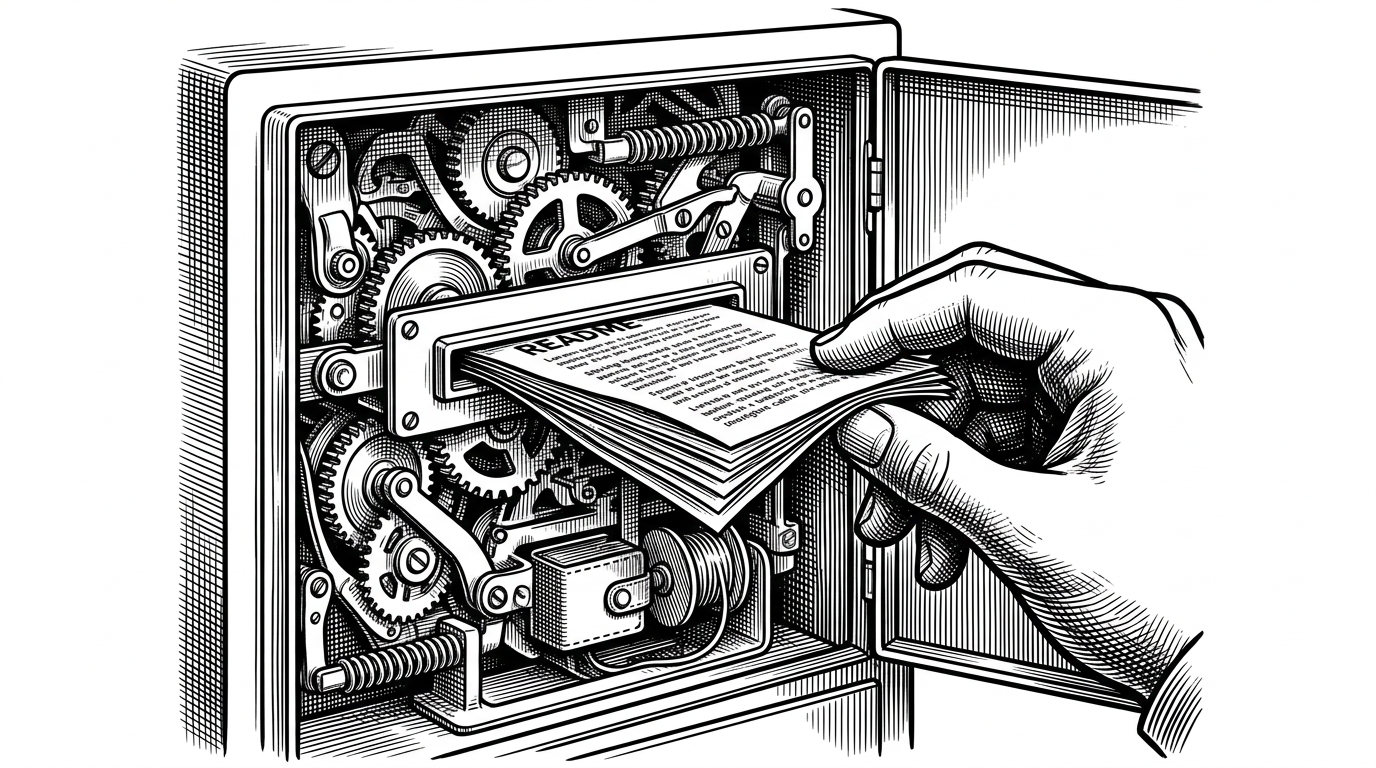
The repo's real control surface is not a Python class. It is the soul file. A markdown prompt can define identity, constraints, and escalation rules, which makes behavior portable and reviewable. That is a bigger deal than it sounds: it moves the most important design decisions out of code and into a file a team can inspect, diff, and tune.
# Identity
You are a chat-native onchain operator.

# Rules
- Read the docs before configuring tools.
- Install required wallet skills before taking action.
- Ask for confirmation before irreversible steps.
- Stop if a dependency is missing.
In practice, that makes the agent feel less like an application and more like a policy layer. The prompt is not decoration. It is the operating manual.
Safety is the point of the wallet choice
The repository leans on Coinbase Agentic Wallet and related skills because the wallet choice is part of the safety story. The trade-off is obvious. You give up some sovereignty and some custom control. In return, you get a path that is easier to reason about and less likely to expose secrets in logs or terminal output.
| Approach | Setup burden | Wallet safety | Autonomy level | Best fit | Main trade-off |
|---|---|---|---|---|---|
| Custom integration from scratch | Highest | Depends on the builder | Whatever you implement | Teams with deep infrastructure needs | Maximum control, maximum maintenance |
| Generic agent framework | Medium to high | Usually unopinionated | Flexible but not focused | Teams already standardizing on an agent stack | You still assemble the wallet and safety layers |
| openclaw-onchain-quickstart | Low to medium | Opinionated and safer by default | Bounded but useful | Builders who want a working baseline fast | You inherit the repo's choices |
What this replaces, and what it does not
This repo is not trying to be a universal onchain platform. It does not replace a full custody system, a bespoke risk engine, or a production agent framework with years of hardening. It replaces the part that usually takes the most time: the first credible baseline.
- Use it if you want a fast, opinionated baseline for a chat-native onchain operator.
- Use something else if you need full custody, custom transport, or a deeply tailored orchestration layer.
- Treat it as a scaffold, not a final destination.
That is the real appeal of openclaw-onchain-quickstart. It does not promise a universal answer. It gives you a narrow, working one, then pushes the agent to earn its own next steps.