Inside `sp2816/contract-intelligence-risk-scoring`: The Open-Source Contract Triage Engine That Scores Risk Clause by Clause
A legal-tech stack that does more than summarize. It extracts clauses, scores exposure, and keeps the evidence trail visible from OCR to dashboard.
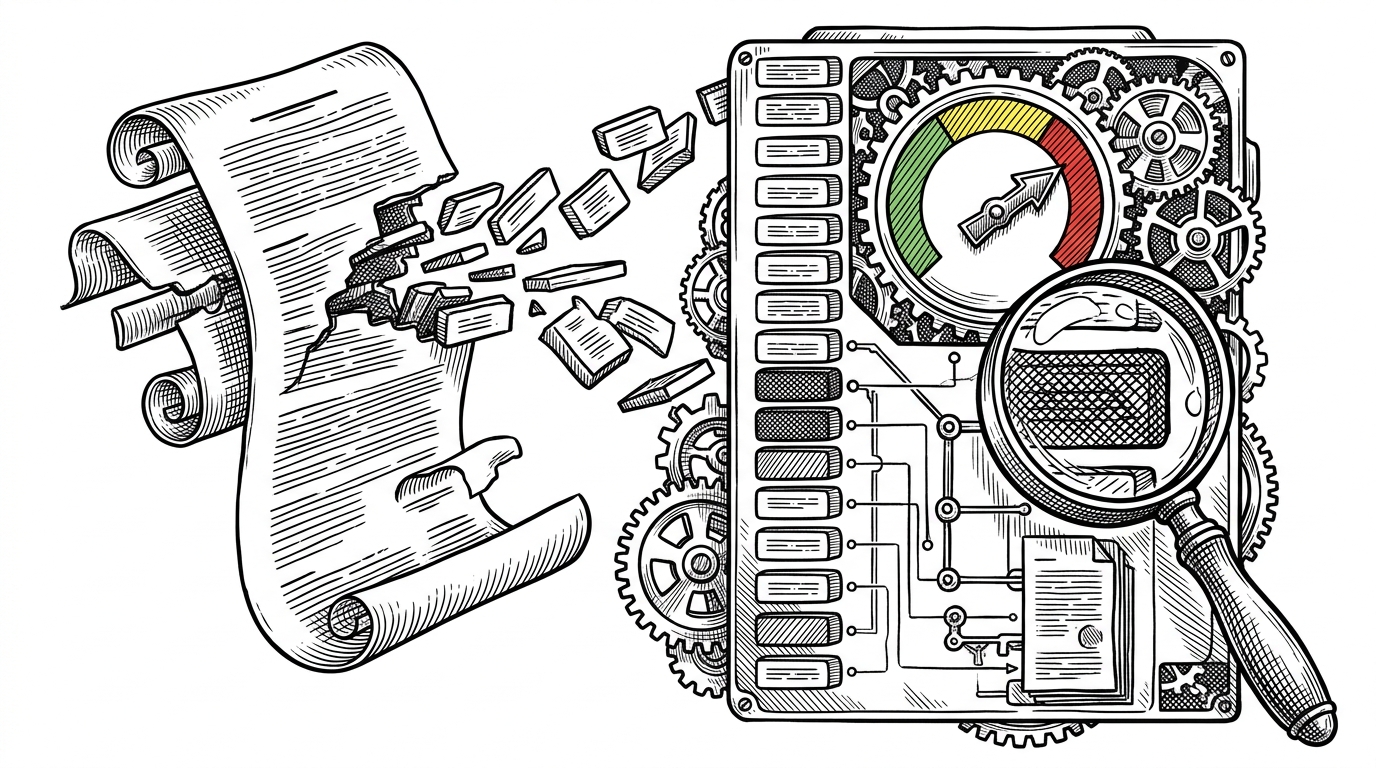
- This repo treats a contract as a structured evidence graph, not a blob of text, which makes risk visible at the clause level.
- Its most important product decision is explainability: the dashboard preserves the trail from document to extraction to score.
- The stack is built like an internal tool you can actually run, with Flask, SQLite, and schema auto-migration reducing setup friction.
- Its real niche is not generic legal chat. It is locally runnable contract triage with a data model that can support future RAG or review workflows.
Contracts Become Evidence, Not Just Text
Most contract AI tools start with a promise of speed. This one starts with a promise of structure. The interesting output is not a single summary sentence, but a chain of artifacts: the contract, its clauses, extracted entities, confidence scores, and an aggregated risk report.
That matters because legal review is not really about reading faster. It is about knowing what changed, what is missing, and why a specific sentence deserves attention. The repo is built around that reality, so the UI can point back to the underlying evidence instead of asking the reader to trust a black box.
The Data Model Is the Product
The architecture makes its intent obvious in the model layer. The repo is not storing files and hoping for magic later. It is storing the things a reviewer would actually need to inspect: contracts, clauses, entities, and a rollup report.
# Simplified shape of the core data model
class Contract:
    id: int
    filename: str
    risk_score: float
    status: str

class Clause:
    contract_id: int
    text: str
    confidence_score: float
    risk_level: str

class Entity:
    clause_id: int
    entity_type: str
    value: str

class RiskReport:
    contract_id: int
    high_risk_count: int
    medium_risk_count: int
    low_risk_count: int
That structure is what makes the deeper review experience possible. A high-risk flag is not just a label. It is attached to a clause, which can be tied back to extracted entities and displayed in context. For a legal reviewer, that is the difference between a demo and a tool.
| Layer | What it stores | Why it matters |
|---|---|---|
| Contract | File metadata and overall score | Provides the top-level object for the dashboard |
| Clause | Sentence or segment, plus confidence and risk | Makes the explanation trail specific |
| Entity | Names, terms, jurisdictions, and similar signals | Turns vague language into searchable facts |
| RiskReport | Aggregated counts and rollup metrics | Lets the UI present a decision-ready summary |
How a Document Moves Through the Pipeline
The pipeline is deliberately modular. The repo separates ingestion, text normalization, clause segmentation, entity extraction, classification, and aggregation. That is a practical design choice, not a research flourish.
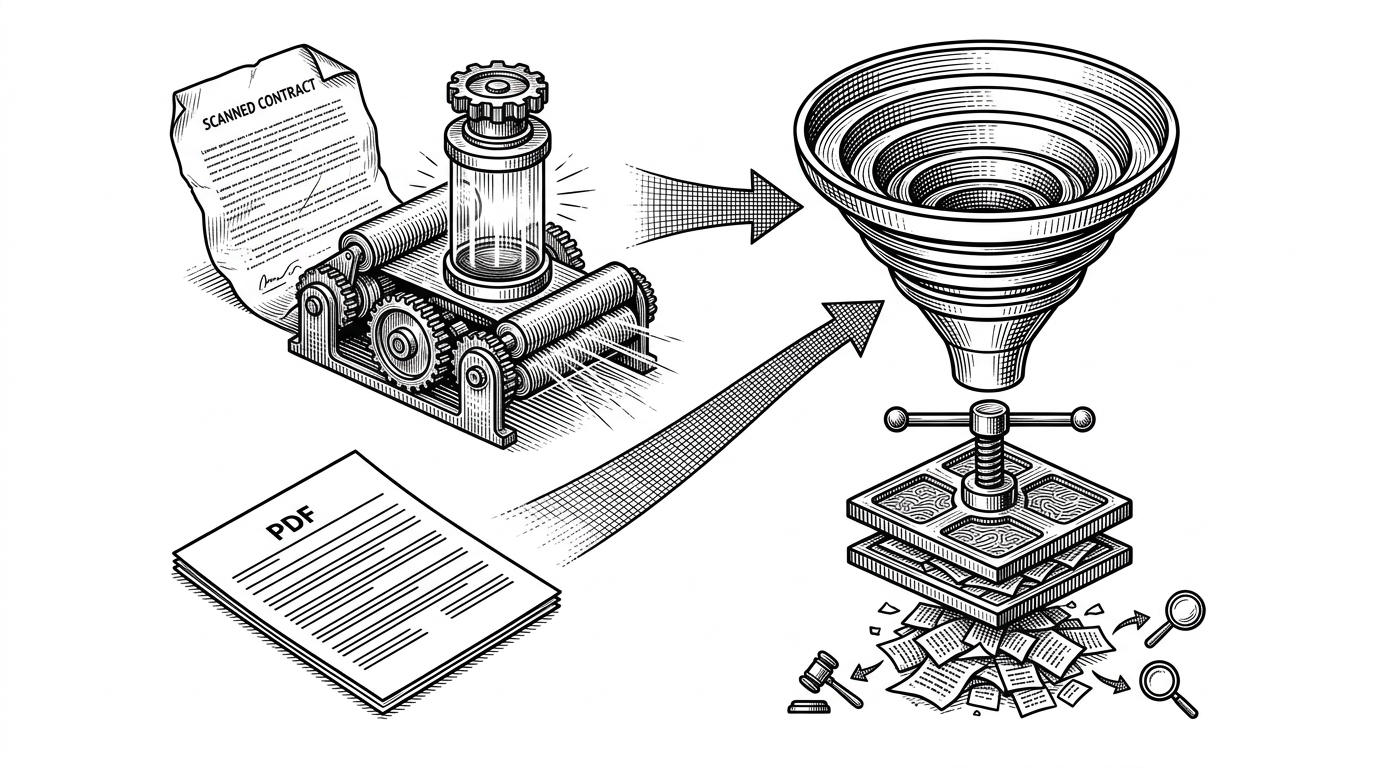
That hybrid path is important. Contract work is full of ugly input files, especially older scans and exhibits. A system that only works on clean text PDFs is fine for a prototype. A system that accepts both formats starts to feel like something an operations team could actually live with.
# Conceptual pipeline shape
contract -> detect_type()
         -> if scanned: ocr()
         -> normalize_text()
         -> extract_clauses()
         -> extract_entities()
         -> classify_clause_risk()
         -> aggregate_risk_report()
         -> render_dashboard()
Why the Mock Chatbot Matters
The chat layer is easy to dismiss because it is currently a mock. That misses the point. The response structure already assumes a future retrieval layer, which means the product is being shaped around structured contract objects rather than free-form prompting.
In practice, that is a better foundation than a chatbot-first design. The system can answer questions later because it has already organized the underlying evidence now. The mock layer is a placeholder, but it is a disciplined one.
The Least Glamorous Feature Is Also the Smartest
`auto_migrate_schema` is the kind of feature that rarely gets a headline and often gets a lot of gratitude. Instead of making contributors manage schema drift by hand, the app inspects the SQLite table definition at startup and adjusts the database to match the models.
def auto_migrate_schema(app):
    # inspect existing SQLite columns
    # compare with SQLAlchemy models
    # apply ALTER TABLE updates when needed
    pass
That choice says a lot about the repo’s priorities. It is trying to be low-friction, demoable, and easy to extend. In other words, it behaves like a product someone wants others to run, not just code someone wants others to admire.
Born-Digital PDFs, Scans, and the Real World
This is where the project becomes less tidy and more credible. Hybrid OCR support is not a nice-to-have in legal work. It is the difference between handling modern contracts and handling the actual archive of business reality.
A lot of document AI tools look impressive when the input is already pristine. The harder test is the one this repo seems to anticipate: faxed amendments, scanned exhibits, mixed-quality PDFs, and files that were never meant to be machine friendly in the first place.
Where It Sits in the Market
The competitive split is clear. Commercial CLM and contract intelligence platforms offer polished workflows, integrations, and enterprise support. Generic legal chatbots offer convenience. Open-source document analyzers often stop at extraction.
| Approach | Output | Explainability | Deployment | Best fit |
|---|---|---|---|---|
| Generic legal chatbot | Natural-language answers | Low to medium | Usually SaaS | Quick review assistance |
| Commercial CLM suite | Workflow automation plus analytics | Medium | Enterprise SaaS | Large legal and procurement teams |
| Open-source document analyzer | Extracted text or fields | Medium | Often self-hosted | Parsing and search |
| This repo | Clause-level risk scoring with evidence trail | High | Local-friendly Flask and SQLite | Builders, internal tools, and explainable triage |
The differentiator is not AI in the abstract. It is structured, traceable risk scoring in a stack that is easy to run locally. That combination is rarer than it should be.
What This Repo Is Really Optimized For
This is a builder’s legal-tech stack. It favors modularity over flash, explainability over mystique, and setup simplicity over enterprise ceremony. That makes it valuable as a reference implementation even if it is not yet a household name.
If you want a contract product that can justify its own warnings, this repo points in the right direction. It does not just tell you a clause is risky. It shows you the route the document took to get there.