tank-discord-bot: Packaging Discord bot expertise like software
Inside Tank’s security-first skill registry, where agent instructions become versioned, permissioned, and audit-ready instead of living as brittle prompt advice.
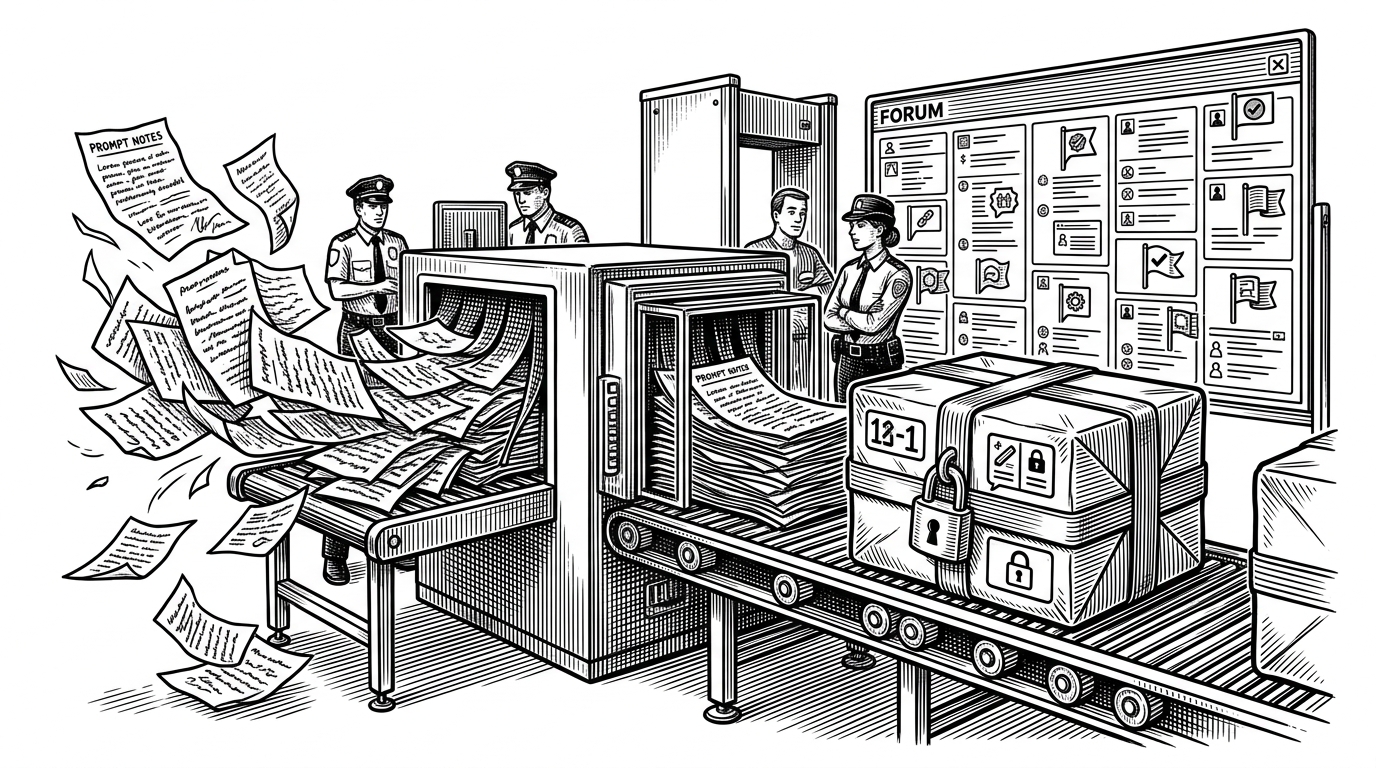
- Tank treats agent know-how as a packageable asset, so the important artifact is the skill registry, not the Discord bot surface.
- The repo turns fragile prompt advice into a trust model built on versioning, permissions, validation, and audit signals.
- Its Discord workflow is really community infrastructure, using routing, cooldowns, and solved-state moderation to preserve signal.
- The Go code is small but production-shaped, with panic recovery, structured logging, and fail-fast configuration baked in.
This is not a normal bot repo
tank-discord-bot reads like a Discord utility project, but that misses the point. The real story is that it sits at the edge of Tank’s skill ecosystem, where bot-building knowledge is treated like something you can package, version, and trust instead of something you keep in a prompt dump.
That framing matters because Discord bots are easy to demo and hard to operate well. Once a bot starts touching help channels, threads, tags, and user permissions, the real problem is not chat. It is control, reliability, and the ability to make the same thing happen the same way every time.
Tank's real product is trust
Tank describes itself as a security-first package manager for AI agent skills, and that is the useful lens here. Skills are reusable packages that teach agents how to perform tasks, but the old way of distributing them leaves out the boring parts that matter most: versioning, lockfiles, declared permissions, and security scanning.
That is why Tank feels more like infrastructure than a marketplace. It does not just hand out instructions. It adds a trust layer around them, then surfaces that trust as something an engineer can inspect before an agent installs or runs the skill.
The diagram is the thesis in miniature. A skill is not just text plus code. It is a published artifact that can be screened, pinned, and judged before it gets anywhere near an agent with broad authority.
What the Discord skill actually does
The bot side of the repo is straightforward in the best way. Slash commands like /skill and /docs give users a chat-native way to discover packages, search documentation, and pull the right reference material without leaving Discord.
The useful detail is in the behavior. /skill supports autocomplete, which makes the registry feel searchable instead of static. /docs uses a deferred response, which buys time for a slower lookup and then edits the answer when it is ready. That is a small UX choice, but it makes the bot feel deliberate rather than hurried.
The current implementation still uses a mock skills map, which makes the repo read like a production-shaped prototype. That is not a weakness here. It shows the seam where a real Tank API will plug in later, and it keeps the architecture visible instead of hiding it behind a finished product.
Why the forum workflow matters
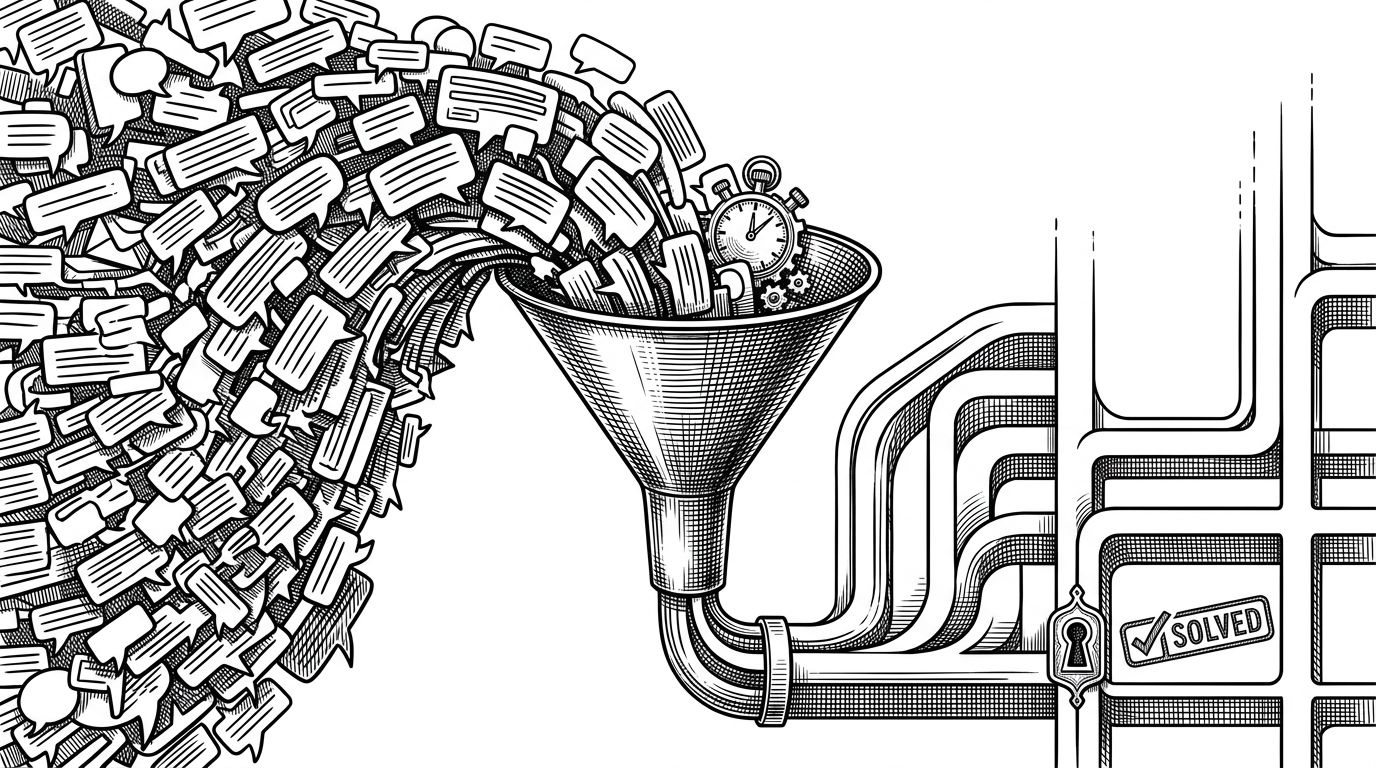
This is the most product-minded part of the repo. The bot watches for likely help requests in general chat, nudges people toward the help forum, and uses a cooldown so it does not become the thing it is trying to prevent. That is a signal-preservation strategy, not just automation.
The solved flow is even better. A reaction can mark a thread as solved only when the reactor is allowed to do it, which means the bot is not just annotating history. It is enforcing the community's rules about who can close the loop.
Why Tank beats prompt-only bot building
| Approach | What you get | Trust model | Reusability | Best for |
|---|---|---|---|---|
| Raw LLM prompt | A fast answer or draft bot idea | Whatever the prompt produces, usually unversioned and hard to verify | Low | One-off exploration |
| Tank skill | A versioned package of bot-building knowledge | Declared permissions, pinned versions, and security checks | High | Agents that need repeatable know-how |
| Prebuilt bot like OpenClaw | A finished bot application | The maintainer's codebase and configuration | Medium | Teams that want a ready-made bot |
That comparison is the cleanest way to place Tank in the market. It is not trying to replace a finished Discord bot, and it is not pretending a prompt is a product. It sits in the middle, where verified knowledge is more valuable than both improvisation and rigidity.
The small code choices that make it production-shaped
The codebase has a few choices that tell you it was written with failure in mind. The panic recovery wrapper around Discord handlers is the most important one, because Discord event handlers run in separate goroutines and one bad panic should not take the whole bot down.
The rest of the shape is equally practical. Structured logging with slog, environment-based config that fails fast when required values are missing, Dockerized deployment, and a non-root container user all point to the same thing: this is infrastructure for a community, not a toy.
That matters because support bots are only useful when they are boringly reliable. If they disappear, crash, or silently miss events, they stop being helpers and start being another source of confusion.
Tank's deeper bet is easy to miss at first glance. It is saying that agent capabilities should be distributed the way serious software is distributed: with versioning, permissions, validation, and a clear path from package to runtime behavior. The Discord bot is just the proof that the model works.