SharedMoments: The Self-Hosted Social App That Treats Memory Like Infrastructure
A private Flask platform for couples, families, and friends that swaps surveillance for passkeys, local AI, and a design built to survive upgrades, migrations, and long-lived use.
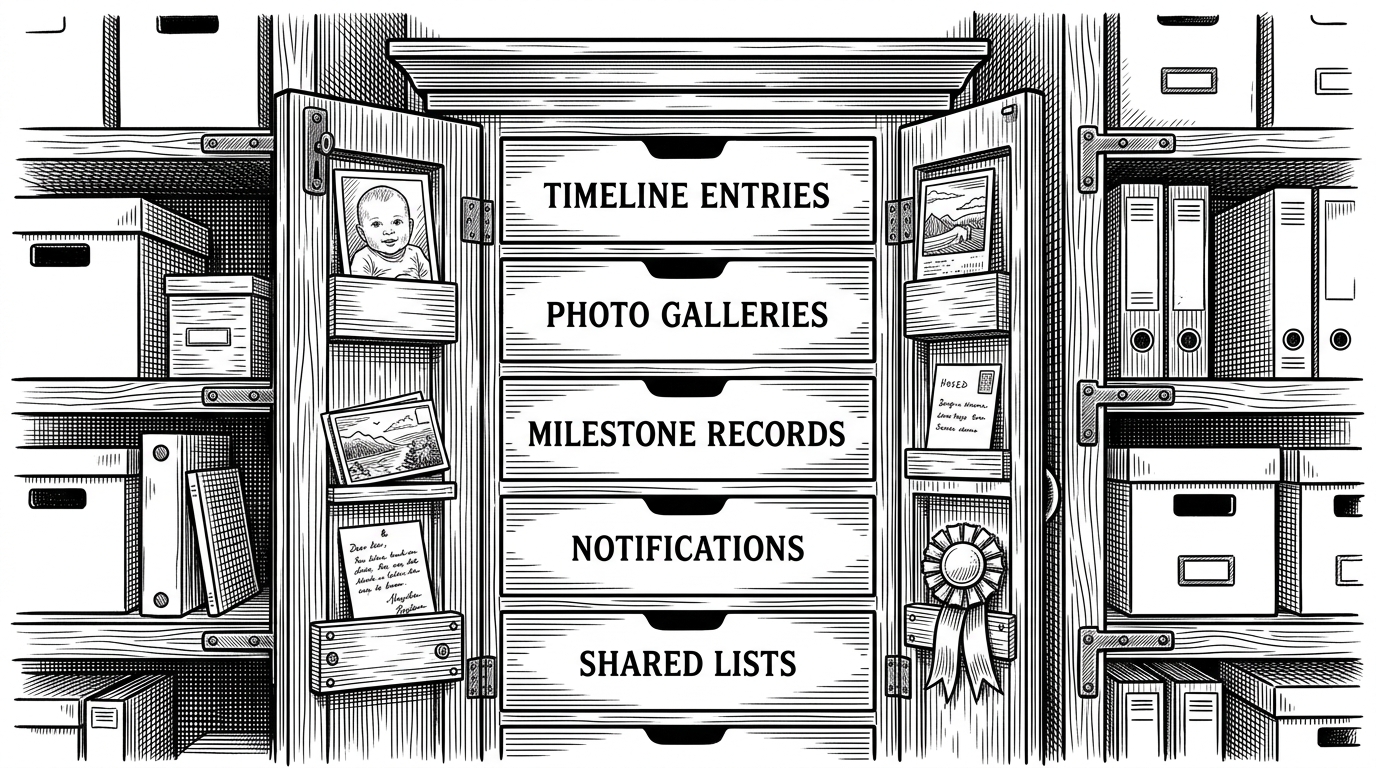
- SharedMoments treats private social memory as infrastructure, so the product story is really about ownership, persistence, and trust.
- Its architecture is tuned for small-group self-hosting, with Flask, SSR templates, SQLite, Docker, and security features that assume the operator is also the caretaker.
- The Edition system is the most original product move, because one codebase can feel like different apps for couples, families, and friends without duplicating the core.
- Local AI, passkeys, and migration gates are not extras here, they are the mechanisms that make a durable private social system feel practical.
What SharedMoments Is Really Building
SharedMoments is not trying to win the attention economy. It is trying to preserve the parts of life that usually get trapped inside apps you do not control. That changes the design brief completely: the goal is not reach, but continuity.
The repo reads like someone built a private social system from first principles. It keeps the familiar objects, a feed, a gallery, milestones, notifications, but rejects the cloud dependence, surveillance incentives, and one-size-fits-all assumptions of mainstream platforms.
Why Private Social Software Is Harder Than It Looks
A private app has to do more than hide content behind a login. It needs strong identity, safe recovery, portable deployment, and a way to survive upgrades without corrupting the archive. In other words, privacy is an architecture, not a setting.
| Dimension | Mainstream social apps | SharedMoments |
|---|---|---|
| Data model | Public by default, optimized for growth | Private by default, optimized for intimate groups |
| Business logic | Engagement and extraction | Ownership and preservation |
| Identity | Account recovery supports scale | Identity has to work for a small household or friend group |
| Deployment | Cloud-first and outsourced | Self-hosted and operator-controlled |
| Longevity | Content can be ephemeral or platform-bound | Memory is treated as a durable system |
That difference sounds philosophical until you run the software. Once a family is depending on it for photos, milestones, and shared history, the hard problems are no longer features. They are data safety, migrations, and whether the system can be trusted next year.
The Architecture That Keeps It Self-Hosted
The core stack is straightforward on purpose. Python 3.12, Flask, Jinja2 server-side rendering, SQLAlchemy, SQLite in v2, Docker, shell scripts for native installs, and a modular route structure. Nothing here is accidental. The entire setup points toward a system that a small owner can run and understand.
The interesting part is the lifecycle. Startup is not just booting a web server. The app syncs schema, checks edition settings, and can launch background migration work so the interface stays responsive while the dangerous steps happen off the main request path.
| Layer | What it does | Why it matters |
|---|---|---|
| Flask routes | Split auth, pages, admin, and API into blueprints | Keeps the app understandable as it grows |
| Jinja2 SSR | Renders the interface on the server | Reduces frontend complexity and makes deployment simpler |
| SQLite v2 | Stores the private archive locally | Makes self-hosting lighter and more predictable |
| Docker and scripts | Package and update the app consistently | Gives operators a repeatable way to run it |
| Migration gate | Blocks unsafe traffic during upgrades | Protects data and avoids half-finished states |
The Best Trick: Edition as a Product Layer
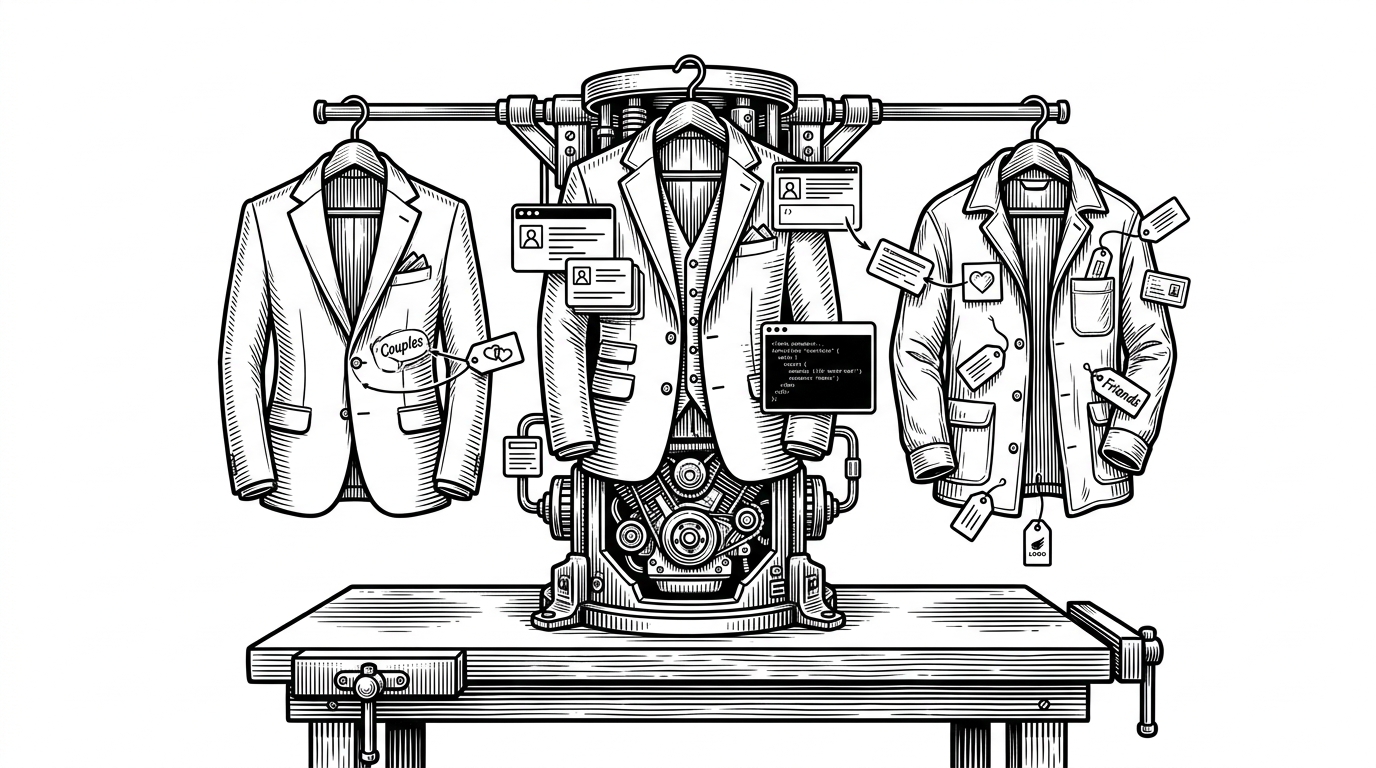
This is the sharpest product idea in the repo. The Edition pattern lets one system feel appropriate to different social groups without fragmenting the codebase into separate apps. The backend stays stable, but the social context changes the user experience.
| Edition | What changes | What stays shared |
|---|---|---|
| Couples | Tone, labels, and emphasis skew toward intimacy | Auth, database, and core app logic |
| Family | Milestones and shared memory become more prominent | Storage, permissions, and migration behavior |
| Friends | Social updates and group flow feel more lightweight | Security, PWA support, and backend structure |
That matters because product design often overestimates how much software needs to be different, and underestimates how much context can be enough. SharedMoments seems to understand that a family archive and a couple’s timeline do not need separate engines. They need different surfaces on the same trustworthy core.
How SharedMoments Avoids Lock-In During Startup and Migration
The migration story is a good test of seriousness. The app does not treat version changes like a hidden maintenance detail. It detects transitional states, blocks unsafe traffic, and routes users through a progress experience while the system finishes the work in the background.
That design choice is easy to miss, but it is one of the reasons the project feels durable. A private archive only stays private if upgrades do not become panic events. The migration gate is how the app protects trust when the codebase changes under it.
# Conceptual flow from the repository
if migration_needed:
    start_background_thread(check_and_run_migration)
    redirect_user_to_migration_progress()
else:
    continue_normal_request_handling()
There is a similar sensibility in the admin tooling. A `manage.py` backdoor for listing users or resetting passwords sounds mundane, but it is exactly the kind of sysadmin-friendly escape hatch that prevents a self-hosted system from locking its owner out of their own data.
Identity, Passkeys, and Why JWT-in-Cookies Matters
Authentication is where private software either feels trustworthy or brittle. SharedMoments uses bcrypt for passwords, JWTs in HTTP-only cookies, and WebAuthn passkeys. That mix suggests a design that wants both security and usability without pushing the operator into enterprise complexity.
| Approach | Strength | Trade-off |
|---|---|---|
| Passwords only | Simple and familiar | Weak recovery and weaker resilience |
| JWT in cookies | Cleaner session handling for a web app | Requires careful cookie security |
| Passkeys | Passwordless login with strong phishing resistance | Needs compatible devices and browser support |
The interesting part is not that these tools exist. It is that they are combined in a self-hosted environment where the user might be a family organizer, not a security team. That means authentication has to protect real people while staying understandable enough to administer at home.
Local AI Is the Ethos Made Visible
SharedMoments also supports OpenAI, Anthropic, and Ollama. That matters because the AI layer is not treated as a novelty. It is another place where the privacy model can either hold or collapse.
| AI option | Data path | Why it fits |
|---|---|---|
| Cloud AI | Content may leave the machine | Convenient, but less aligned with local trust |
| Local Ollama | Inference stays on owned hardware | Matches the app’s self-hosted privacy stance |
| Hybrid support | Operators can choose per deployment | Keeps the system flexible without forcing one policy |
The local option is the one that changes the story. Once memory descriptions or content assistance can happen on the user’s own hardware, the app stops being just a private storage layer and starts becoming a private intelligence layer.
Why the App Feels Built for Decades, Not Launch Day
The timeline and milestone features matter because they make longevity visible. This is not just a place to dump photos. It is a structured record of a relationship, a household, or a friendship group, with enough shape to survive being revisited years later.
The PWA support strengthens that same thesis. A family app should open naturally on a phone, behave consistently on desktop, and avoid the friction of app-store dependency. That is the kind of small operational choice that turns a tool into a habit.
SharedMoments in the Self-Hosted Landscape
SharedMoments sits in a narrow but meaningful niche. It is not a generic file locker, not a public social network, and not a broad productivity suite. It is a private social memory system, which makes its design constraints unusually specific and unusually interesting.
| Category | What it optimizes for | Where SharedMoments fits |
|---|---|---|
| Mainstream social platforms | Discovery and engagement | It rejects this model entirely |
| Generic self-hosted apps | Storage or publishing | It goes further into relationship-centered UX |
| Personal media tools | Photos and backups | It adds identity, timeline, and social context |
That distinction is the whole point. The repo is compelling because it treats intimacy as a software problem worth solving with the same care people usually reserve for scale. It feels less like a startup product and more like an heirloom system.