PDF_to_Podcast_Generator Turns PDFs Into a Two-Voice Audio Pipeline
A Streamlit app that preserves document structure, scripts a conversational episode, and pushes the result through fast LLM summarization and neural text-to-speech.
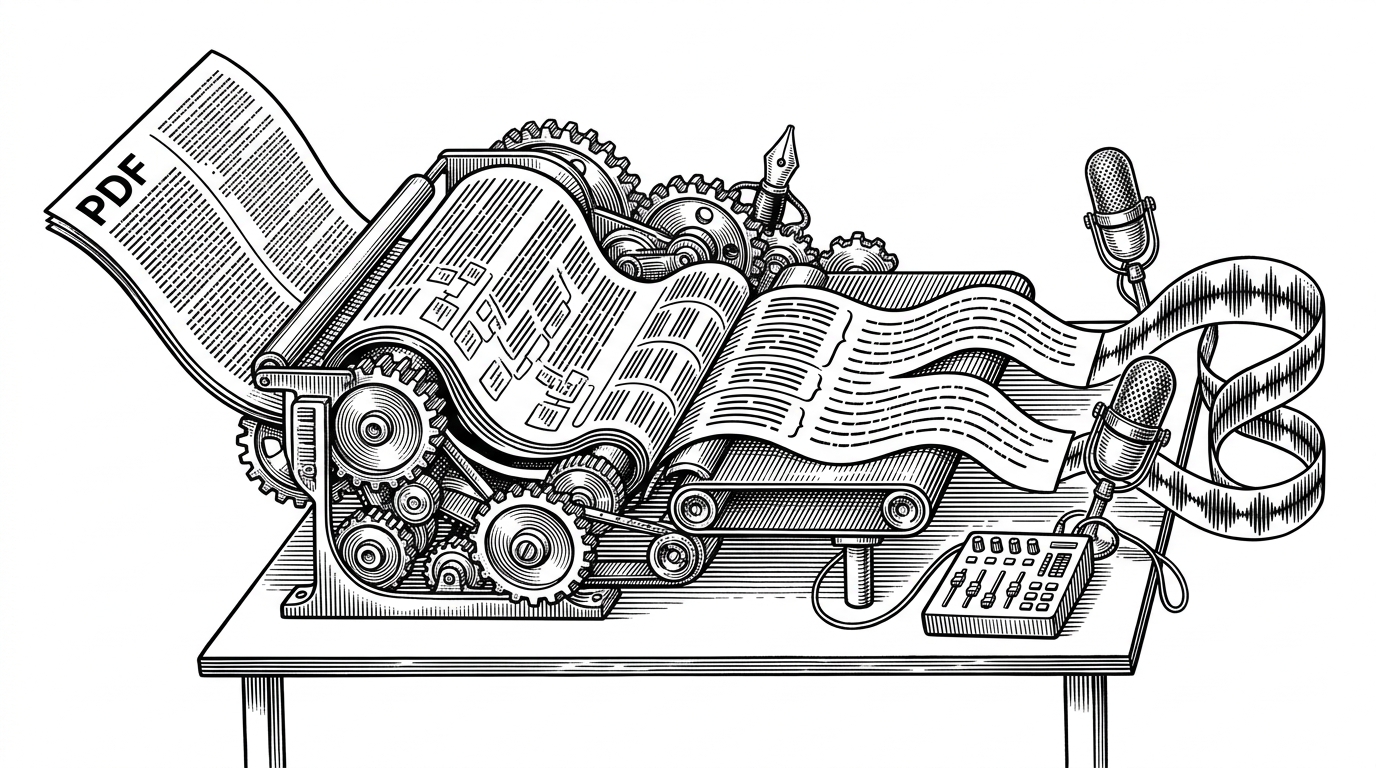
- The repo’s real idea is not speech synthesis. It is treating a PDF as source material for a scripted conversation.
- Markdown-first extraction is the hidden enabler because it preserves hierarchy before the model starts summarizing.
- Chunking, map-reduce summarization, and dialogue generation keep long documents from collapsing into a shallow first-page summary.
- Groq and edge-tts make the pipeline fast enough to feel like an interactive tool instead of a batch conversion script.
From PDF to Podcast, Not Just PDF to Speech
Most PDF-to-audio tools stop at narration. This one goes farther. It rewrites the document into a two-voice episode, which changes the output from flat read-aloud to something that feels authored.
That distinction matters. A podcast is not just audio. It has pacing, role separation, and a sense of editorial framing. The app is built to manufacture those ingredients from a source file that started as static text and layout.
Why Markdown Is the Hidden Superpower
The strongest design choice in the repo is the extraction step. pymupdf4llm.to_markdown keeps headings, lists, and structure intact, so the LLM sees a document that still behaves like a document instead of a flattened text dump.
That preservation unlocks the rest of the flow. The model can tell what is a heading, what is a bullet, and what is body text. When you are turning documents into dialogue, that hierarchy is the difference between a coherent episode and a mushy summary.
def create_chunks(text):
    splitter = RecursiveCharacterTextSplitter(chunk_size=4000, chunk_overlap=500)
    return splitter.split_text(text)

chunks = create_chunks(markdown_text)
chunk_summaries = [summary_chain.invoke({"text": chunk}) for chunk in chunks]
combined_summary = combine_chain.invoke({"summaries": chunk_summaries})
script = script_chain.invoke({"summary": combined_summary})
The Map-Reduce Script Factory
This is a classic long-context problem solved with a practical map-reduce shape. The app splits the document into chunks, summarizes each chunk, merges those summaries, and only then asks for the final scripted episode.
That keeps the output from drifting toward the opening pages of the PDF. It also gives the system a shot at covering the whole document without depending on a single oversized prompt or a fragile one-pass summary.
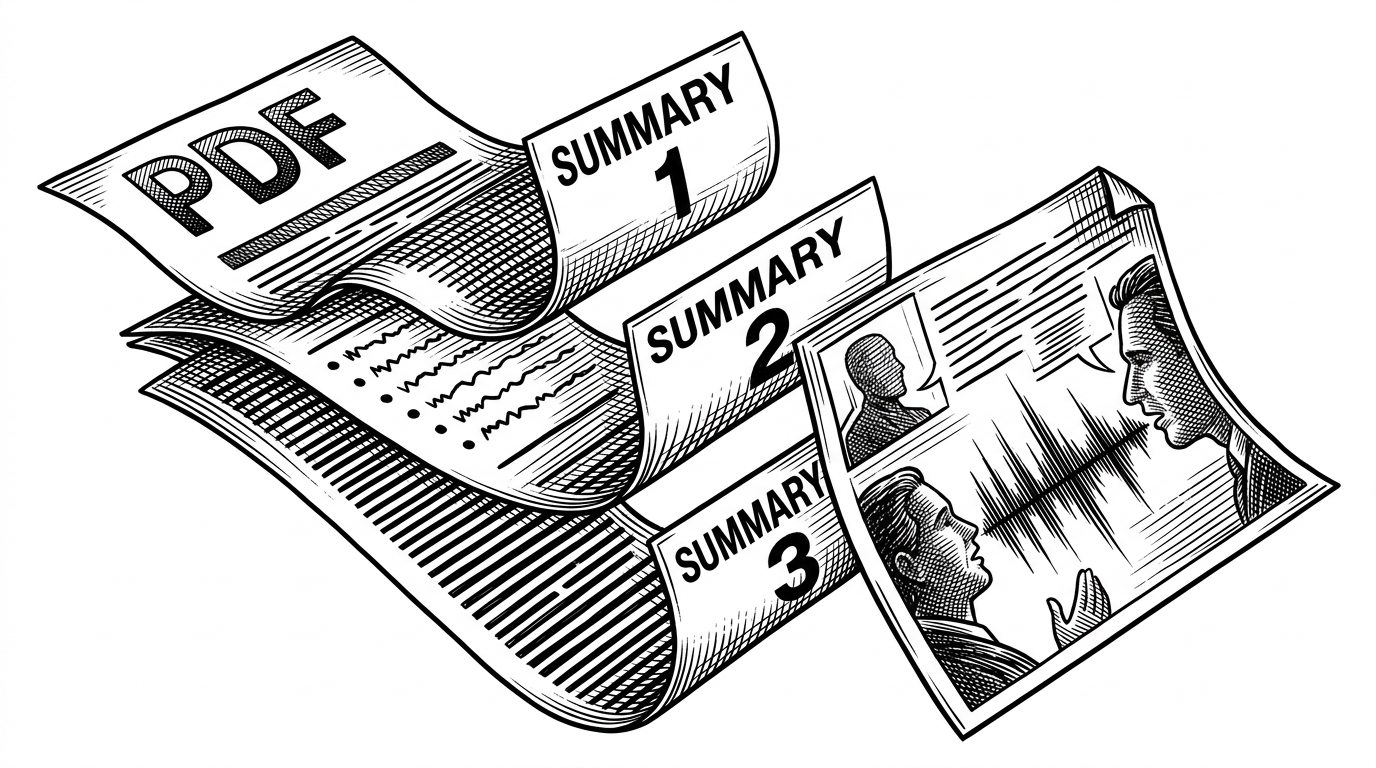
The prompting strategy is just as important. The script is constrained into alternating host lines so the output can be parsed and routed into separate voices. That is a small implementation detail with a big product effect.
Why This Stack Feels Fast Enough to Use
Latency is the difference between a curiosity and a tool. Groq reduces the time spent on language generation, and edge-tts keeps voice synthesis light enough to fit an interactive workflow.
Together, they make the app feel responsive. The user can move from PDF upload to generated audio without waiting on a heavyweight local model or a slow multi-step cloud workflow.
| Layer | This repo | Plain PDF-to-TTS | Commercial podcast platform |
|---|---|---|---|
| Document understanding | Markdown-preserving extraction | Usually flat text extraction | Often mixed, depends on product |
| Output style | Two-voice scripted conversation | Single voice narration | Multi-track editing and publishing |
| Latency focus | High | Usually secondary | Varies by service tier |
| Open source | Yes | Often yes | No |
| Setup complexity | Moderate | Low to moderate | Low for users, high lock-in |
What It Does Better Than a Plain Audiobook Tool
The project is not trying to beat every TTS engine or podcast editor. Its niche is narrower and more interesting: document understanding, dialogue scripting, and fast synthesis in one open-source flow.
That matters because the comparison is not really PDF-to-audio versus PDF-to-audio. It is flat narration versus authored conversation. The latter gives the output shape, and shape makes the result easier to listen to and easier to reuse.
What the Repo Says About Its Next Step
The codebase looks like a prototype, but a serious one. It is intentionally compact, centered around a single Streamlit app, and it already points toward a next phase with RAG retrieval and emotion-aware TTS.
That combination suggests a clear direction. The current version proves the pipeline. The next version could make it smarter about retrieval, more expressive in delivery, and more robust as a product.