demo-webhooks: The Deterministic Webhook: How Vercel Labs Tames Deployment Chaos
Beyond the POST request. Building a resilient state machine for the modern cloud lifecycle.
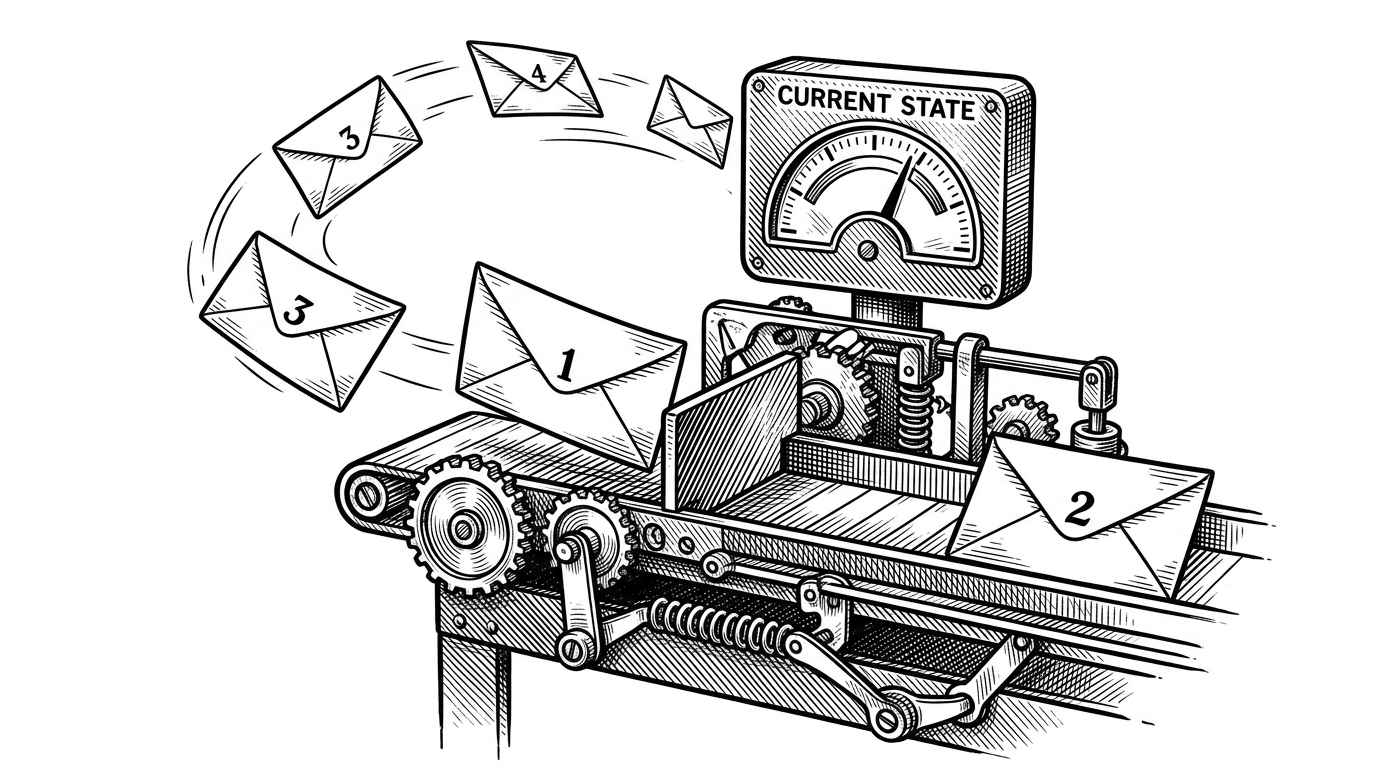

Webhook delivery order is **not guaranteed**. You may receive events out of order.
- A numerical ranking system prevents out-of-order webhooks from overwriting current deployment states with stale data.
- The repository tracks global project modes in Redis to identify when successful builds are blocked by active rollbacks.
- Secure receivers use timing-safe cryptographic comparisons to prevent attackers from brute-forcing secret keys through response latency.
- This architecture transforms a stateless trigger into a resilient state machine that ensures strict forward momentum.
When Success Arrives Before Birth
The happy path of a deployment is a lie. When a system triggers a build, it fires off asynchronous events. 'Created' goes first. 'Succeeded' follows. But the network is a chaotic place. Sometimes, the success notification outruns the creation notice. If your dashboard blindly updates its state based on the last received payload, your UI will flicker, break, or show a completed build that suddenly reverts to 'in progress'.
This is the exact problem vercel-labs/demo-webhooks was built to solve. It is not just a demo. It is a state machine masterclass disguised as a playground.
The Hierarchy of Truth
To fix out-of-order delivery, the repository introduces a ranking system. It assigns a strict numerical value to every possible lifecycle state. 'Created' is zero. 'Succeeded' is one. 'Promoted' is two.
When a new webhook arrives, the Node.js receiver checks the incoming event's rank against the current state stored in Redis. If the new event has a lower rank than the existing state, the system discards it. This elegant logic ensures the strict forward momentum of the deployment lifecycle.
const ORDER = ['created', 'succeeded', 'promoted'];

function rank(state) {
  return ORDER.indexOf(state);
}

// Inside the webhook handler:
if (rank(incomingState) <= rank(currentState)) {
  console.log('Ignoring stale event');
  return res.status(200).end();
}
The Rollback Paradox
Tracking deployment state is only half the battle. The repository introduces a secondary abstraction called 'Project Mode'. This solves a deeply confusing edge case in modern cloud hosting.
Imagine a team deploys a broken update and immediately triggers an instant rollback to a previous version. Meanwhile, a developer pushes a new commit. That new commit will build. It will fire a 'Succeeded' webhook. But because the project is pinned in a rollback state, that successful build will not be promoted to production. A naive webhook receiver would see 'Succeeded' and incorrectly tell the team the new code is live.
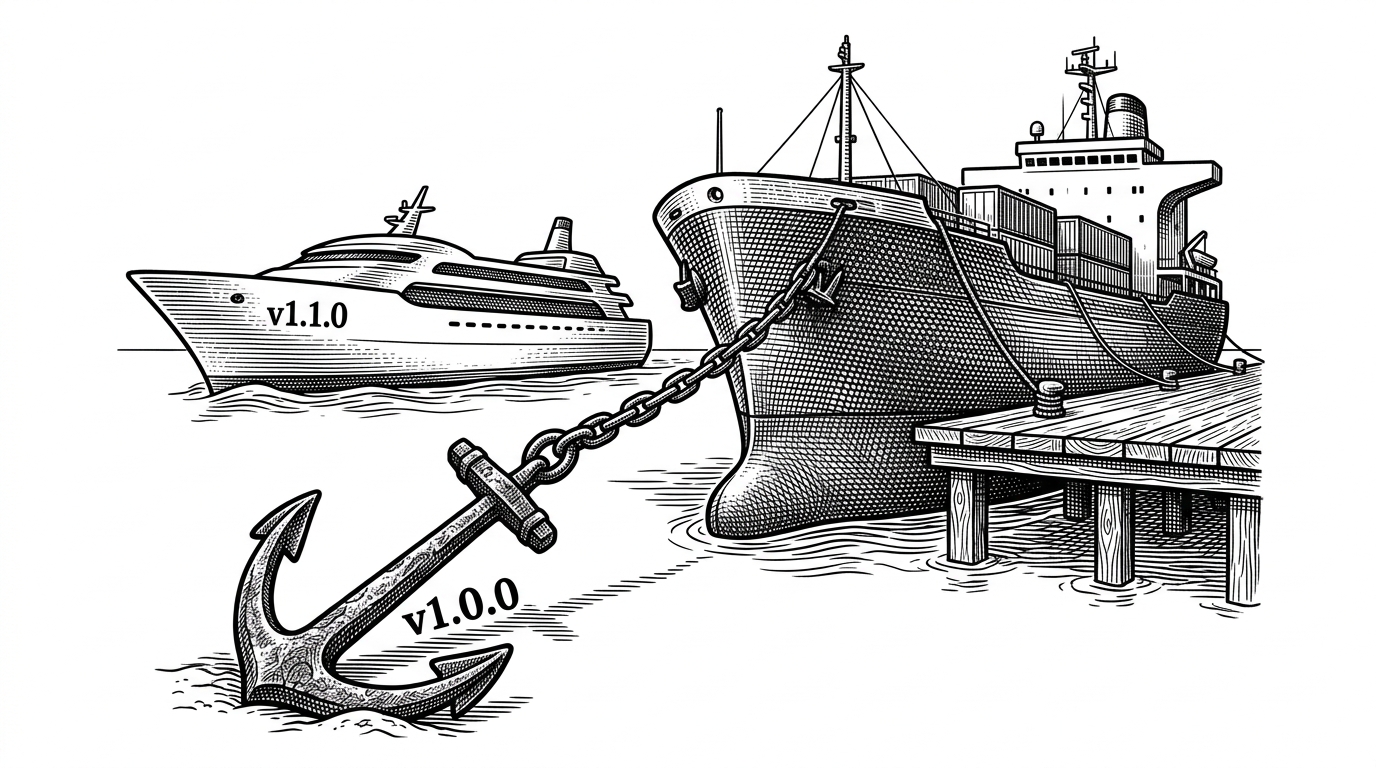
By tracking both the deployment lifecycle and the global project mode in Redis, the receiver can accurately reflect when a green checkmark is actually a lie. The logic forks: if the project is in rollback, ignore the success of new background builds.
Architectural Comparison: Script vs. State
Most developers treat webhooks as triggers. They write a simple serverless function that listens for a POST request and fires off a Slack message. This repository demonstrates why that approach fails at scale.
| Feature | Standard Receiver | Vercel Demo Architecture |
|---|---|---|
| Event Ordering | Blindly overwrites state (Race conditions) | Rank-based filtering discards stale events |
| Rollback Awareness | Ignorant (Shows false 'Live' status) | Tracks distinct 'Project Mode' state |
| Security | Basic string comparison (Vulnerable) | Uses `crypto.timingSafeEqual` |
| Data Layer | Stateless fire-and-forget | Redis-backed dual-key storage |
Cryptographic Paranoia
A webhook receiver is an open door to your infrastructure. The demo repository enforces strict cryptographic verification of the Vercel signature. It specifically uses Node's `timingSafeEqual` for the comparison.
Standard string comparisons return `false` the moment they hit a mismatched character. Attackers can measure the microsecond differences in response times to guess your secret key character by character. A timing-safe function takes the exact same amount of time to execute regardless of where the mismatch occurs. It is an essential detail for any production receiver.
The Blueprint
Event-driven architecture is inherently messy. You cannot control the network, and you cannot guarantee the order of operations. What you can control is how your system interprets the noise.
By combining a rank-based filter, strict state isolation, and cryptographic security, `vercel-labs/demo-webhooks` provides a blueprint for resilience. It proves that a reliable dashboard is never just a reflection of the latest event. It is a carefully curated source of truth.