deploy-vercel: The Vercel Template That Hides a Proxy in Plain Sight
A single-file Node.js app turns a serverless host into a disguised gateway, a subscription generator, and a remote-monitorable tunnel, all wrapped in the language of a harmless website.
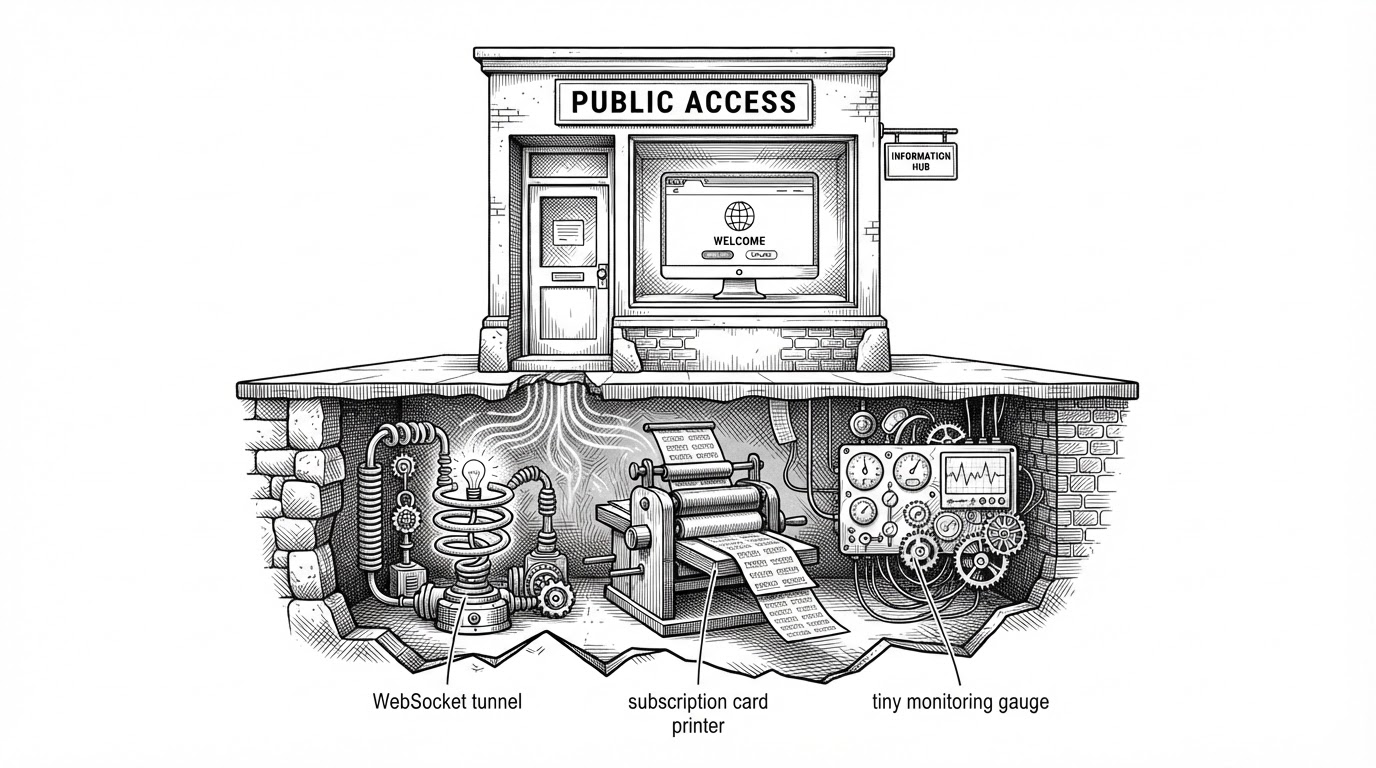
- deploy-vercel treats the homepage as camouflage and the serverless function as the real product.
- One endpoint carries three jobs at once: proxy transport, subscription generation, and monitoring.
- The repo’s main innovation is not protocol novelty but packaging, where branding and infrastructure are fused into a single disguise.
- Its comparison value comes from showing how far a normal Vercel deployment can be stretched before it stops looking like a website.
Why This “Website” Is Actually a Disguise
The first trick is visual, not technical. The root route is meant to look harmless, even generic, so the deployment can pass as an ordinary website while the real behavior lives behind it. The README is explicit about that idea: vvxw/deploy-vercel asks you to replace the landing page with AI-generated HTML and keep the face of the site calm.
用AI生成一个纯html的网页替换 index.thml 伪装网页
That is the project’s core move. It treats presentation as a control surface, not decoration. The public page is there to satisfy human visitors and casual checks, while the deployment underneath is doing something much less ordinary.

One File, Three Roles
The architecture is almost aggressively compact. `index.js` is the center of gravity, and it has three distinct jobs: it serves proxy traffic, generates importable subscription strings, and reports status to a Nezha dashboard. That monolith is not elegant in a framework sense, but it is practical for a template whose main promise is one-click deployment.
// The repo’s monolith is the point.
// One file handles traffic, subscriptions, and monitoring.

export default async function handler(req, res) {
  // serve camouflage page
  // generate subscription data
  // proxy tunneled traffic
  // report runtime health
}
That stack makes the repo easy to clone and easier to redeploy. It also makes the design brittle, because every responsibility shares the same runtime, the same deployment, and the same failure mode.
How the Serverless Trick Works
The technical maneuver is straightforward once you strip away the packaging. WebSockets provide a transport wrapper that can ride inside ordinary web-facing infrastructure, while `vercel.json` pushes the function toward a region and a long execution window. The code is trying to behave like a normal API route, yet it is being used as a long-lived relay.
The interesting tension is between persistence and serverless design. Vercel wants short, stateless work. This repo asks for the opposite: a durable channel, a stable endpoint, and enough runtime slack to keep tunnels alive. The result is a template that depends on the mismatch it creates.
部署完成后确认没问题,将反代后的域名填写到 index.js 的DOMAIN环境变量里, 然后用https://www.jshaman.com/index.html 混淆替换后保存
That README instruction says a lot in one sentence. The domain is not just configuration, it is part of the disguise. Even the code obfuscation step is folded into the deployment story.
Camouflage as a Design Pattern
This repo’s real differentiator is not a protocol feature. It is the way it collapses branding, transport, and observability into one pattern of plausible harmlessness. A fake front page, a hidden relay, and a remote status feed all support the same goal: make the deployment look ordinary from the outside.
That makes the project clever, but also fragile. Any system built on appearance has a narrow margin for error. If the front page looks suspicious, the whole illusion weakens. If the runtime is throttled, the tunnel loses its cover. If the monitoring trail is noisy, the disguise leaks through the back door.
The broader lesson is larger than this repo. In serverless environments, presentation is not separate from infrastructure. It can become part of the infrastructure itself.
How It Compares
This is not a better Vercel starter. It is a different species of template. The comparison makes that clear.
This is not a better website template. It is a more layered disguise template.
| Project type | Root route | Transport model | Operational complexity | Monitoring | Main differentiator |
|---|---|---|---|---|---|
| Standard Vercel starter | Honest landing page or app shell | Ordinary HTTP request/response | Low | Usually none | Fast deployment and DX |
| Focused proxy template | Often a proxy-specific landing page | Single-protocol relay | Medium | Basic or external | Transport first |
| deploy-vercel | Benign facade over hidden relay | WebSockets wrapped inside serverless routing | Higher | Nezha agent integration | Camouflage plus transport plus telemetry |
Compared with ordinary Vercel boilerplates, this repo gives up transparency. Compared with narrower proxy templates, it adds a second layer of control and a stronger story about what the page is supposed to be. That combination is what makes it unusual.
What This Repo Says About Serverless Platforms
The interesting part is not that serverless can host this pattern. It is that serverless makes the pattern easier to package and distribute. A platform built for convenience becomes a substrate for whatever fits through its ports and execution limits.
That is why the project matters even if you never use it. It shows how quickly a mainstream deployment target can be repurposed when the priority shifts from shipping a web app to hiding the app’s real behavior. The template is a reminder that infrastructure always has an unofficial second life.