QM: The Multiplayer Operating System for AI Agents
A deep look at how `yc-software/qm` turns isolated agent sandboxes, scoped identity, and Slack-native collaboration into shared company infrastructure.
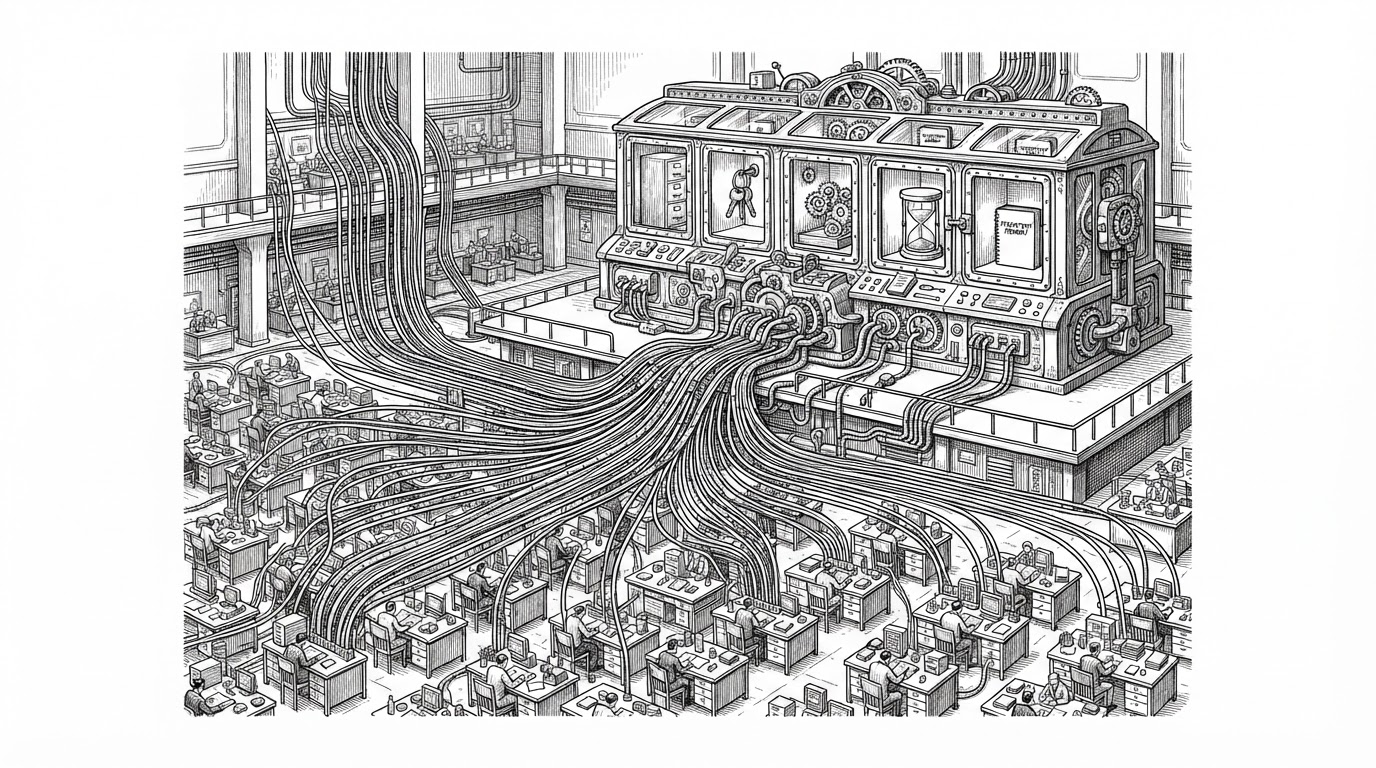
- QM’s core move is to make AI agents behave like organizational infrastructure with scoped identity, durable memory, and explicit policy.
- Its strongest idea is multiplayer tenancy, where a person, Slack room, or project gets a private agent workspace instead of sharing one bot.
- The deployment layer matters because QM signs capability payloads and treats updates as controlled ingress into a live runtime.
- The project’s governance is as opinionated as its architecture, with prose-first contributions and humans owning implementation.
Why personal AI breaks the moment a company uses it
Personal assistants are easy because the trust model is simple. One person, one context, one set of secrets. QM starts where that model fails: once an organization wants agents in shared channels, on shared projects, and around shared credentials, the chat thread becomes the wrong abstraction.
That is the interesting wager in yc-software/qm. It is not trying to be a smarter chatbot. It is trying to be the layer that makes agents safe, durable, and legible inside a company.
| Single-user assistant | QM |
|---|---|
| One human, one conversation | Many people, rooms, and projects with distinct scopes |
| Ephemeral chat state | Durable files, memory, and execution state |
| Loose trust boundary | Explicit security postures and admin policy |
| Tooling attached to a prompt | Tooling packaged into an organizational control plane |
QM’s core idea: scoped identity plus durable memory
QM gives each employee or Slack room its own workspace. That workspace keeps private files, credentials, cron-like jobs, and memory that persist across tasks. The point is not just isolation. It is continuity with boundaries.
This is what makes QM feel more like a workstation or service account than a disposable prompt session. An agent can return to the same scope, keep its tools installed, and operate inside a security posture that matches the risk of the task.
| Primitive | What it means in QM | Why it matters |
|---|---|---|
| Scope | A person, room, or project gets a dedicated agent workspace | Identity and context stop collapsing into one shared bot |
| Durable memory | State persists across tasks instead of vanishing after a chat | The agent can build up continuity and local history |
| Private files and keychain | Each scope keeps its own assets and secrets | A team can share infrastructure without sharing everything |
| Execution state | Installed tools and sandbox state stay available | Agents behave more like long-lived workers than sessions |
The deployment layer is the nerve ending
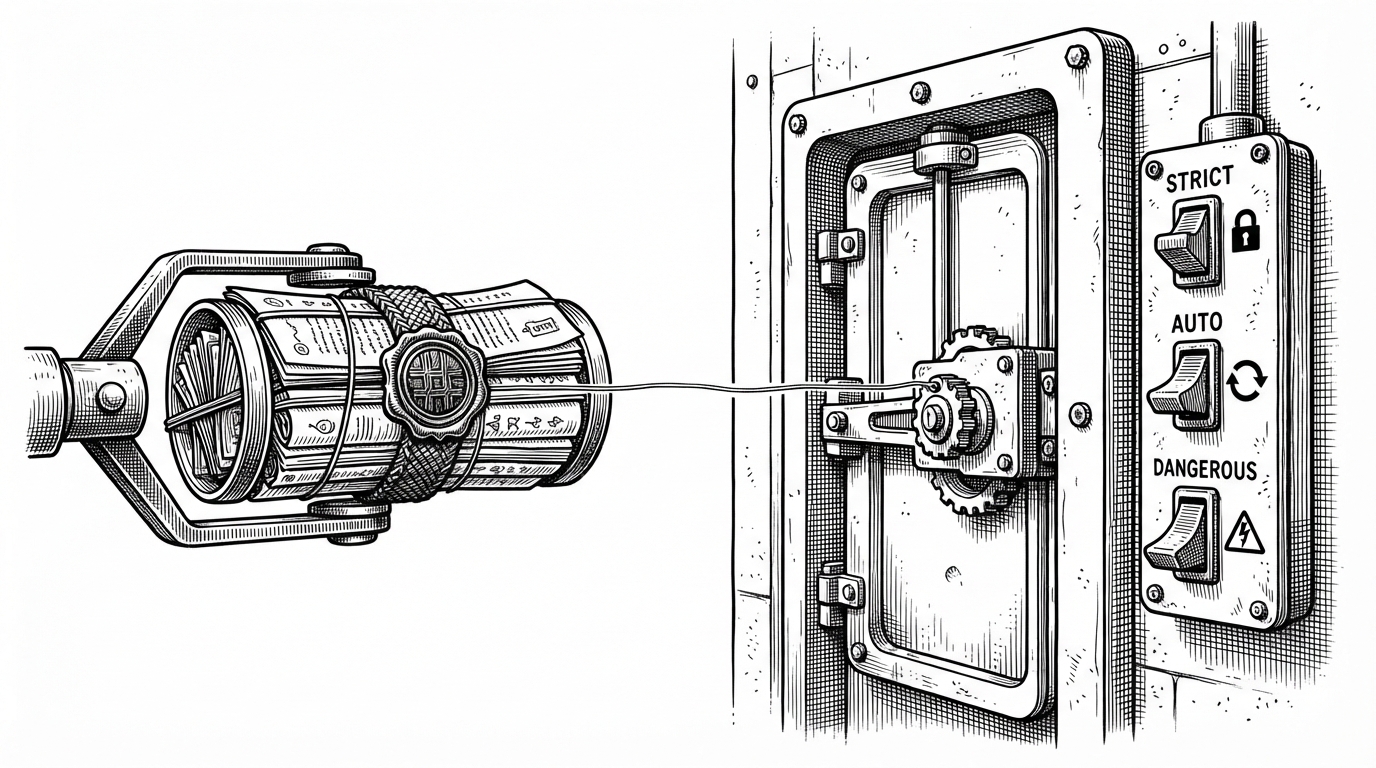
The mechanical heart of the repo shows up in `cli/src/deployment-layer.ts`. It bundles skills and tools into a content-addressed payload, signs the result with HMAC, and sends that package to the running core. In other words, QM does not just execute agents. It packages capabilities and proves where they came from.
// Conceptual shape, simplified from the deployment layer
const contentHash = hash(payload)
const signature = hmac(secret, contentHash)

send({
  contentHash,
  payload,
  signature,
  headers: { 'x-signature': signature }
})
The important detail is the update path. QM treats agent capabilities as signed, controlled ingress into a live environment. That is the difference between a toy harness and an operational platform.
Security is not a bolt-on, it is the product
QM’s security model is opinionated because it has to be. The repo distinguishes between Strict, Auto, and Dangerous postures, which is a useful admission that agent autonomy is always a policy decision. You do not solve that problem with prompting alone.
| Posture | Behavior | Trade-off |
|---|---|---|
| Strict | Every risky call expects human review | Slowest, but easiest to reason about |
| Auto | The system screens or mediates calls automatically | Faster, but still governed by policy |
| Dangerous | The agent can act with minimal friction | Most flexible, but also the riskiest |
The sandbox contract and internal auth chassis reinforce that posture. Credential paths are constrained, replay resistance is built into internal service calls, and the agent runtime is meant to operate under explicit rules instead of vague trust.
We take contributions as human-written text, not code — see CONTRIBUTING.md . Describe the change you'd like informally in a .txt or .md file in adrs/ , and if we're aligned we'll handle the implementation.
How QM talks to the rest of the stack
QM is built around a control plane that can route different engines underneath it without changing the outer wrapper. The repo supports multiple model backends and uses a plugin chassis so auth, core communication, and service boundaries stay consistent even when the underlying engine changes.
| Layer | Role in QM | Takeaway |
|---|---|---|
| Auth plugin | Handles login and identity flows | Identity is a system primitive, not an afterthought |
| Core client | Standardizes internal service calls | Plugins can talk to the core without inventing their own protocol |
| Slack integration | Brings scopes into shared rooms | The agent becomes part of company communication |
| Model engines | Swappable execution backends | The org does not have to rebuild its control plane to change models |
The governance twist: prose-first, human-written, maintainers implement
QM’s contribution model is unusually deliberate. External contributors are asked to write informal ADRs rather than open direct code PRs, and the maintainers handle implementation. That is a strong signal that architectural coherence matters more here than raw contribution volume.
For an agent platform, this makes sense. A project built around durable autonomy probably cannot afford fuzzy decisions at the edges. It needs a shared vocabulary for scope, policy, and trust before it needs more patches.
thanks for reminding me about qm, it has some cool features. My MindRoot framework had some of qm's main features awhile ago though.
What QM replaces, and what it doesn’t
QM is not a Claude Code replacement. It sits around tools like Claude Code, OpenCode, and Codex the way an operating system sits around applications. Those tools are inner-loop engines. QM is the outer loop that gives them tenancy, persistence, policy, and a place in the organization.
| Category | Inner-loop tools | QM |
|---|---|---|
| Primary unit | One developer | One organization with many scopes |
| State | Local and session-bound | Durable and tenant-aware |
| Policy | Mostly user-managed | Built into the platform |
| Integration | Developer-centric CLI | Slack-native and company-wide |
| Role | Execution engine | Shared control plane |
That also explains where QM competes. Against hosted enterprise assistants, it offers self-hosted control and model flexibility. Against local harnesses, it offers persistence and collaboration. Its niche is not better chat. It is better organizational shape.
The trade-off: power through centralization
QM’s promise is also its tension. It centralizes identity, memory, deployment, and policy so that agents can be shared across a company without dissolving into chaos. That same centralization means admins get visibility, operational discipline matters, and trust has to be earned at the platform level.
That is the real story. QM is compelling because it treats agents as governed infrastructure, not clever scripts. Whether that feels empowering or too centralized depends on how much control your team wants to trade for leverage.