Travel-Agency-Website: The Tiny Repo That Sells the Whole Trip
A static travel site can’t book flights or manage inventory. But it can still do the most important job: make a small agency look real, fast, and ready for business.
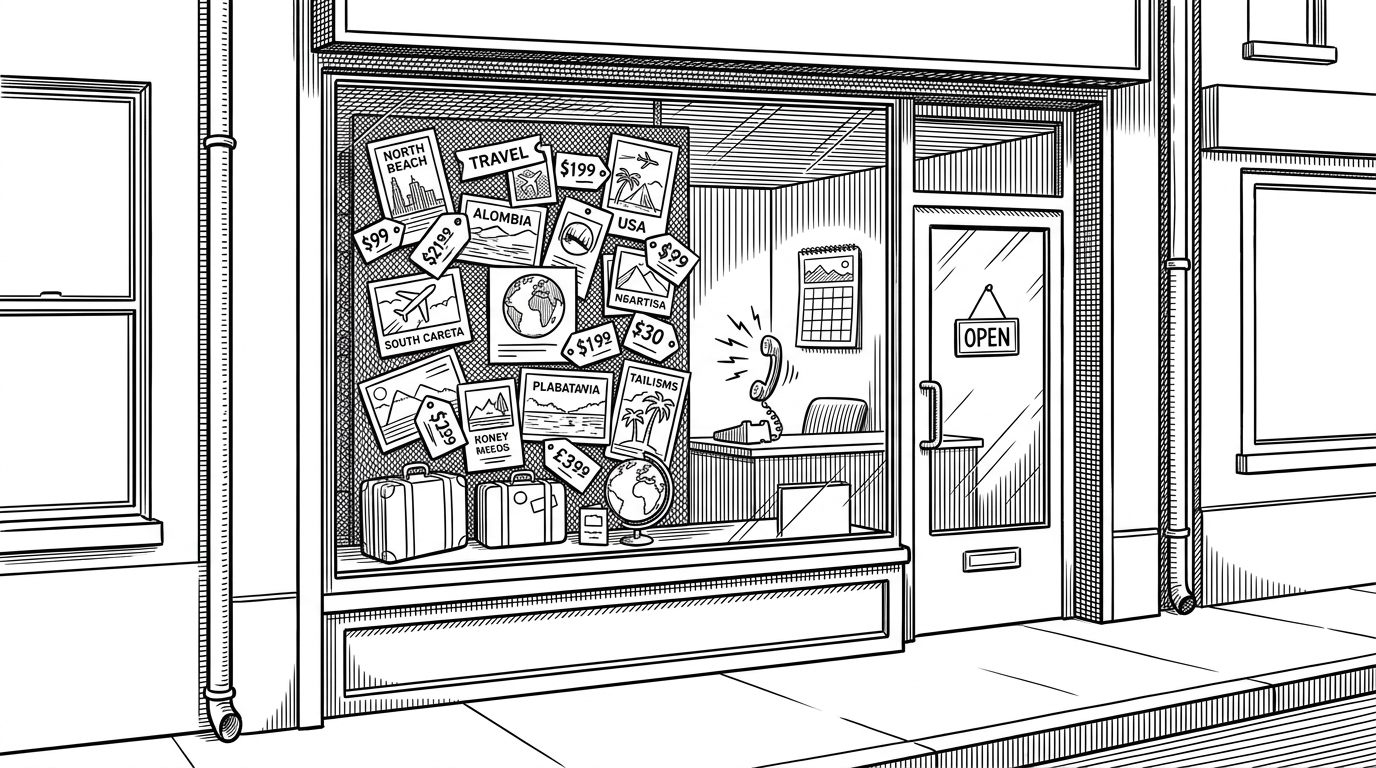
- This repo matters because it proves a travel business can look established long before it can operate like one.
- Its real product is persuasion, not transactions, so the homepage, packages, and contact prompts do the heavy lifting.
- The unusual zip-first packaging signals a project that prioritizes delivery and presentation over conventional repository hygiene.
- For solo builders, the lesson is blunt: credibility can come from a static front door while the expensive backend waits its turn.
A travel agency that ends at the front desk
The interesting part of AG312-a/Travel-Agency-Website is not that it is a travel site. It is that it reaches just far enough to look like a real agency, then stops before the machinery gets expensive. That makes it a clean example of brochureware that is smart about its limits.
You get the surface area that matters early on: destinations, promotions, contact prompts, and a way to look established. You do not get the operational burden of inventory, payments, accounts, or booking reconciliation. That tradeoff is the whole story.
Promotions and upcoming adventures section of a travel agency website. https://t.co/Z2RwHrCHMG https://t.co/rGGbYJiAjk
Why this kind of site still matters
For a small agency, the first job is not automation. It is credibility. A clean site with clear offers and obvious contact paths can do more for early demand than a half-built platform with one foot in every subsystem.
That is why this kind of repo keeps showing up. It is cheap to ship, easy to explain, and good enough to sell the idea of a service before the service needs software depth. In market terms, it buys time.
What’s actually inside the repo
The repository reads like a delivery artifact rather than a sprawling application. The research points to a front-end stack built from HTML, CSS, and JavaScript, and the source was packaged as a zip archive instead of a conventional, fully expanded code tree. That choice says as much about workflow as it does about code.
That is why the zip packaging matters. It obscures the usual clues readers use to judge code quality, but it also preserves a complete local snapshot. For a tiny project, that can be a practical way to share a finished state without spending time on repository polish.
Travel-Agency-Website/
  Travell.zip
  (likely HTML / CSS / JavaScript inside the archive)

What this suggests:
- static front-end delivery
- no visible backend surface
- repo optimized for presentation, not extension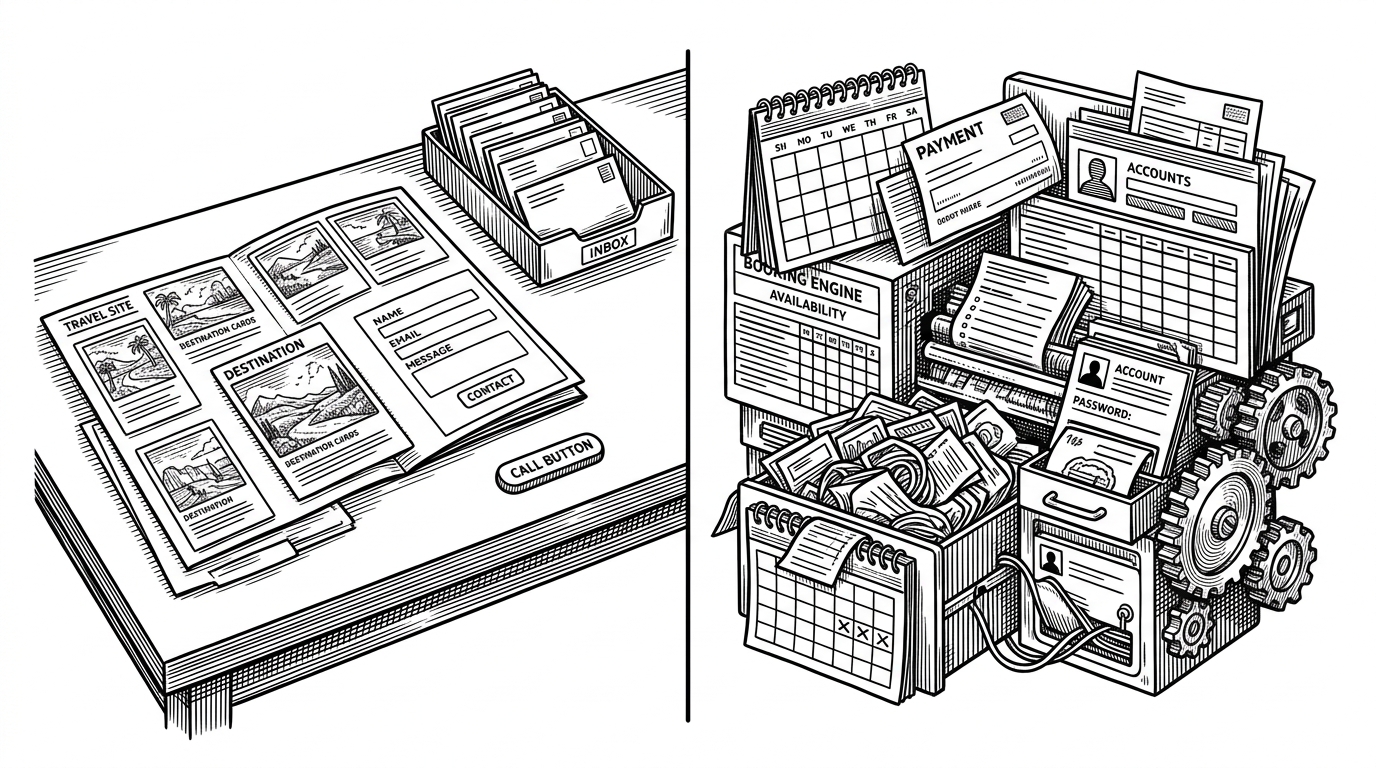
The real product is the sales funnel
This site is not trying to complete a transaction. It is trying to create confidence. The homepage, destination tiles, promotions, and inquiry prompts work together like a handoff chain. Each element moves the visitor one step closer to talking to a person.
That is the underrated part of the design. For many service businesses, the website is not the system of record. It is the system of first contact. The actual work still happens offline, in email, on the phone, or in a lightweight back office.
| Approach | Setup cost | Control | Bookings | Maintenance |
|---|---|---|---|---|
| Static site in this repo | Low | High | No | Low |
| WordPress or other CMS | Medium | Medium | Possible with plugins | Medium |
| Custom booking platform | High | High | Yes | High |
Static site vs. CMS vs. booking platform
Put the three options side by side and the project’s place becomes obvious. A static site wins on speed and simplicity. A CMS gives non-technical owners more content control. A booking platform buys real operations at the cost of complexity, maintenance, and integration overhead.
That is the useful lesson. The right stack is not the most powerful one. It is the one that matches where the business actually is.
The hidden lesson for solo builders
This repo is a reminder that presentation can be a valid first product. If a business needs trust, visibility, and a clean way to gather interest, it does not need a full operations layer on day one. It needs a credible front door.
That is a good constraint for solo builders. Ship the face of the business first. Add machinery only when the business has earned it.