NVIDIA/OpenShell: The Runtime That Refuses to Trust the Agent
OpenShell keeps credentials, policy, and audit logging outside the sandbox, so autonomous code can act without owning the keys.

- OpenShell treats the agent as untrusted software and moves secrets, policy, and audit control into the runtime.
- Its K3s-in-Docker design gives local simplicity without giving up Kubernetes primitives, mTLS, or structured enforcement.
- The repo is agent-native in both product and process, using skills and vouching to let machines help without letting them flood the project.
- Compared with the usual DIY sandbox, OpenShell changes custody and control instead of just packaging the same risky setup.
The agent never owns the keys
OpenShell’s core move is not to make agents stronger. It makes the runtime stricter. The sandbox can run code and request network access, but the gateway decides whether a request leaves the box, which credentials can be injected, and what gets written to audit logs.
Tonight’s reading: Nvidia Nemoclaw Documentation Learning the protection layers that Nvidia placed around Openclaw. Reading about how to grant network access to your agents sitting in a Openshell sandbox, etc. https://t.co/1K91Kk6Kqs
That inversion matters because it changes the failure mode. A compromised agent can still try to act, but it cannot simply read a mounted keyfile, sidestep policy, or open a raw socket and hope for the best. The privilege boundary lives outside the sandbox, where it is easier to inspect, audit, and revoke.
Why the repo is built for agents
OpenShell does not only secure agents. It also assumes agents will help build the project itself. The .agents/ and .opencode/ directories, plus the skills and memory files around them, turn repo knowledge into reusable instructions instead of scattered prompting folklore.
That makes the repository feel unusually self-referential in a useful way. The same system that constrains runtime behavior also shapes how contributors work, which is why the project pairs agent-friendly docs with a vouching workflow and human review.
- Skills package common tasks into explicit instructions that an agent can follow without guesswork.
- Memory files keep the project’s vocabulary and operating assumptions in one place.
- Vouching raises the cost of low-quality automated contributions without banning agent assistance.
- Humans still control access, which keeps the collaboration model legible when the repo gets busy.
How trust works at runtime
The architecture is easier to understand if you read it as a custody chain. Bootstrap creates the local environment, PKI establishes identity, K3s-in-Docker provides Kubernetes primitives, the gateway enforces policy, and OCSF logging records what happened in a format security teams can actually use.
That design is why mTLS and gateway mediation matter so much. The sandbox can only speak to what the runtime permits, and it can only prove what the runtime has already provisioned. The interesting security move is not the container. It is the fact that the container never becomes the authority.
- Bootstrap sets up the local runtime and generates the certificates that define identity.
- The agent runs inside the sandbox and can issue requests, but not mint authority.
- The gateway checks policy before traffic is allowed to leave.
- Credentials are injected at the point of use, not handed to the agent as a permanent possession.
- OCSF logging records the request path in a standardized audit trail.
Why K3s-in-Docker is the clever compromise
Plenty of projects can describe a secure control plane. Fewer can make it feel local. OpenShell uses K3s inside Docker so the user gets Kubernetes semantics without becoming a cluster operator first. That is the trick: serious boundary enforcement with a single-player onboarding path.
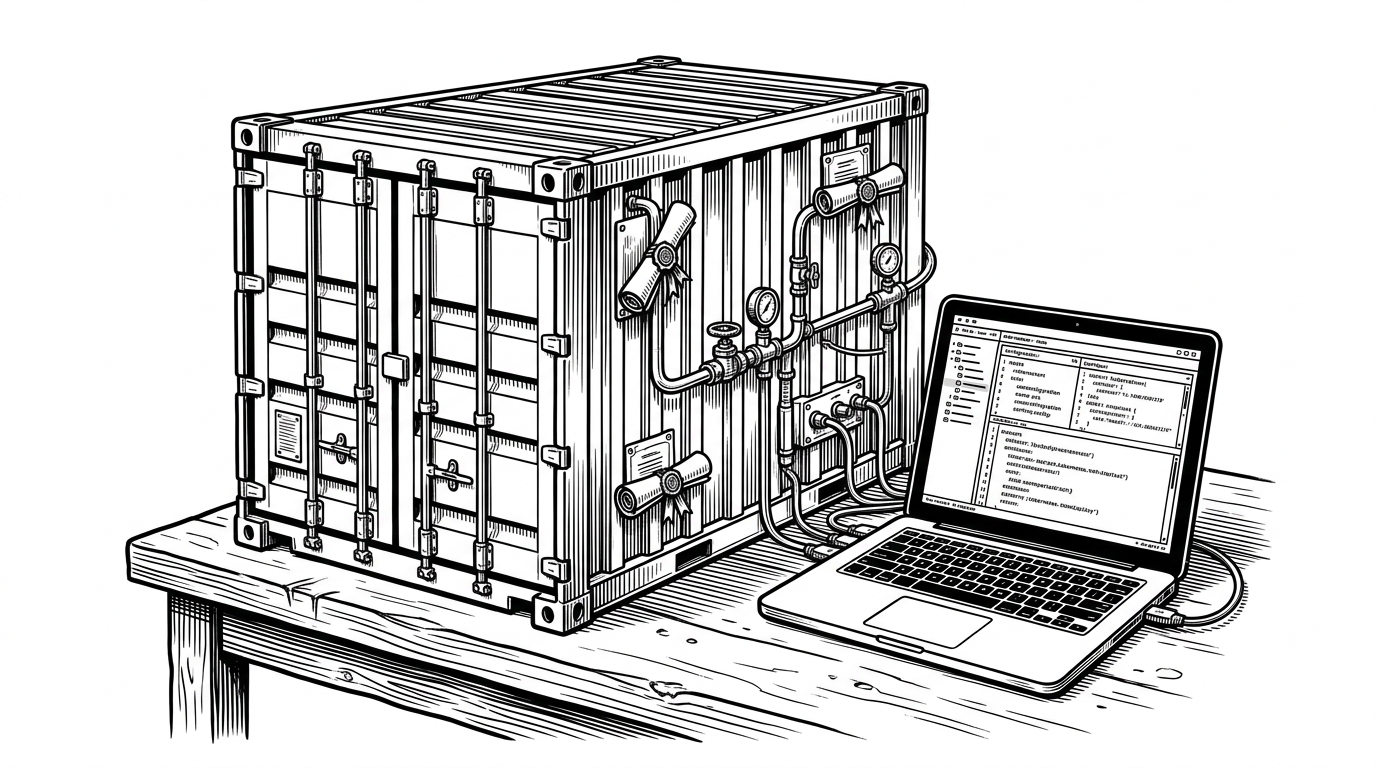
That compromise also explains the project’s practical appeal. Users do not have to choose between a toy sandbox and an enterprise control plane. OpenShell tries to give them both at once: local startup friction on one side, policy-aware infrastructure on the other.
OpenShell versus the usual DIY sandbox
| Dimension | DIY sandbox | OpenShell |
|---|---|---|
| Secrets | Mounted into the environment and trusted by default | Kept outside the sandbox and injected only at the gateway |
| Policy | Ad hoc scripts and scattered firewall rules | Centralized policy enforcement before requests leave the runtime |
| Network access | Broad by convenience, narrow only after manual tuning | Explicitly mediated through the gateway and proxy layer |
| Audit trail | Logs added after the fact, if they exist at all | Structured OCSF logging built into the flow |
| Operations | Easy to start, hard to reason about | More opinionated upfront, easier to govern later |
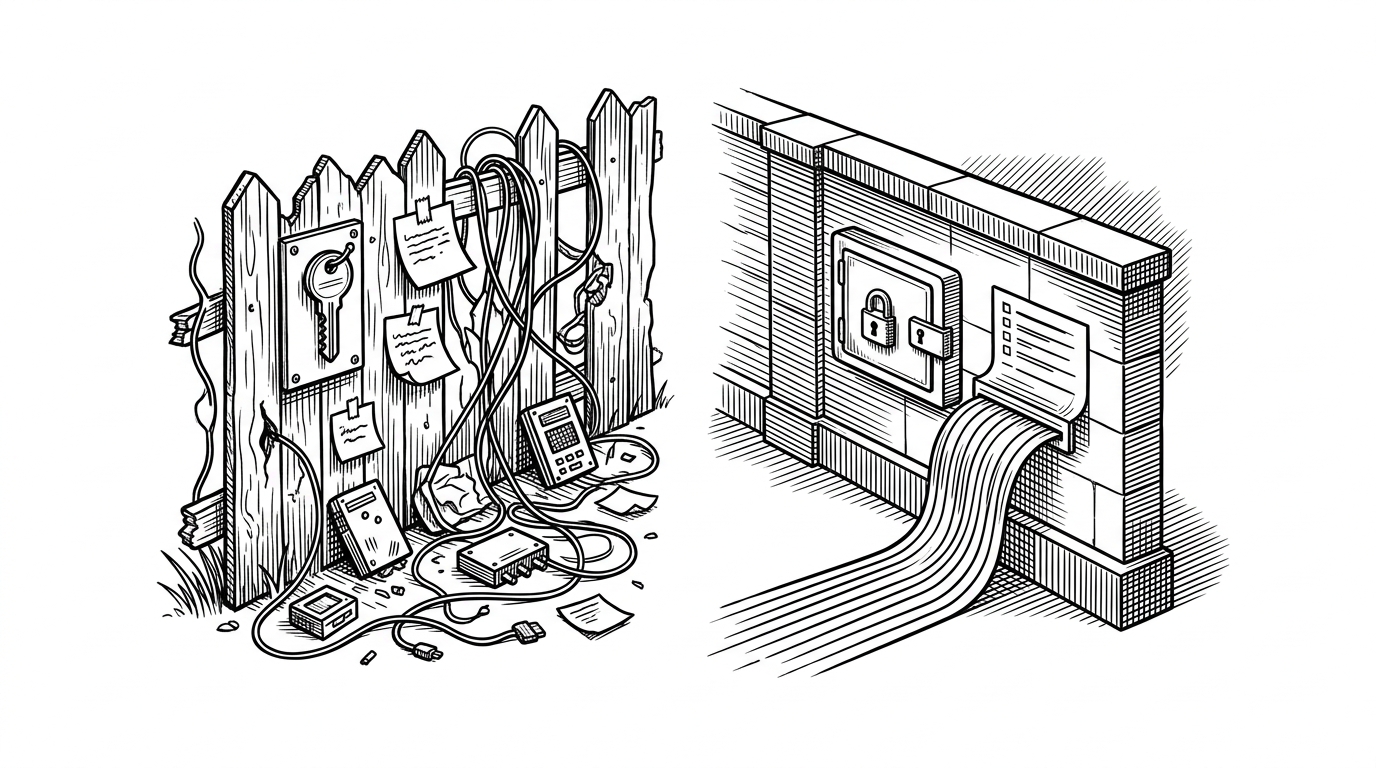
That is the real comparison. The question is not whether an agent can be put in a container. The question is whether the container owns the trust boundary or merely lives inside it.
What OpenShell signals next
OpenShell points to a different standard for agent infrastructure. Raw capability still matters, but it is no longer enough on its own. The next serious stack will be judged by custody, policy, observability, and the ability to keep autonomy from turning into ambient risk.
That is why OpenShell reads less like a shell project and more like a category sketch. It assumes agents will act, but never that they should be sovereign. In a world of autonomous code, that may be the more durable default.