OpenShell-Community: The Operating System for Untrusted Agents
NVIDIA’s community repo packages sandboxes, skills, and bootstrap tooling around a sharper idea of AI safety: constrain the runtime, not the prompt.
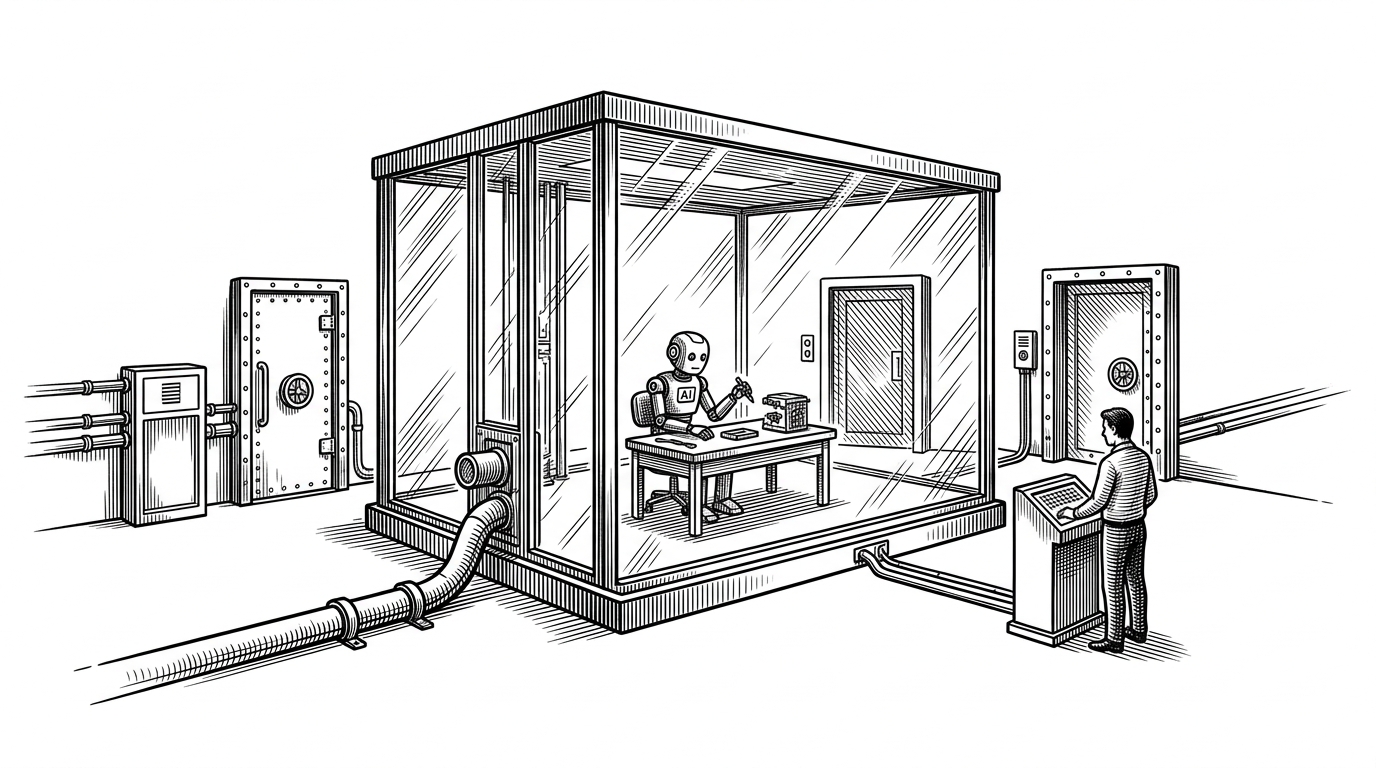
- OpenShell-Community treats AI safety as a runtime problem, not a prompt-writing problem.
- The repo matters because it packages the on-ramp: sandboxes, skills, launch scripts, and a welcome UI that make the system usable.
- Its sharpest idea is binary-aware policy, where each executable inherits only the network and filesystem reach it needs.
- The project is as much about adoption as architecture, because a secure runtime is only useful if developers can actually start it.
The wrong layer to trust
Most agent safety talk starts in the prompt. That is the wrong place to start once an agent can read files, run commands, and call out to the network. At that point, the model is not just talking. It is acting.
OpenShell-Community pushes the control point down into the runtime. The repo is interesting because it assumes the agent is untrusted by default and builds the rest of the system around that assumption.
| Approach | Trust boundary | Operational downside |
|---|---|---|
| Prompt guardrails | The model will obey instructions | Breaks as soon as the agent can act outside the chat |
| Generic container | The container boundary and manual config | Still broad unless every binary and endpoint is pinned |
| OpenShell-Community | The runtime plus declared policy for each binary | More setup, but a far smaller blast radius |
What the community repo actually ships
This repo is not the core engine. It is the packaging layer around the engine, which is why its directory structure matters. The `sandboxes/` folder holds the environment definitions. `brev/` carries launch and welcome UI code. `scripts/` handles maintenance. That shape tells you the product story immediately: OpenShell is meant to be installed, started, and extended, not just admired.
That is a subtle but important choice. A security substrate does not become useful because the architecture is elegant. It becomes useful when a developer can clone a repo, inject credentials, launch a sandbox, and see something alive on the screen.
Policies that follow the binary
This is the part that makes OpenShell feel different from a normal container story. The policy model is not just about whether a sandbox is allowed to reach the internet. It is about which binary is making the request, and which destinations that specific binary is allowed to use.
OpenShell is the safe, private runtime for autonomous AI agents.
That changes the enforcement model in a practical way. A shell, a browser, a model CLI, and a helper script no longer share one giant blob of trust. Each binary can be treated like its own workload with its own permissions. If a tool is compromised, its reach is still bounded by policy.
The repo's sandboxes make this concrete. The base environment wires in agent tools, package managers, and startup logic, while policy files and proxy components define what those tools are allowed to do. The result is not perfect magic. It is a narrower, more legible blast radius.

NVIDIA OpenShell sits between your agent and your infrastructure. It governs how the agent executes, what the agent can see and do, and where inference goes.
Why the welcome UI matters
A lot of infrastructure projects fail at the first click. OpenShell-Community tries to avoid that by shipping a welcome UI and launch scripts that do the boring but necessary work. They create the sandbox, pass keys into the isolated environment, and proxy the user into the running system.
That is not cosmetic. It is adoption engineering. If the runtime is the thesis, the on-ramp is the proof that the thesis can survive contact with real developers.
The same logic shows up in the repo's skills and sandbox layout. It does not ask everyone to assemble a platform from scratch. It gives them a starting environment, a controlled execution path, and a way to extend the system without flattening the trust model.
How it compares to the obvious alternatives
The easiest mistake is to confuse OpenShell with a plain container stack. Containers help, but a generic container does not tell you which executable can call which service. Prompt-only guardrails help less, because they are only as strong as the model's willingness to obey them. OpenShell sits in the gap between those two failure modes.
That is why the project feels less like an app and more like substrate. It is trying to become the layer other agent tools inherit, not the agent tool itself.
Alpha software — single-player mode. OpenShell is proof-of-life: one developer, one environment, one gateway.
What to make of it
The project is still clearly in its early shape, and the README says so. But the direction is clear. NVIDIA is not just shipping another assistant wrapper. It is trying to define the operating boundary for autonomous agents.
That makes OpenShell-Community more interesting than a single framework release. The repo is the evidence that the company is thinking about agent runtime as a platform problem, with security, setup, and extension points all treated as first-class concerns.