NVIDIA/skills Turns AI Prompts Into a Governed Software Supply Chain
A catalog of portable agent skills, schema checks, signatures, and plugin bundles shows how NVIDIA is standardizing what coding agents know, how they run, and what they are allowed to trust.
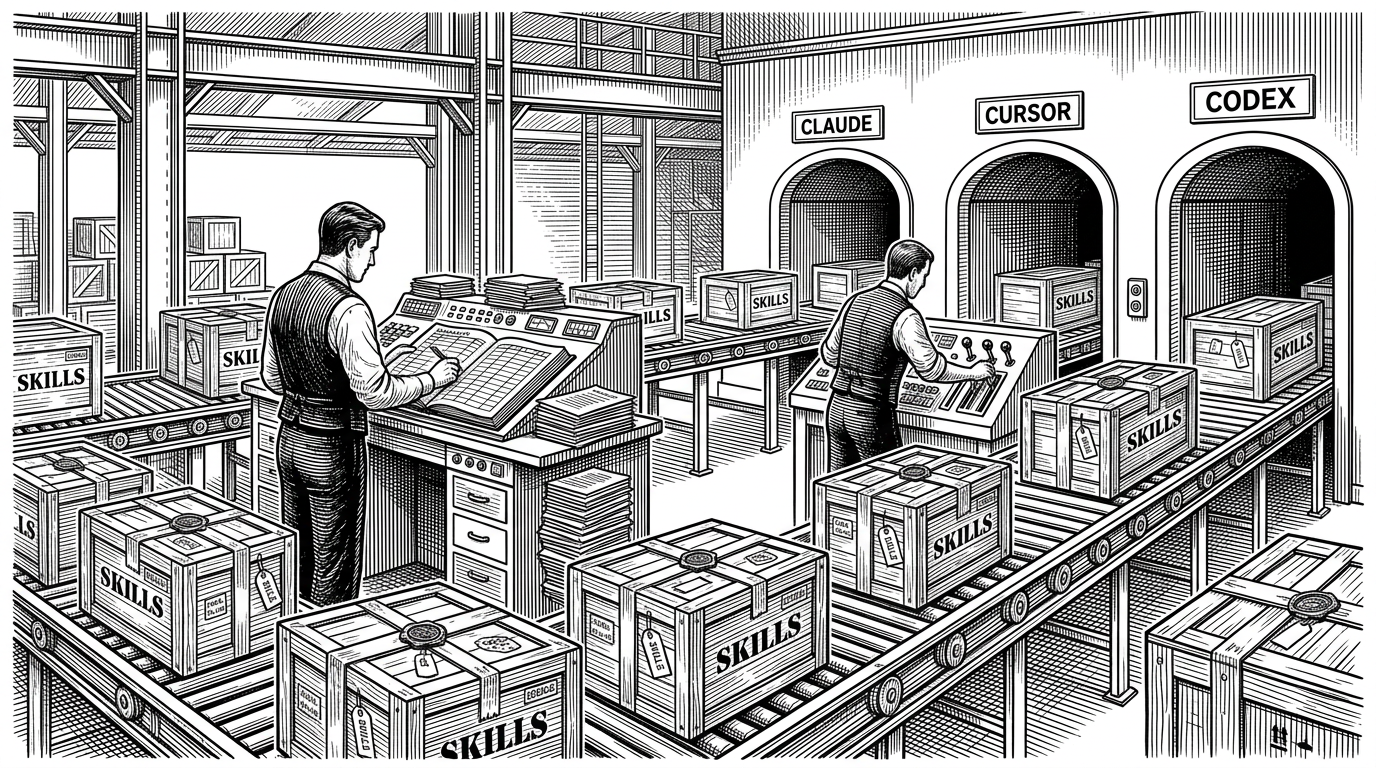
- NVIDIA/skills reframes prompts as governed software artifacts with metadata, evals, packaging rules, and integrity checks.
- The repo is built to distribute the same capability across multiple agents without pretending those agents are identical.
- Schema-driven metadata and signature verification make discovery and trust part of the product, not afterthoughts.
- The real target is NVIDIA’s complex physical AI stack, where bad instructions are expensive and drift is a security problem.
The useful mental shift here is simple: this repo is not a prompt library. It is a control plane for how agent capability gets produced, validated, packaged, and trusted. That matters because NVIDIA is not shipping toy workflows. It is shipping instructions for CUDA, Jetson, robotics, simulation, and the tooling around them.
A skill is a portable instruction set that guides AI agents to optimally utilize CUDA-X libraries and platform tools.
The repo is a distribution hub, not a monolith
The top-level layout makes the strategy obvious. /skills holds the canonical capability units, /plugins turns those units into agent-specific bundles, /components.d feeds product definitions into the catalog, and /.github/scripts runs the machinery that glues it all together. This is less a software project than a factory floor.
That structure matters because it separates content from delivery. The skill itself stays portable, while the packaging layer adapts it for each agent’s quirks. NVIDIA gets one source of truth, then multiple downstream formats.
A skill is a software artifact with policy attached
This is the repo’s sharpest idea. A skill is not just a markdown page telling an agent what to do. It can include SKILL.md, BENCHMARK.md, evals/, metadata, and signatures, which makes it behave more like a versioned contract than a casual instruction set.
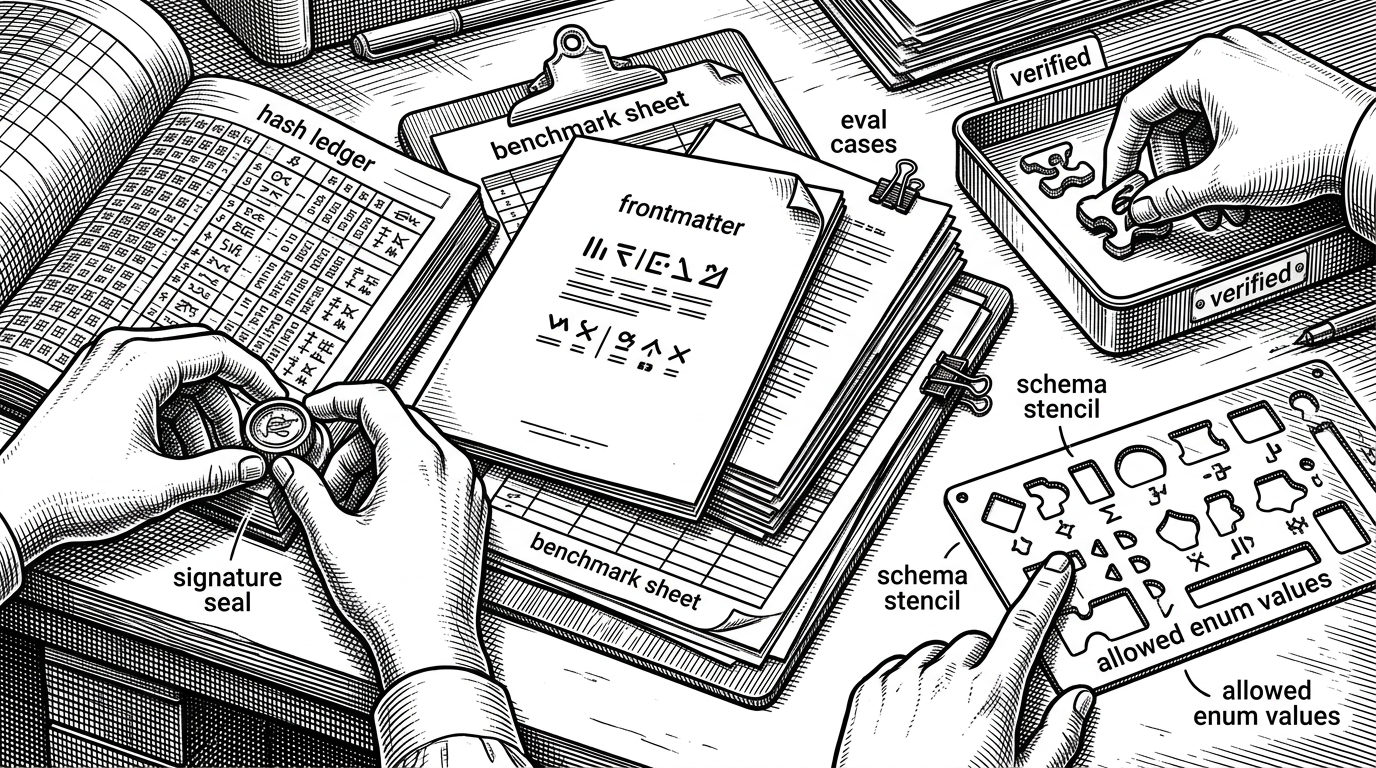
The evals are the important part. They turn agent behavior into something that can regress, fail, and be fixed. That is a familiar software idea applied to an unfamiliar object: prompt-driven behavior.
Metadata is not decoration here. It is the product UI
The metadata pipeline is doing double duty. generate-skill-metadata.py extracts frontmatter, looks up schema enums, and can even use AI enrichment, but the real trick is that the JSON schema also acts as a discovery layer. In other words, the taxonomy is not just validation. It is how the catalog stays searchable and consistent.
| Method | Metadata source | Discovery quality | Failure mode |
|---|---|---|---|
| Manual tagging | Human-written labels | Inconsistent | Drifts fast and gets messy |
| Schema-driven tagging | Allowed enum values from JSON schema | Stable and filterable | Constrained, but predictable |
| AI-enriched tagging | Model-assisted suggestions plus schema checks | Broad and scalable | Useful only if validation stays strict |
That is a very NVIDIA move. The UI does not sit on top of the data model. The schema itself becomes part of the product experience.
Packaging changes per agent, but the skill stays the same
build-plugins.py shows the practical side of the thesis. NVIDIA wants one canonical skill, then different packaging rules for different agents. The repo uses defaults plus overrides, and it can symlink in one place and copy in another, which is the kind of unglamorous detail that makes interoperability real.
| Agent packaging | How it behaves | Why it matters |
|---|---|---|
| Claude Code | Can use symlinks | Keeps the repo lean and easier to maintain |
| Cursor | Receives an adapted bundle | Fits the agent’s local expectations |
| Codex | Uses copies when symlinks do not survive | Avoids broken installs and deployment friction |
That split is the point. NVIDIA is not flattening agents into a fake standard. It is standardizing the skill and letting the delivery format vary.
Why NVIDIA needs governance, not just convenience
For a generic app, a prompt mistake is annoying. For CUDA, robotics, or simulation, it can be expensive or dangerous. That is why the repo’s scope makes sense only if you see the larger stack: CUDA-X, Jetson, Omniverse, physical AI, and enterprise deployment all raise the cost of bad instructions.
When agents can directly use NVIDIA libraries, models and frameworks, physical AI development will move faster, enabling developers to build the robots, autonomous vehicles and industrial systems of the future at an incredible pace.
That quote is not just marketing. It explains the economics. If agents are going to touch real infrastructure, NVIDIA needs a way to control what they are allowed to learn, reuse, and trust.
The security model treats skills like executable code
The trust layer is where this repo stops feeling like documentation and starts feeling like infrastructure. verify_content_integrity.py recomputes hashes, checks signature bundles, and looks for sync drift, which means a skill is not trusted because it exists. It is trusted because the content still matches what was signed.
That is an important distinction. A signature without drift detection is a nice label. A signature plus recomputation is a real control.
What this replaces, and what it does not
| System | What it governs | What it distributes | Trust model | Best use case |
|---|---|---|---|---|
| NVIDIA/skills | Capability, policy, packaging, validation | Portable skills for multiple agents | Schema checks plus signatures | Complex NVIDIA workflows and physical AI |
| MCP | Tool and data transport | Connections to external systems | Protocol-level interoperability | Agent-to-tool communication |
| LangGraph / LangChain | Orchestration | Workflows and agent flows | Framework-level control | Multi-step agent logic |
| Traditional docs | Reference material | Knowledge pages | Human trust and manual review | Reading, not execution |
The table makes the boundary clear. MCP moves calls around. LangGraph coordinates behavior. NVIDIA/skills packages the knowledge itself, then validates and distributes it like a supply chain.
That makes this repo more ambitious than a content catalog and narrower than a general agent framework. It is an opinionated control layer for one ecosystem, and that is exactly why it is interesting.