bug-bounty-runner: Beyond the Grep: Inside Shuvonsec's Autonomous Security Agent
How claude-bug-bounty bridges the gap between raw network packets and human-level vulnerability reasoning.
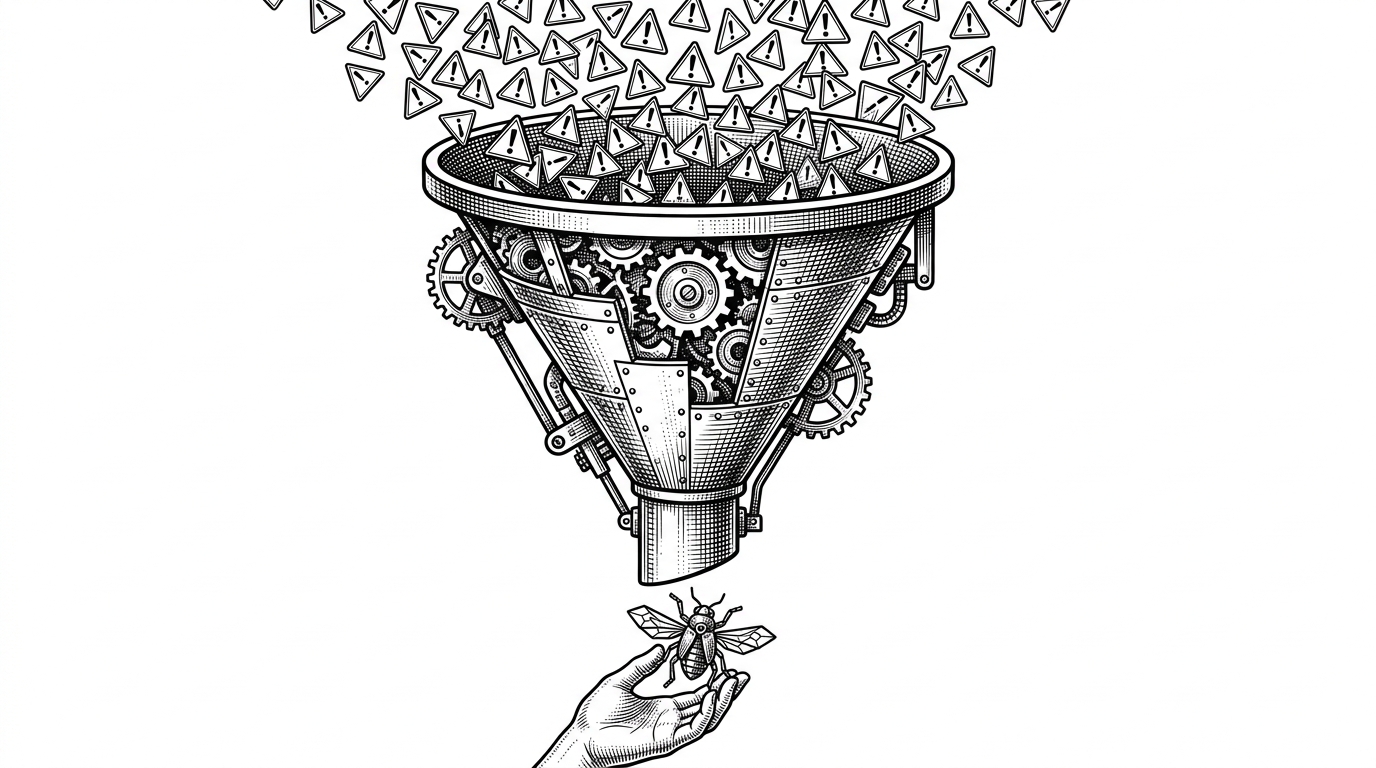

Claude Bug Bounty is an agent harness — not just scripts. It reasons about what to test, validates findings before you waste time writing them up, remembers what worked across targets, and generates reports that actually get paid.
- The agent uses the Model Context Protocol to intercept and modify live HTTP traffic through Burp Suite.
- Automatic validation commands reproduce exploits to eliminate false positives before a human researcher intervenes.
- A dual-token orchestration model allows the agent to identify complex logic flaws like IDOR by swapping session headers on the fly.
- The system transitions from rigid script execution to an autonomous loop that adapts its testing strategy based on real-time server responses.
The End of the False Positive
The "Context Gap" is the graveyard of bug bounty automation. Traditional scanners are loud and dumb. They find thousands of potential vulnerabilities but understand zero of them. The typical workflow involves running a massive reconnaissance pipeline, piping the output into a text file, and spending days manually verifying false positives.
Shuvonsec's project represents a fundamental shift. By anchoring a Large Language Model directly into the network traffic, the tool does not just look for patterns. It understands the business logic. When it finds a potential issue, it uses a dedicated validation command to reproduce the exploit before alerting the human researcher.
The Model Context Protocol Bridge
The intelligence of an AI agent is strictly limited by its senses. A model that only reads static files can only find static bugs. To uncover critical logic flaws, the agent needs to observe the application in motion.
This repository solves the visibility problem via a Burp Suite integration using the Model Context Protocol (MCP). The agent can intercept, read, and modify live HTTP requests. It is not just reviewing code. It is interacting with a live proxy, allowing it to test stateful vulnerabilities like OAuth bypasses and race conditions in real-time.

The Multi-Account Master
Finding Insecure Direct Object References (IDOR) requires testing boundaries between users. Most automated tools fail here because they only operate from a single perspective. They can verify if an endpoint is protected from unauthenticated access, but they struggle to verify if User A can access User B's private data.
The orchestrator abstracts this complex manual process using a dual-token model. It provisions an attacker session and a victim session simultaneously. By swapping authorization headers on the fly, the agent mathematically proves when a logic barrier has failed.
| Feature | Claude Bug Bounty | Traditional Scanners | Manual Testing |
|---|---|---|---|
| Context Awareness | High (Reasons about logic) | Low (Pattern matching) | High (Human intuition) |
| False Positive Rate | Low (Auto-validates) | High (Requires manual triage) | Low (Human filtered) |
| Speed to Execution | Fast (Automated loops) | Very Fast (Parallel pipelines) | Slow (Repeater tabs) |
Autopilot vs. Orchestration
Traditional bash-heavy reconnaissance pipelines are like pre-programmed assembly lines. They execute a rigid sequence of tools regardless of the output. If a server returns a strange 403 error, the pipeline blindly moves to the next task.
An agentic harness operates like a self-driving car. It pauses, analyzes the 403 error, and might decide to test for a header bypass before proceeding. This orchestration of specialized tasks transitions the developer from a script-runner to a true security pilot.
Bug bounty automation is not a script that finds vulnerabilities for you. ... What it actually is: a system that handles the mechanical parts of security research — reconnaissance, asset discovery, initial scanning — while keeping humans in control of the decision that matters most: what to submit.