agrigainAgent: AgriGain: The AI Agronomist That Splits Thinking, Search, and Math Into Separate Jobs
A deep dive into the agentic system that turns agricultural waste into actionable recommendations by combining clarifying questions, hybrid retrieval, trusted market data, and deterministic ROI calculations.
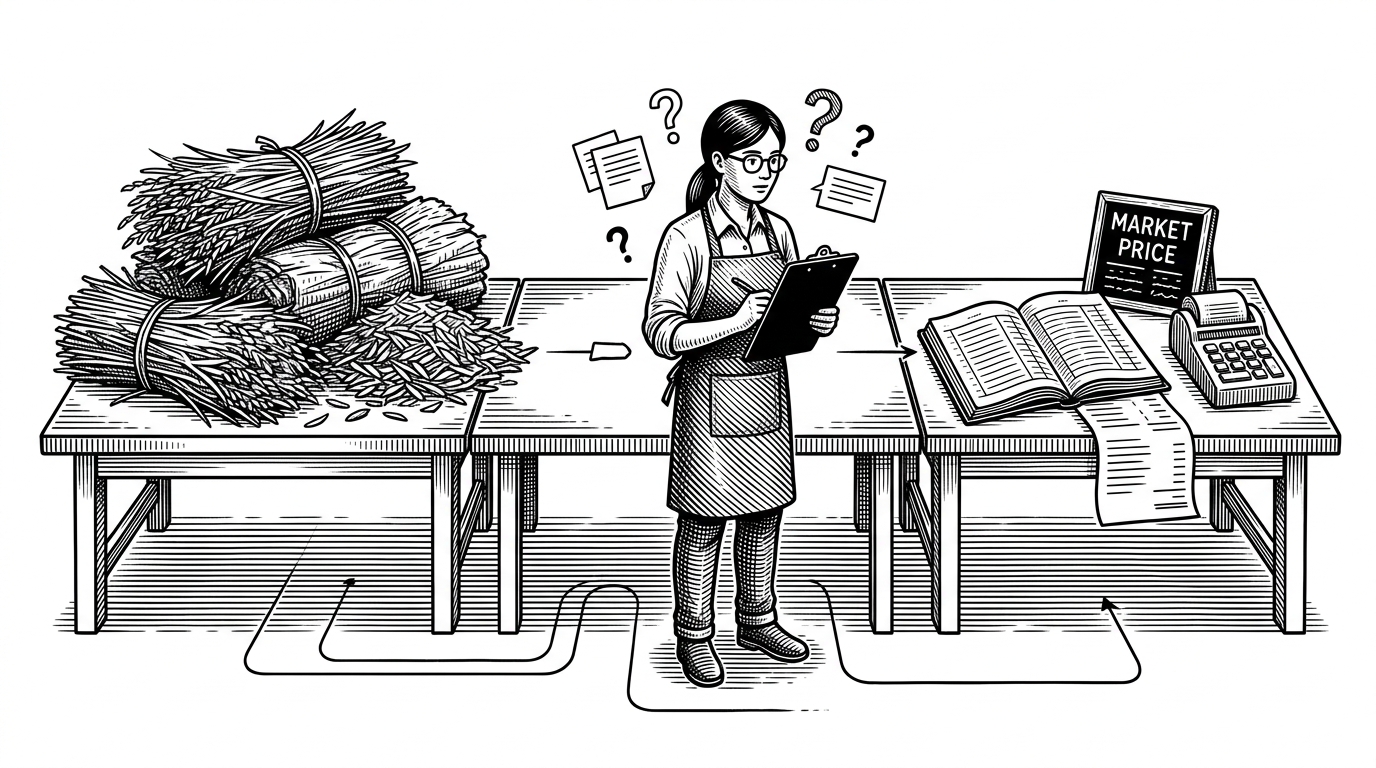
- AgriGain is most interesting as a control system, because it turns a vague agricultural question into a sequence of clarification, retrieval, and calculation.
- The project avoids a common LLM failure mode by refusing to let the model improvise arithmetic or market logic.
- Its retrieval stack treats agricultural knowledge as both structured and unstructured, which is a better fit than plain vector search alone.
- The product reads like a consultative workflow for biomass decisions, not a chat box with tools bolted on.
Why AgriGain Is Not Just Another Farm Chatbot
Most AI assistants answer fast. AgriGain is trying to answer well. The project is built around a simple but rare idea: when someone asks how to turn crop waste into value, the system should separate the question into parts that need science, parts that need fresh market data, and parts that need deterministic math.
That matters because agricultural advice is a trust problem before it is a language problem. A model can summarize biomass uses, but it should not invent feedstock prices, guess at yield, or freestyle an ROI calculation. AgriGain’s architecture is interesting because it treats those as different responsibilities.

The Core Trick: Let the Model Ask, Let Python Calculate
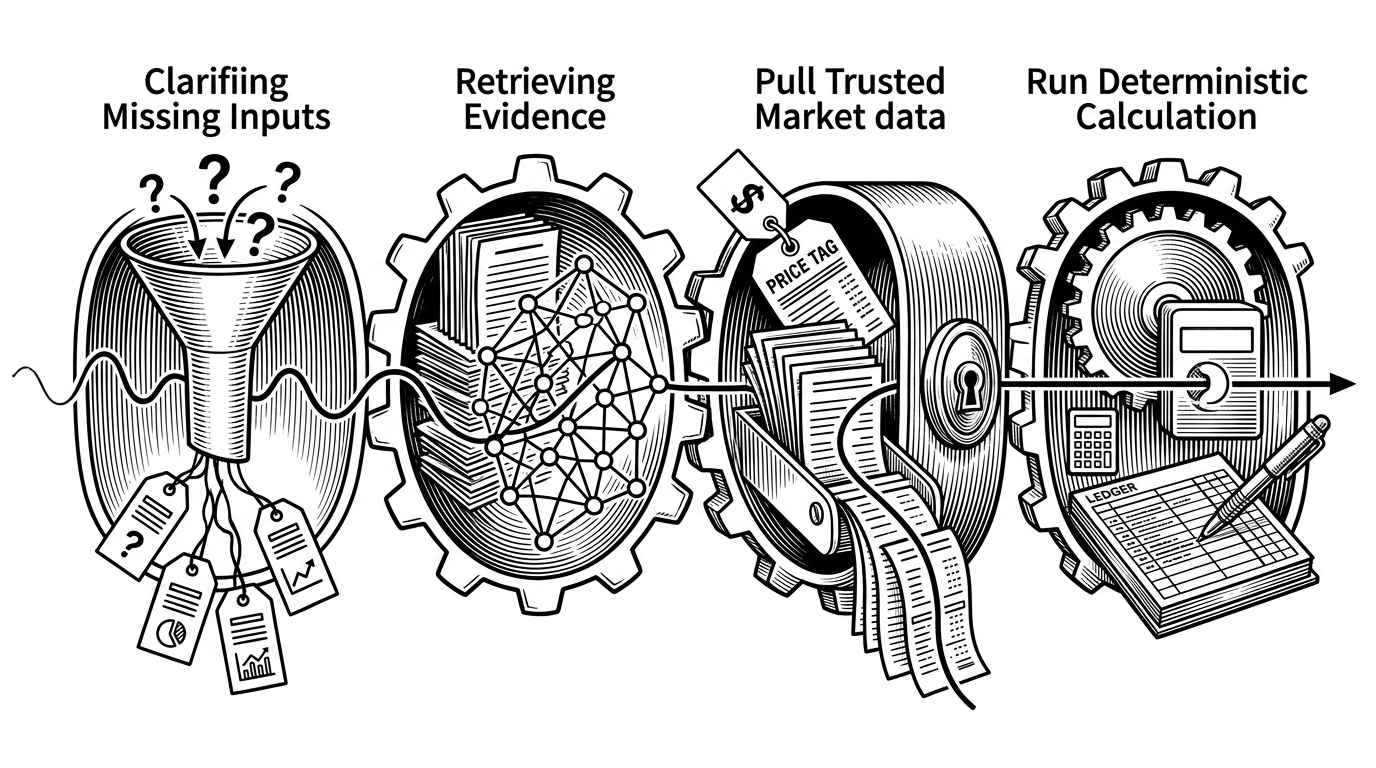
The sharpest design choice in AgriGain is that the LLM does not own the whole answer. It acts as the coordinator for uncertainty. If the user leaves out quantity, location, or feedstock type, the system asks for what is missing first, then passes structured inputs to the rest of the pipeline.
That split shows up in the codebase structure too. The backend is organized around specialized agents, with separate modules for parameter handling, retrieval, web search, and calculation. It is a practical response to a common failure pattern in agent apps: one prompt tries to do everything, and the whole thing becomes mush.
# Conceptual shape of the workflow
query = get_user_query()
params = parameter_agent.check(query)

if params.missing_fields:
    return parameter_agent.ask_clarifying_question(params.missing_fields)

facts = rag_agent.retrieve(params)
market = web_search_agent.lookup(params.location)
result = calculation_agent.compute(params, facts, market)
return synthesize(result)
How the Orchestrator Turns a Vague Question Into a Workflow
AgriGain uses a LangGraph ReAct-style orchestrator, which means the system is not just calling tools in a loose sequence. It is moving through a state machine. The important part is the state. `AgentState` keeps track of messages, gathered data, and reasoning steps, so the assistant does not reset itself every turn.
The node sequence matters: reason, act, observe, synthesize. That makes the assistant feel less like a prompt wrapper and more like a process manager. The model can reason about what it still needs, act by calling the right tool, observe the result, and only then synthesize a response.
The Retrieval Stack Is Doing Three Jobs at Once
The retrieval layer is not just vector search with a nicer name. The repository uses hybrid retrieval, reranking, and a knowledge graph. That combination is a strong fit for agriculture, where some facts are stable and structured, while others live in reports, papers, and market pages.
| System type | Input handling | Retrieval method | Math handling | Trust model | Best use case |
|---|---|---|---|---|---|
| Generic chatbot with tools | Loose natural language prompt | Ad hoc search | LLM guesses or tool calls | User has to notice mistakes | Quick brainstorming |
| Standard RAG app | Document query prompt | Vector search only | Usually still handled by the LLM | Grounding depends on retrieved text | FAQ and document lookup |
| AgriGain | Clarified structured parameters | Hybrid search plus reranking plus knowledge graph | Deterministic Python calculation | Trusted domains and explicit data flow | Agricultural decision support |
That matters because agriculture has two kinds of truth. There is factual truth, like nutrient content or processing methods. Then there is live truth, like price and availability. AgriGain treats those as different retrieval problems instead of flattening them into one embedding index.
Trusted domains are the point, not a detail
The web search agent filters toward trusted domains such as government and institutional sources. That is a smart choice because price advice is only as useful as its provenance. In this domain, freshness without trust is worse than no answer at all.
That is also why the project feels more mature than a typical demo. It is not chasing breadth. It is narrowing the information surface until the answer can be defended.
The Product Shape: A Consultative Flow, Not a Prompt Box
The frontend reinforces the same logic. The app is bilingual, built with a modern web stack, and presents output as structured results instead of a single paragraph dump. That is not cosmetic. It signals to the user that the system has already separated context, evidence, and computation.
The result is closer to a consultation panel than a chat surface. A farmer or agri-business user can see what the system needed, what it found, and what it calculated. That transparency is part of the product, not just the interface.
Where AgriGain Fits in the Agent Landscape
Compared with general-purpose agent frameworks, AgriGain is narrower and more opinionated. Compared with a standard RAG bot, it is more disciplined. The project is not trying to be the biggest agent platform. It is trying to be the one that is hardest to fool.
| Pattern | Strength | Weakness | What AgriGain changes |
|---|---|---|---|
| Generic agent framework | Flexible task coverage | Drifts into ambiguity | Adds domain-specific workflow and constraints |
| Standard RAG bot | Easy grounding in documents | Weak at live data and math | Adds trusted web search and deterministic calculation |
| AgriGain | Decision support for agricultural waste | Narrower scope | Turns uncertainty into a managed pipeline |
Who Built It and What That Suggests
The repository points to Chinmay Kulkarni, working under the GitHub handle Chinmay9535. That matters less as biography and more as signal. The codebase looks like the work of someone who understands that real-world AI systems need guardrails, not just better prompts.
The architectural choices suggest ambition with a practical streak. Separate agents, hybrid retrieval, structured state, trusted source filtering, and deterministic math all point in the same direction: reduce the chance of being wrong when the user is asking for something economically consequential.