The End of Handwritten CUDA: Inside NVIDIA/cuda-tile
How a strict power-of-two compiler abstraction and an open-source MLIR dialect are replacing manual thread management for AI workloads.
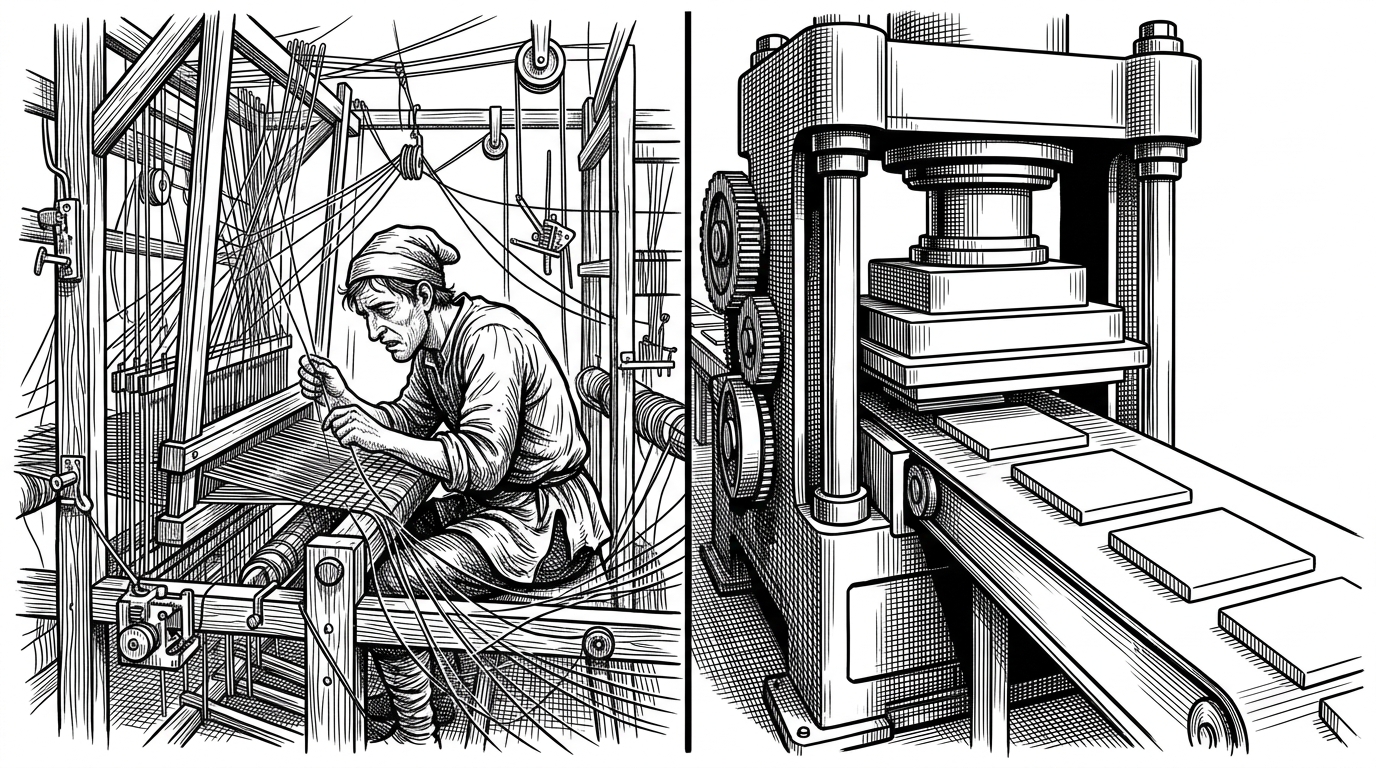
- NVIDIA's cuda-tile repository shifts GPU programming away from the manual SIMT thread model toward a higher-level, block-based tile abstraction.
- The compiler uses mathematical View masks to perform zero-cost transposes, moving data from global memory to Tensor Cores without physical element manipulation.
- A strict power-of-two dimensional constraint enables optimized address generation and prevents shared memory bank conflicts.
- By open-sourcing the underlying MLIR dialect, NVIDIA is establishing a portable, hardware-agnostic exchange format for AI compilers.
For over a decade, extracting maximum performance from NVIDIA GPUs meant writing brutal, low-level C++ using the SIMT (Single Instruction, Multiple Threads) model. Developers had to manually manage warps, avoid thread divergence, and orchestrate shared memory bank conflicts. It was a necessary tax for AI innovation.
The cuda-tile project changes this paradigm entirely. It elevates the programming model from individual threads to high-level tiles. By offloading the complex memory choreography to an MLIR-based compiler, developers can achieve hand-tuned PTX performance using Python or Julia.
| Feature | Traditional CUDA (SIMT) | CUDA Tile IR |
|---|---|---|
| Execution Model | Manual thread and warp management | Compiler-managed block-level parallelism |
| Memory Movement | Explicit load/store per thread | Abstract TileView transformations |
| Shape Constraints | Dynamic sizes permitted | Strict static power-of-two dimensions |
| Target Frontend | Primarily C++ | Python, Julia, and MLIR dialects |
The View Abstraction
Under the hood, cuda-tile relies on the CudaTile_TileView interface. This acts as a converter from a coordinate in an abstract tile space to actual hardware tiles. Instead of physically reshaping data in memory, which is computationally expensive, the compiler manipulates the View.
This abstraction allows for zero-cost transposes and sub-tile extractions. The compiler effectively performs mathematical masking during the load and store phases, feeding the Tensor Cores exactly what they need without moving physical bytes unnecessarily.
The Power-of-Two Tradeoff
Unlike standard dynamic MLIR tensors, the cuda_tile.tile type requires fully static shapes and power-of-two dimensions. This is a deliberate engineering tradeoff found deep inside the Types.td definitions.
While it limits flexibility, this constraint simplifies the math for address generation. The compiler can use bit shifting instead of multiplication or division, and it ensures perfect alignment with the physical banking structure of GPU Shared Memory.
Traditional GPU programming with CUDA requires developers to think about threads, warps, and memory hierarchies. While powerful, this approach requires the programmer to map algorithms onto hardware efficiently. With CUDA Tile, developers describe operations on tiles of data, and the compiler handles the mapping to hardware.
The MLIR Trojan Horse
The most surprising element is NVIDIA open-sourcing the Tile IR. Built on the LLVM/MLIR foundation, the repository includes a custom Bytecode layer. This suggests NVIDIA is positioning this IR as a universal exchange format for AI compilers.
By standardizing the bytecode, third-party tools and competing hardware layers could theoretically consume optimized TileIR blobs. It is a strategic move away from monolithic compilers toward a modular, dialect-based approach.
CUDA Tile IR is an MLIR-based intermediate representation and compiler infrastructure for CUDA kernel optimization, focusing on tile-based computation patterns and optimizations targeting NVIDIA tensor core units.