Crowdfund-DApp: The Smart Contract That Refuses to Pay Out Blindly
A decentralized crowdfunding stack that ties money to milestones, lets contributors weigh in on releases, and pairs wallet auth with social login to make Web3 feel less like a gate.
- Crowdfund-DApp treats crowdfunding as a release protocol, not a donation page, because the contract only moves money when milestones clear a governance step.
- The milestone and voting model is the real product, since it gives backers a say in whether the next payout is deserved.
- The frontend matters because it translates wallet friction, contract state, and identity into something a normal user can actually navigate.
- Clerk plus RainbowKit signals a pragmatic Web3 stance: keep on-chain enforcement, but remove avoidable onboarding pain.
Most crowdfunding apps ask for trust up front. You trust the platform, then trust the creator, then hope the money lands where it should. Crowdfund-DApp flips that sequence. It turns funding into a set of controlled release decisions, where milestones and contributor votes decide when capital can move.
A crowdfunding app that does not trust the payout
That is the whole thesis. This repo is not trying to be “Kickstarter on Ethereum” in the shallow sense. It is trying to make payout conditional on evidence, consent, and contract state.
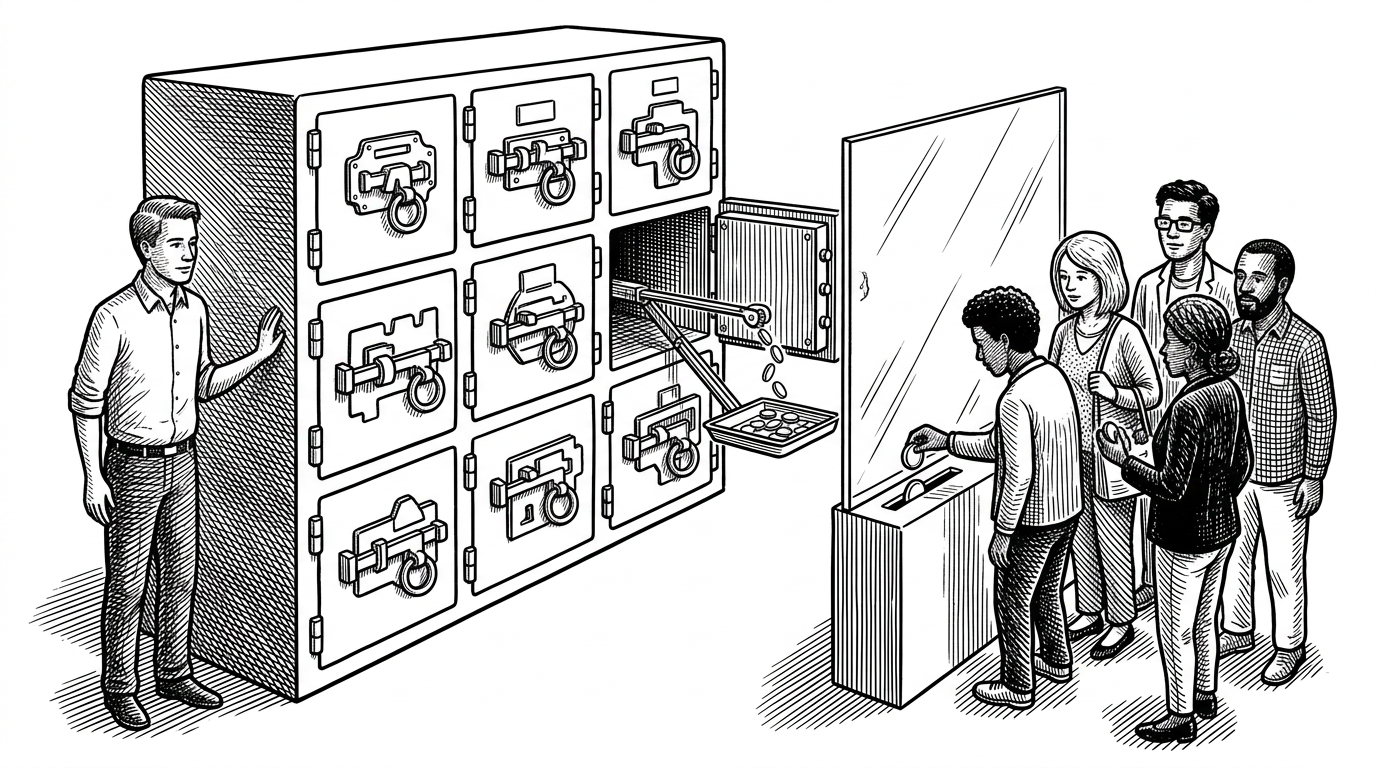
The interesting part is the anti-rug mechanic. Funds are not treated as a lump sum sitting in a creator wallet. They are held inside the contract until a milestone review path says the next release is justified.
Why milestones change the shape of crowdfunding
A milestone system changes the social contract. Backers stop being passive donors and become part of the release mechanism. That matters because it moves the platform from “raise money and hope” to “raise money, prove progress, then unlock the next tranche.”
The repo’s milestone voting events suggest a DAO-lite model. Not full-blown governance theater, just enough community oversight to make payout contingent on shared judgment. That is a narrower claim than “decentralized everything,” and it is more useful.

The contract is the source of truth
The center of gravity lives in web3/contracts/CrowdfundingMarketplace.sol. That is where campaign state, milestone state, and release logic are defined. The frontend can explain the rules, but the contract decides what is real.
The repo uses the usual guardrails you want to see in a payout contract: ReentrancyGuard to protect withdrawals, Pausable for emergency stops, and Ownable for admin-level control. Those are not flashy features. They are the difference between a demo and a system you would even consider funding.
struct Campaign {
    address creator;
    uint256 target;
    uint256 deadline;
    string metadataURI;
    bool active;
}

struct Milestone {
    string title;
    uint256 amount;
    bool approved;
    bool released;
}

event MilestoneVoteRequested(uint256 indexed campaignId, uint256 indexed milestoneId);
event MilestoneVoted(uint256 indexed campaignId, uint256 indexed milestoneId, bool approved);
event FundsReleased(uint256 indexed campaignId, uint256 indexed milestoneId, uint256 amount);
That shape matters. A campaign is not just a target and a deadline. It is also a sequence of milestones, each with its own approval and release state. In other words, the contract models trust as state transitions.
How the frontend translates chain logic into something usable
The UI is not just a skin. It is a translation layer over wallet friction, contract calls, and asynchronous state. The custom hook in hooks/useContract.js wraps contract writes so components can call high-level actions instead of juggling raw Web3 details.
That abstraction is easy to overlook, but it is the difference between a maintainable app and a pile of repeated boilerplate. The hook centralizes success handling, error handling, and contract preparation. The result is a cleaner product surface and fewer places to make the same mistake twice.
The homepage also aggregates platform data by iterating through campaign state, which gives the app a live overview instead of a static marketing page. That is the right move for a crowdfunding product. The homepage should feel like the ledger of record, not a brochure.
Clerk plus RainbowKit is the quietest big idea here
This is the most pragmatic decision in the stack. RainbowKit handles wallet identity, while Clerk adds social login. Put those together and you get a hybrid onboarding path that recognizes a simple truth: not everyone who wants to back a project wants to start by learning wallet UX.
That matters because adoption is usually where Web3 products lose the room. The smart contract can be elegant and still fail if signup feels like a lab exercise. This repo seems aware of that.
Where this sits versus familiar crowdfunding models
Crowdfund-DApp is not the same thing as a traditional crowdfunding site or a plain donation contract. It is closer to a conditional release protocol with community oversight. The table below makes that distinction visible quickly.
| Model | Release trigger | Who decides payout | Can funds be frozen? | Supports milestones? | Best at |
|---|---|---|---|---|---|
| Kickstarter-style crowdfunding | Campaign success or platform rules | Platform and campaign policy | Sometimes, depending on terms | Usually no | Discovery and audience-building |
| GoFundMe-style donations | Donor intent and organizer control | Organizer | Not in a protocol sense | Usually no | Fast fundraising with low setup |
| Simple on-chain donation contract | Immediate transfer or basic withdrawal | Creator | Rarely | No | Transparent deposits and direct transfers |
| Crowdfund-DApp | Milestone approval and contract state | Contributors plus contract rules | Yes, by design | Yes | Trust-minimized release of capital |
The comparison shows the real category shift. Crowdfund-DApp does not just raise money. It decides when money becomes spendable, and it does that with a governance layer attached to the payout path.
What kind of product this becomes if it scales
The repo already has the ingredients of a serious pattern: clean contract boundaries, a typed-ish frontend layer, and production-minded guardrails. It feels early, but not random. That is usually the better sign.
If this idea matures, the value is not necessarily as a general-purpose crowdfunding app. The more interesting endpoint is a reusable design pattern for milestone-gated capital, where creators raise money in tranches and communities help decide whether the next tranche is earned.
That is a narrower product than “Web3 fundraising for everyone.” It is also more believable. The strongest projects in this space usually do one hard thing well, then expand from there.