nodeapp: The Anatomy of the Modern Minimum Viable Container
How a zero-dependency Express boilerplate exposes the architectural shift from bare-metal scripts to immutable infrastructure.

- The minimum viable web application has evolved from a single script to a triumvirate of logic, dependency manifest, and infrastructure blueprint.
- By hardcoding network boundaries, the repository removes abstraction to make the container's execution path entirely explicit.
- Splitting Dockerfile copy commands isolates application state from logic to leverage layer caching.
- The omission of a .dockerignore file highlights the exact boundary between a pedagogical template and a production-ready microservice.
The New Atomic Unit
A decade ago, a basic web application was a single JavaScript file. You uploaded it to a server via FTP, installed global dependencies, and hoped the underlying operating system matched your local environment. Today, the absolute minimum viable application requires a triumvirate of files.
The arffsaad/nodeapp repository is a perfect, unopinionated embodiment of this shift. We are dissecting it not because it is complex, but because its extreme simplicity exposes the foundational mechanics of modern containerized deployments. It serves as a clean-room specimen of the modern atomic unit of compute.
The Triumvirate of State
A modern service requires logic, state, and environment. In this repository, those roles are played strictly by server.js, package.json, and the Dockerfile. There is no configuration drift because the environment is defined alongside the code.
The author hardcodes the port variable in the application logic. While production systems rely on environment variables, this rigid declaration removes abstraction. It makes the networking path entirely explicit for developers learning how internal container ports map to the host.
Caching as Architecture
The most technically interesting part of this repository is its Dockerfile layer caching strategy. The infrastructure layer explicitly isolates the dependency manifest from the application logic.
COPY package*.json ./
RUN npm install
COPY . .
By copying the manifest file and running the installation step before copying the rest of the source code, the container leverages Docker's layer caching. If the developer changes a single line in the server logic, Docker skips the expensive installation step entirely. This architectural choice saves countless hours of build time over a project's lifecycle.
The Boundary of 'Hello World'
What a pedagogical repository leaves out is just as important as what it includes. This codebase deliberately omits a .dockerignore file.
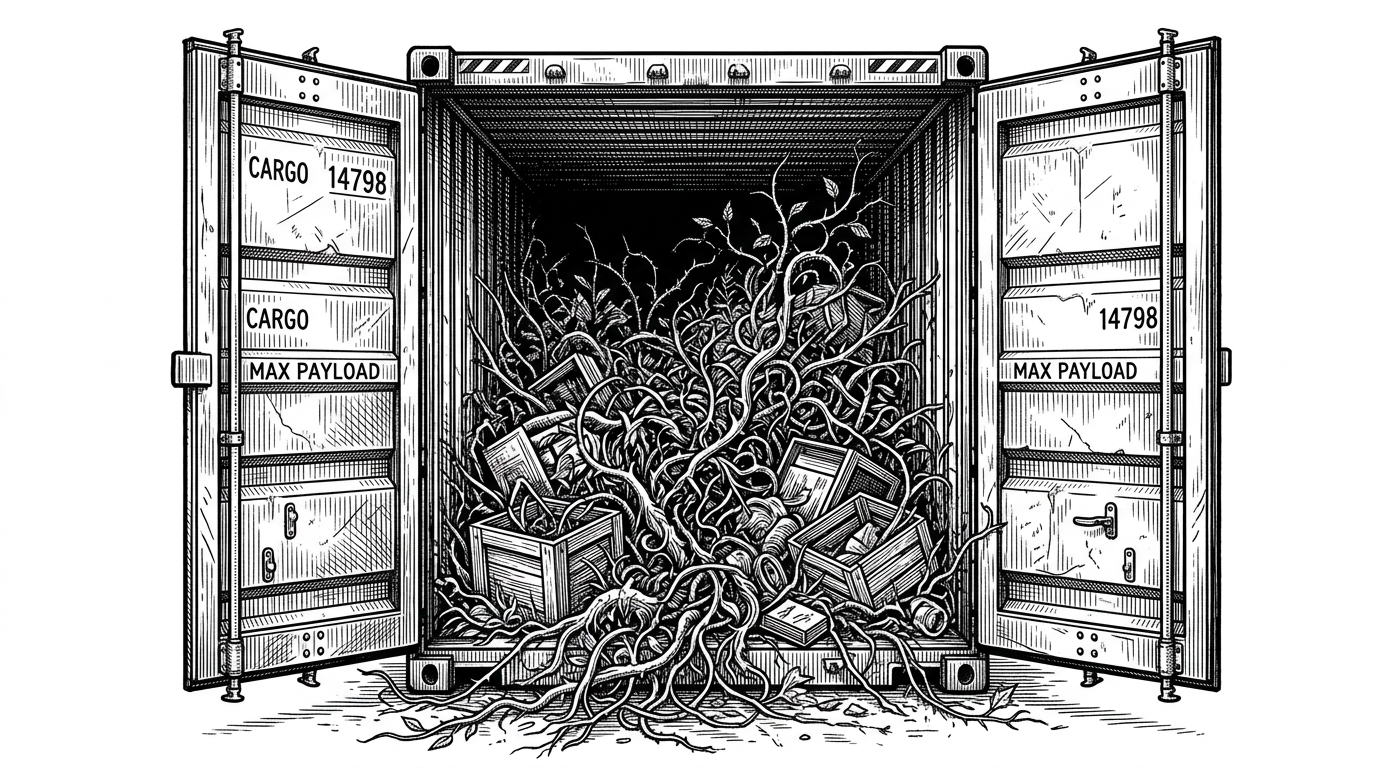
Without this file, a local dependencies folder can accidentally be copied into the container image if built locally after an installation. This omission is not a bug, but rather the exact boundary line between a learning template and a production microservice. It forces the developer to understand build contexts.
| Feature | The 2014 Node App | The 2024 Node App |
|---|---|---|
| Execution Context | Assumes target OS | Bundles specific Debian OS (node:18) |
| Dependency Resolution | Relies on global NPM installs | Isolated local dependencies |
| Networking | Binds to whatever port is free | Explicitly mapped internal ports (EXPOSE 3000) |
| Portability | Works on my machine | Provably identical across environments |