Inside `donnemartin/system-design-primer`: The Repo That Teaches You to Think Like a Systems Architect
A free, visual curriculum for trade-offs, distributed systems patterns, and interview-grade reasoning that turns system design from memorization into method.

Learning how to design scalable systems will help you become a better engineer. System design is a broad topic. There are a vast number of resources scattered throughout the web on system design principles. This repo is an organized collection of resources to help you learn how to build systems at scale.
- The Primer’s real product is architectural judgment, not a pile of answers.
- It teaches one repeatable workflow that turns vague requirements into constraints, diagrams, and trade-offs.
- Its flashcards and mock implementations make recall part of the learning system, not an afterthought.
- The repo wins by being free, visual, broad, and teachable, even when it stops short of messy real-world migration work.
The reason `donnemartin/system-design-primer` stuck is not that it lists good interview answers. It is that it packages a way of thinking. The repo keeps pushing the same habit: take an underspecified prompt, make the constraints explicit, choose a shape for the system, and defend the trade-offs.
That matters because system design is rarely a memory test in the real world. It is a judgment test. The Primer teaches that judgment through repetition, diagrams, and tiny code mocks that force the reader to move from concept to structure.
The repo is a decision engine, not a notes dump
Most resources in this space separate the parts that matter. One page explains scaling theory. Another shows a diagram. A third gives you a few flashcards. The Primer bundles those pieces into one loop, so the reader practices the same move in multiple forms.
The structure is the clue. The repo is organized around solutions, diagrams, and resources, with a README that acts like a curriculum index. That is why it feels more like an operating system for learning than a static reference page.
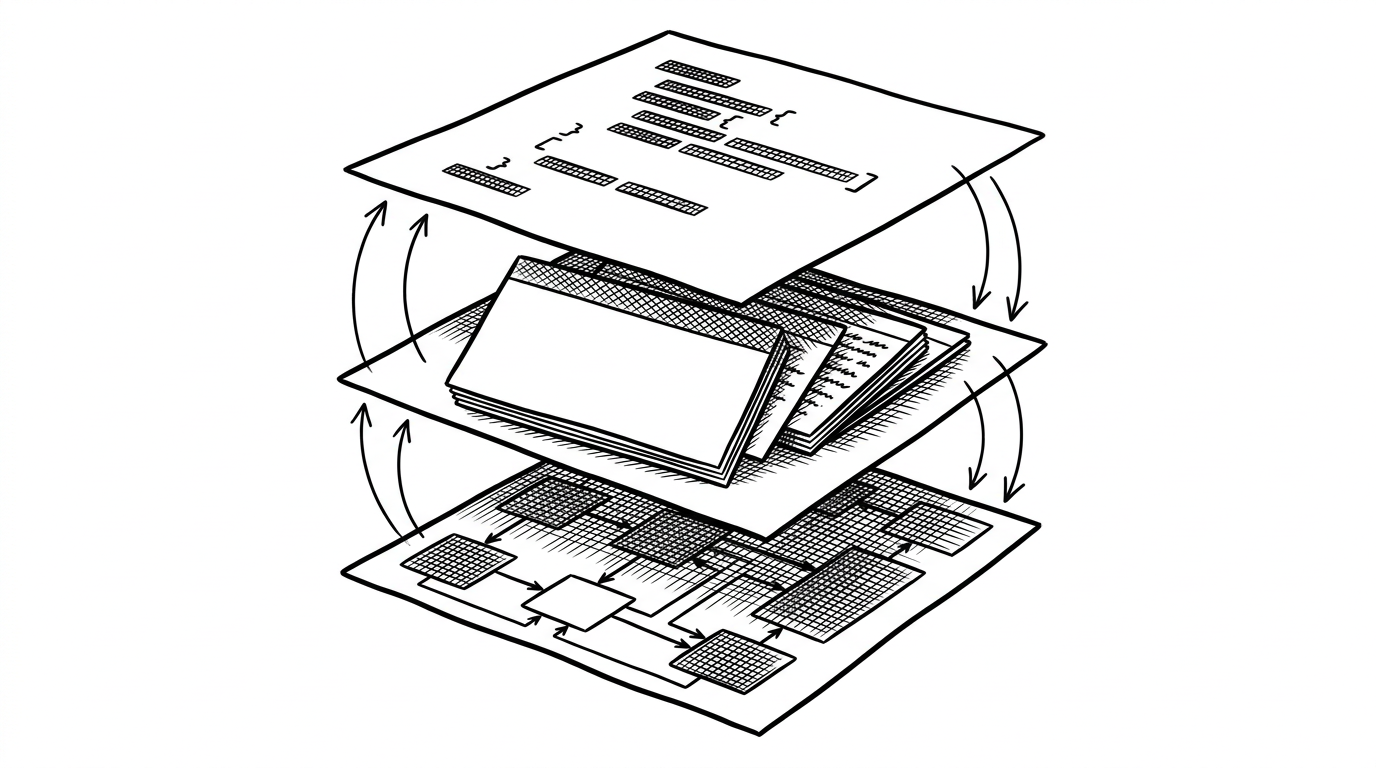
How the Primer trains architectural judgment
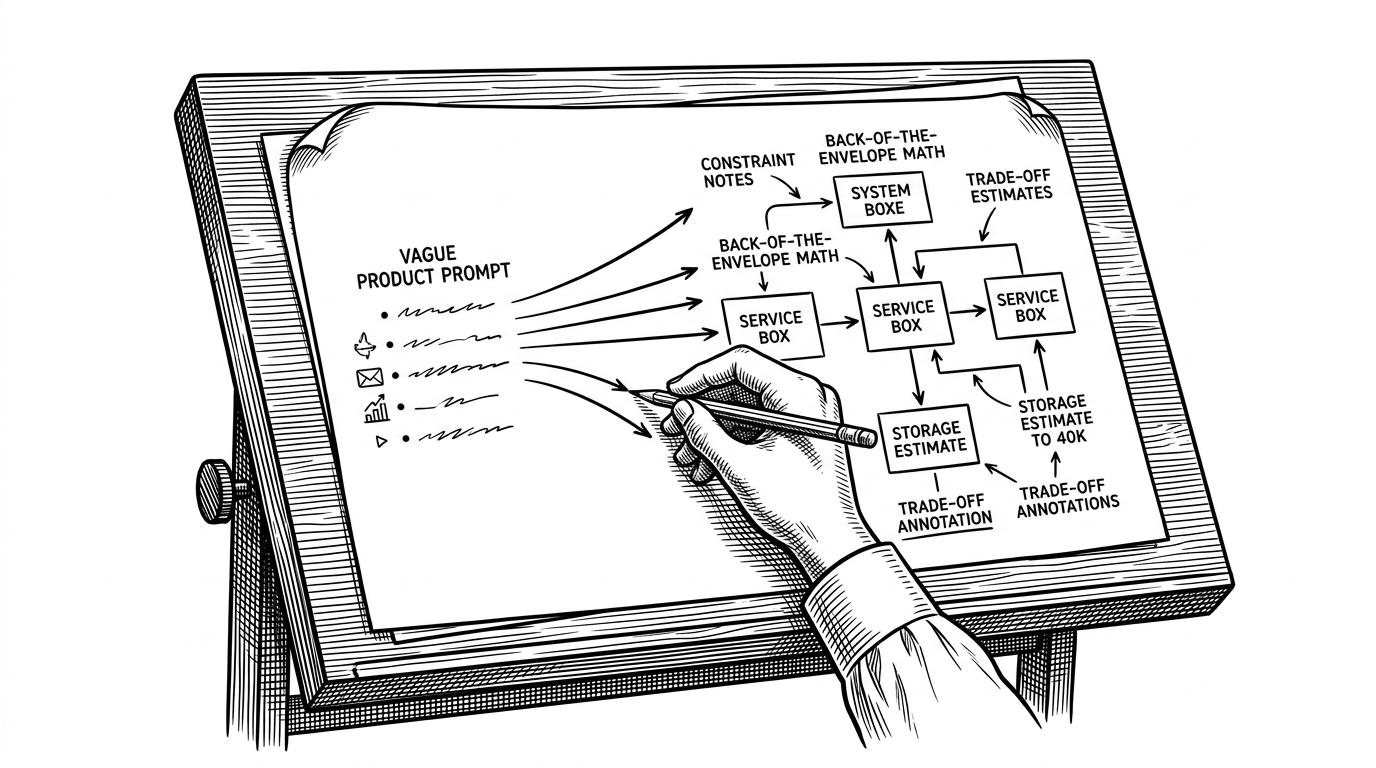
The repo’s repeatable pattern is the lesson itself. Start with constraints and assumptions. Do rough math. Sketch the high-level design. Then zoom into component choices and trade-offs.
1. Clarify requirements
2. Estimate scale
3. Sketch the system
4. Detail the components
5. Call out trade-offs
6. Revisit with flashcards
The Pastebin solution is a good example of how the Primer works. A feature request becomes storage estimates, request rates, and a concrete choice of components. You are not just naming technologies. You are justifying why a particular architecture fits the problem.
The point is not that the Primer gives you a single canonical answer. It trains you to produce a defensible answer. That is a different skill, and a more durable one.
Why the flashcards matter
The Anki layer is easy to overlook, but it is one of the repo’s sharpest ideas. System design is full of patterns that must be recognized quickly under pressure. Flashcards turn that recognition into muscle memory.
That makes the repo feel less like a reference and more like a curriculum. You are not just reading about caches, queues, partitioning, and consistency. You are rehearsing them until they become retrieval paths.
The visual system is the real interface
The diagrams are not decoration. They are the interface. For a topic this abstract, the drawing is often the first place understanding becomes stable.
That is also why the repo traveled so well. Clear system drawings cross language barriers faster than prose. A well-made architecture sketch is a portable explanation.
What it gets right, and what it leaves out
The Primer is strongest when the problem is greenfield design. It is also excellent for interview prep, where the task is to communicate structure, trade-offs, and scale under time pressure.
Its weaker spot is the messier side of engineering. Real migrations, legacy dependencies, org politics, partial rewrites, and operational debt do not fit neatly into a clean mock solution template. That limitation does not break the repo, but it does define its lane.
| Strength | Where the Primer shines | Where it is thin |
|---|---|---|
| Greenfield design | Fast, structured reasoning for new systems | Less guidance for legacy constraints |
| Interview prep | Great for explaining trade-offs on the fly | Can encourage polished but shallow answers |
| Learning format | Diagrams, notes, code mocks, and flashcards reinforce each other | Not a substitute for production experience |
| Scope | Broad coverage across common system patterns | Not deep on operations, migrations, or org dynamics |
Why it outlasted flashier alternatives
This comparison is about role, not ranking. Each resource solves a different problem. The Primer sits in the middle ground where breadth, teachability, and access matter most.
| Resource | Best for | Format | Depth | Visuals | Memory support | Primer advantage |
|---|---|---|---|---|---|---|
| System Design Primer | Free, broad system design study | Open-source repo | Moderate | Strong | Yes, Anki flashcards | Combines curriculum, visuals, and recall |
| DDIA | Theory and deep internals | Textbook | Very deep | Low | No | Easier entry point for interview prep |
| ByteByteGo / System Design 101 | Modern visual explanations | Illustrated repo | Moderate | Very strong | No | Broader curriculum and learning loop |
| Grokking the System Design Interview | Step-by-step interview structure | Paid course | Moderate | Moderate | No | Free and community-driven |
| Karan Pratap Singh system-design | Modular course-like breadth | Open-source repo | Moderate | Moderate | No | More memory tooling and a larger canonical footprint |
DDIA goes deeper. ByteByteGo is prettier. Grokking is more guided. The Primer wins when the job is to build a free, broad, highly teachable system-design curriculum that can be reused, translated, and memorized.
The global standard effect
The most striking thing about the Primer is not its format. It is its spread. The repo became infrastructure in engineering culture because it was easy to consume, easy to remix, and easy to localize.
That makes it unusually durable. A good repo can be useful. A good curriculum can be copied. A good learning system can become part of how a field teaches itself.
I think that repo single handedly helped me answer most of the question on my last interview series which nets me the offer.
That is the real reason the Primer lasted. It does not just explain systems. It teaches a reusable method for seeing them.