grafana/xk6-docs Turns the CLI into an AI-Ready Encyclopedia
Web-based documentation is slow for developers and prone to hallucination for AI agents. This k6 extension bundles version-locked manuals directly into the binary.
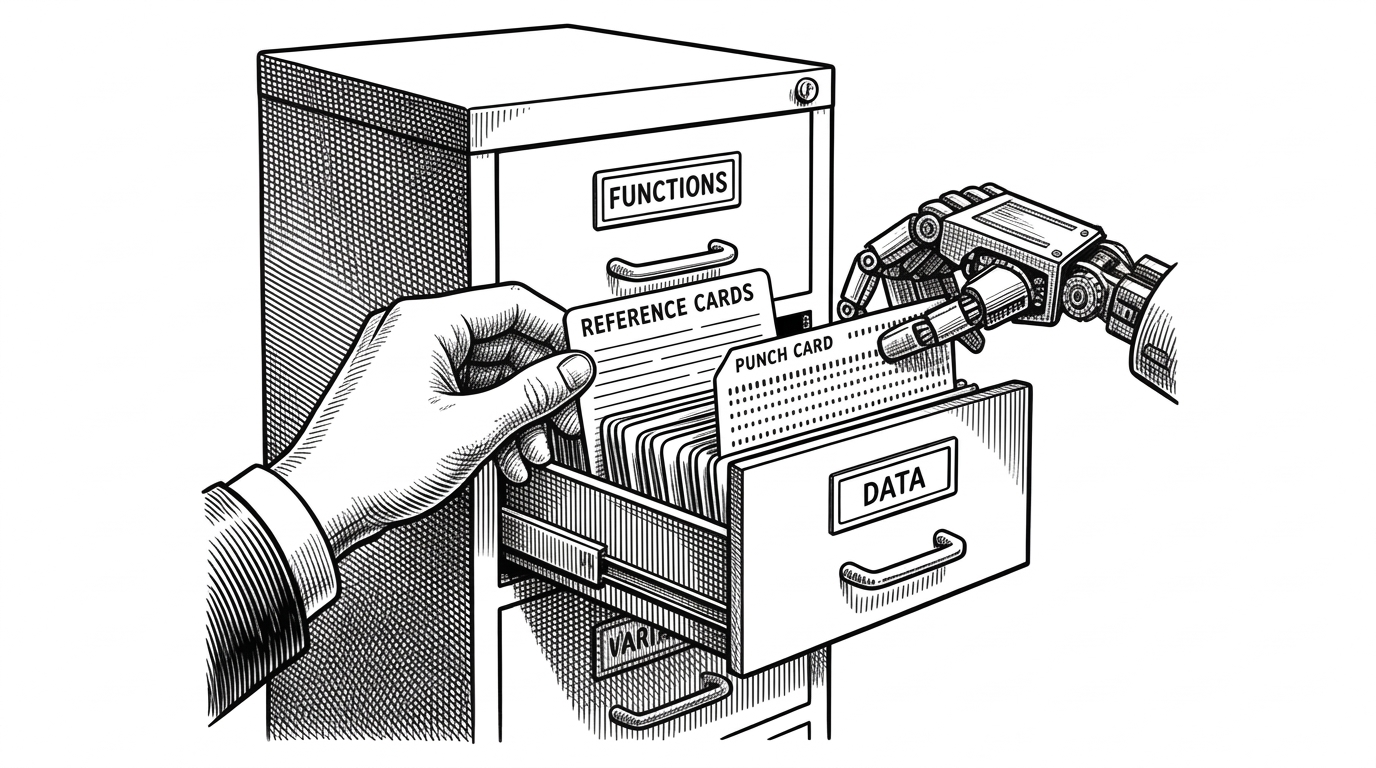

An agent skill is included so AI coding agents can look up k6 docs efficiently — fewer commands, no guessing paths, no wasted tokens.
- The extension bundles version-locked documentation directly into the k6 binary to prevent API version drift.
- A dedicated skill command provides a Model Context Protocol bridge for AI agents to query documentation natively.
- The transformation pipeline compiles complex web-based MDX and Hugo components into clean terminal output.
- Local Zstd compression enables instant, offline documentation lookups without the latency of web scraping.
A Manual Built for Machines
Modern software development is increasingly a collaborative effort between humans and AI agents. Yet, the way we distribute documentation remains stubbornly human-centric. Web-based portals require context switching, network latency, and visual parsing. When an AI agent like Claude Code or Cursor needs to understand an API, scraping a web page is an expensive, token-heavy process prone to hallucination.
The `xk6-docs` extension takes a different approach. It treats documentation as a local, machine-readable dependency. By running a simple command, developers can instantly query the k6 manual from their terminal. More importantly, it exposes a dedicated `skill` command. This effectively installs a Model Context Protocol bridge, allowing autonomous agents to search and read the documentation natively.
The Version-Locked Reality
One of the most insidious problems in modern development is version drift. You find a solution on a company documentation site, paste the code, and it fails. The website is showing the latest major release, but your local project is pinned to an older version. AI agents suffer from this even more acutely, often hallucinating API signatures based on outdated training data or mismatched web search results.
This extension solves the problem through introspection. The `version.go` logic uses Go's runtime debug package to inspect the build metadata of the running binary itself. It hunts for the exact version of the `go.k6.io/k6` core dependency.
Once it finds the version string, it normalizes it into a wildcard format. A specific build like `v0.45.2` is mapped to the `v0.45.x` documentation bundle. The manual is physically bound to the machinery it describes. There is no guesswork.
Compiling Web Markdown to the Terminal
The official k6 documentation is a complex web property. It runs on Hugo and relies heavily on React components, shortcodes, and web-specific MDX features. Rendering this directly in a terminal would result in unreadable garbage.
The hardest technical challenge in the repository is the `transform.go` pipeline. It acts as a specialized compiler that downgrades rich web content into clean terminal output. It strips out PascalCase React components, converts Hugo admonitions into standard Markdown blockquotes, and sanitizes internal links to keep the text while removing web URLs that point to locally bundled files.
By processing the documentation at build time and caching the results in a compressed Zstd tarball locally, the application ensures that rendering is instantaneous. When a developer runs a query, the CLI applies standard ANSI formatting and writes directly to standard output.
The Offline-First Advantage
The terminal is the developer's home. Switching to a browser breaks flow state. While general-purpose CLI search tools exist, they lack the deep, nested understanding of specific toolchains and usually require an active internet connection.
By bundling a compressed index and utilizing intelligent fuzzy-routing for slugs, `xk6-docs` behaves more like a local database than a web scraper. It handles edge cases elegantly, automatically prefixing queries with context so that searching for "clear" correctly resolves the cookie jar API.
| Feature | Web Documentation | General CLI Search | xk6-docs |
|---|---|---|---|
| Version Accuracy | Shows Latest Release | Mixed/Unpredictable | Binary-Locked |
| AI Agent Usability | Token-Heavy Scraping | Medium | Native Skill Integration |
| Offline Capability | None | Partial (Cache) | Full Local Bundle |
| Latency | Network Dependent | Network Dependent | Instant |
The shift from web-hosted reference material to embedded, binary-locked documentation is a quiet revolution. As AI coding agents become the primary consumers of API references, tools that are illegible to machines will simply be used less. By turning the load-testing CLI into its own encyclopedia, Grafana ensures k6 is ready for the agentic future.