Turbodrone: The Universal Remote That Frees Cheap Drones From Their Apps
A reverse-engineered control stack that normalizes flight commands, rescues video feeds, and turns low-cost WiFi drones into programmable robotics hardware.
- Turbodrone’s breakthrough is normalization, not just control, because it makes different cheap drones respond to one shared mental model.
- Reverse engineering is the product feature here, since packet sniffing and protocol adapters turn undocumented hardware into reusable infrastructure.
- The flight loop matters because steady packet timing and shaped stick response make bargain drones feel precise instead of twitchy.
- Video is treated as an unreliable subsystem, so reconnect logic and frame fan-out are first-class architecture, not afterthoughts.
Cheap drones usually arrive with a tiny digital leash: one app, one protocol, one fragile control experience. Turbodrone cuts that leash and replaces it with a Python API, a web client, and a normalized control layer that can drive several different low-cost drones through the same interface.
That sounds like a convenience project. It is actually a systems project. The interesting move is not that the repo flies a drone. It is that it converts app-locked plastic hardware into something that behaves like a platform.
From Toy Drone to Programmable Platform
Marshall Richards started from a familiar annoyance: these drones are capable enough to be fun, but the software around them is brittle and closed. In the README, he describes the motivation as freeing drones from their "jail" by reverse-engineering the mobile apps and exposing the video feed and control path as code.
I thought it would be cool to free some of these drones from their "jail" and write an API and client for accessing the video feed and sending control commands down to the drone by reverse-engineering how the mobile apps work. That way you can turn a highly capable $50 "toy" drone into something that can be programmatically controlled and used for all sorts of applications and experiments.
That framing matters. Turbodrone is not competing with polished consumer drone software. It is rescuing overlooked hardware and making it usable for experiments, teaching, and robotics tinkering.
The codebase reflects that ambition. Python handles the backend, React and TypeScript handle the web client, and the repo is organized around clear separations: models, protocols, services, and plugins. That is a sign the project is trying to scale beyond a one-off hack.
The Real Trick: One Mental Model for Many Incompatible Drones
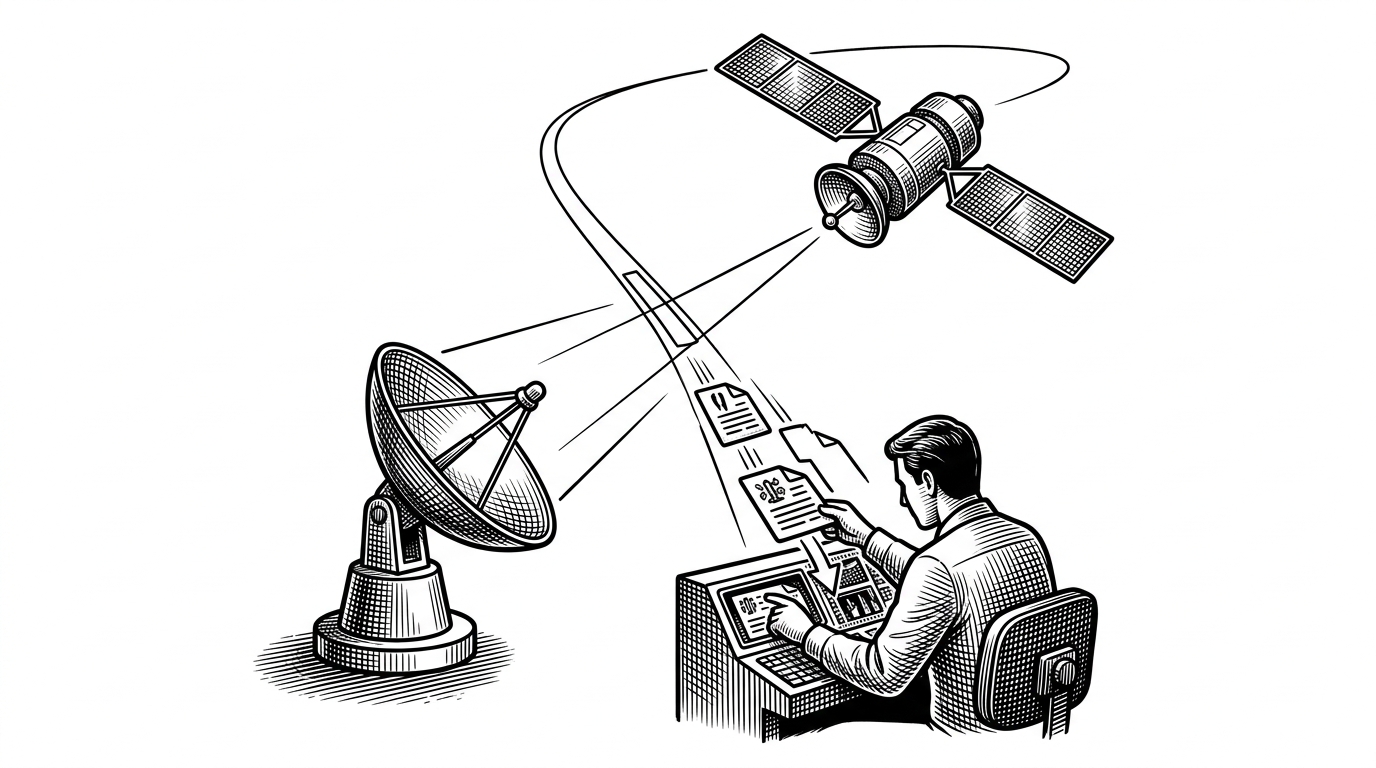
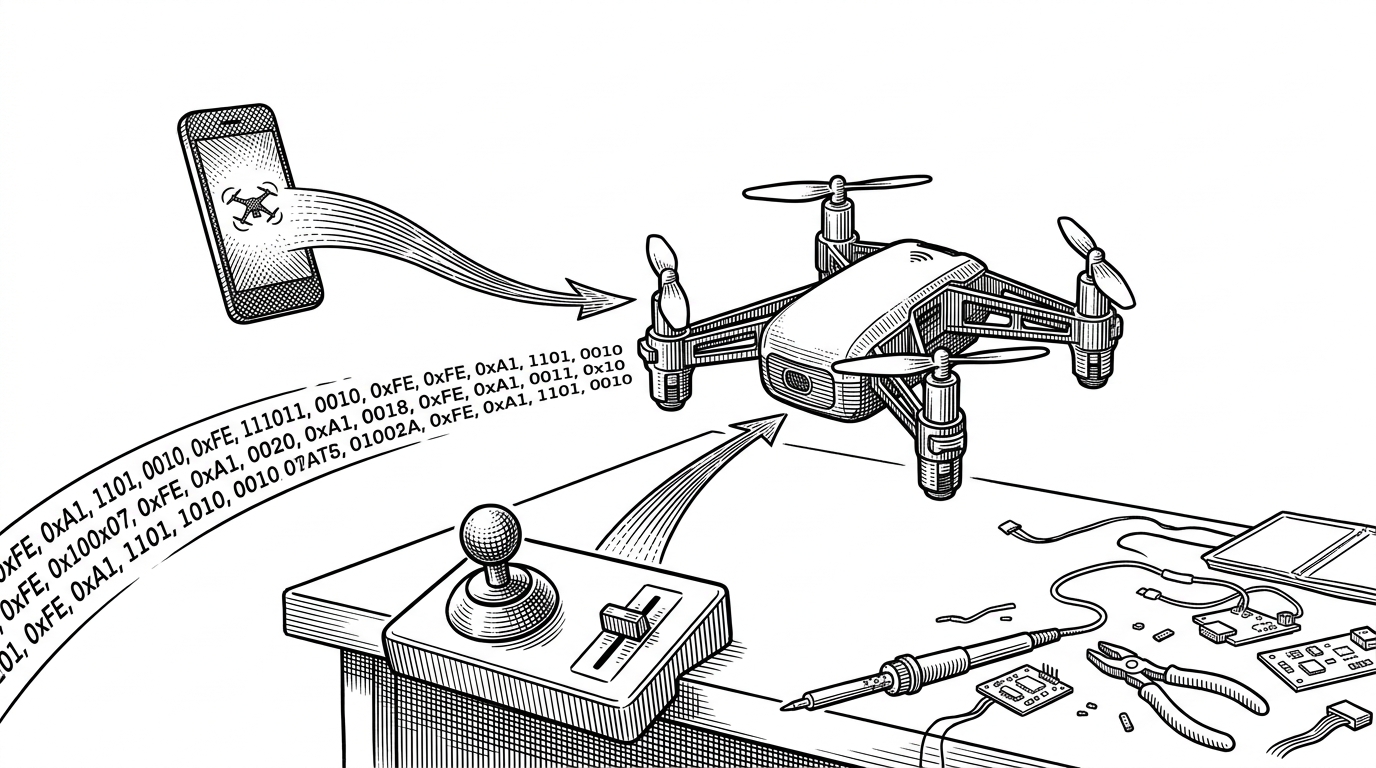
Turbodrone’s core abstraction is simple to describe and hard to build: a flight controller speaks in normalized intent, while protocol adapters translate that intent into whatever byte layout a specific drone expects. The user thinks in axes and actions. The drone sees its own weird packet dialect.
In practice, that means a controller can keep working even when the hardware changes underneath it. One drone may want one packet shape and another may want a different one, but the upstream interface stays stable. That is the difference between a toolkit and a platform.
# Conceptual shape of the control path
axes = {"pitch": 0.0, "roll": 0.0, "yaw": 0.0, "throttle": 0.0}
controller.update_axes(
    pitch=0.6,
    roll=0.0,
    yaw=-0.2,
    throttle=0.4,
    strategy="incremental",
)
packet = adapter.build_control_packet(model, axes)
socket.send(packet)
How the Packet Sniffing Becomes Flight Control
This is where the project stops being abstract and starts looking like detective work. The repo’s research notes point to jadx, Ghidra, and Wireshark as the tools used to peel back the app, inspect native code, and observe what actually goes over the wire.
That work is not glamorous, but it is the reason the abstraction holds up. The project includes protocol adapters such as s2x_rc and wifi_uav_rc, which translate normalized commands into the specific packets different drones demand.
To View Video stream `ffplay rtsp://192.168.1.1:7070/webcam`... Can't get it to work with turbodrone so far. perhaps the /webcam endpoint needs to be added. still going through the code.
A small line in the implementation tells you a lot about the level of reverse engineering involved: one packet builder notes that flags in byte 6 and 7 were reversed compared with the mobile app. That is the kind of detail you only get by comparing actual firmware behavior with the app’s traffic and then fixing the mismatch by hand.
Why the Flight Loop Feels So Intentional
The control feel is not an accident. The flight controller runs at a fixed rate, sending packets continuously instead of waiting for a one-off command. That matters because cheap WiFi drones tend to feel sloppy when control updates are irregular or too coarse.
Turbodrone also shapes how input feels. Exponential response reduces twitchiness around center stick positions, while an immediate response boost keeps the drone responsive when you want a sharper move. The result is a control surface that feels closer to a real RC workflow than a toy app.
That combination, steady timing plus shaped response curves, is what makes the project feel intentional rather than merely functional. It does not just let you send commands. It lets you fly with less friction.
Video Is the Other Half of the Problem
Control is only half the battle. Toy drones are notorious for unstable video links, so Turbodrone treats connection resets as normal operating conditions. The backend’s video service recreates protocol state when the socket breaks instead of pretending the link is reliable.
That resilience shows up again in frame distribution. The FrameHub fan-out pattern lets multiple clients see the stream without stealing frames from each other. That is a small architectural choice with big practical impact when you want the drone feed visible in more than one place.
In other words, the repo handles video like a live service, not a display widget. That is exactly the right instinct for unreliable consumer hardware.
Why This Beats the Usual Drone Options
Turbodrone is not trying to outgun professional flight stacks. It occupies a narrower, more interesting niche: inexpensive hardware, reverse-engineered access, and enough abstraction to make multiple white-label drones look like one target.
| Feature | Turbodrone | TelloPy | ArduPilot / PX4 | Crazyflie |
|---|---|---|---|---|
| Target hardware | Generic low-cost toy drones | Ryze Tello | Custom professional drones | Crazyflie micro-quadcopter |
| Control approach | Reverse-engineered WiFi protocols | Official DJI / Ryze SDK | Open-source autopilot firmware | Open-source firmware and control lib |
| Primary language | Python, TypeScript, React | Python | C++ and assorted tooling | C and Python |
| Video stream | Reverse-engineered video paths | Official SDK video | Varies by setup | Optional camera deck |
| Best fit | Affordable robotics experiments and app-locked hardware | Entry-level documented learning | Advanced autonomy and mission planning | Research and swarm robotics |
The comparison is clear. TelloPy is easier if you own a Tello. ArduPilot and PX4 are much deeper stacks for serious airframes. Crazyflie is a polished research platform. Turbodrone is for the messy middle, where the hardware is cheap, the protocols are hidden, and the payoff is access.
What Turbodrone Suggests About Hardware
The bigger lesson is not about drones alone. Consumer hardware often becomes stranded when the app disappears, the protocol shifts, or the vendor stops caring. Reverse engineering gives that hardware a second life.
That makes Turbodrone useful in more than one lane. Hobbyists get a cheaper entry point. Educators get accessible robotics hardware. Builders get a control stack they can actually extend. And a pile of toy drones gets promoted into something closer to infrastructure.
That is the whole point of the project. It takes the ugly, undocumented middle layer and turns it into an advantage.