Tweaker makes device-specific Linux feel boring
It turns hardware detection into a single first-boot decision, then hands the result back to Debian instead of leaving a trail of permanent forks.
- Tweaker's real abstraction is not a tweak file, it is a first-boot decision that converts hardware detection into a reversible packaging step.
- By keying off the device-tree compatible property, the daemon can stay small while still picking the right configuration for each board.
- Debian packaging gives the project an exit ramp, because the tweaks are installed as managed artifacts instead of one-off filesystem edits.
- The project scales by shrinking the surface area of device-specific knowledge, not by hiding it.
Linux device support breaks in boring ways. One board wants a different symlink, another needs a different config fragment, and suddenly a universal image is no longer universal. Tweaker is interesting because it refuses to become another pile of bespoke images. It treats the device as data, chooses the correct tweak once, and leaves the rest of the system alone.
Mobian's problem was scale, not taste
The Mobian team describes the original idea plainly: a daemon that identifies the hardware, reads a prepared config, and applies the matching tweaks. That matters because the hard part is not spotting a board. The hard part is making sure the answer turns into something cleanly installed, understandable, and easy to remove later.
Simply put, tweakster is a system daemon that identifies the device it’s running on by checking the device-tree`compatible` property. It then determines the necessary tweaks by reading a pre-prepared config file, processes tweaks files, then creates symlinks to the resulting files into the system.
That is the important move. The daemon is not trying to be a general configuration framework. It is a narrow interpreter for one job: match hardware identity to a deterministic set of changes. Once that decision is made, the system can stay universal everywhere else.
The whole trick is a short decision pipeline
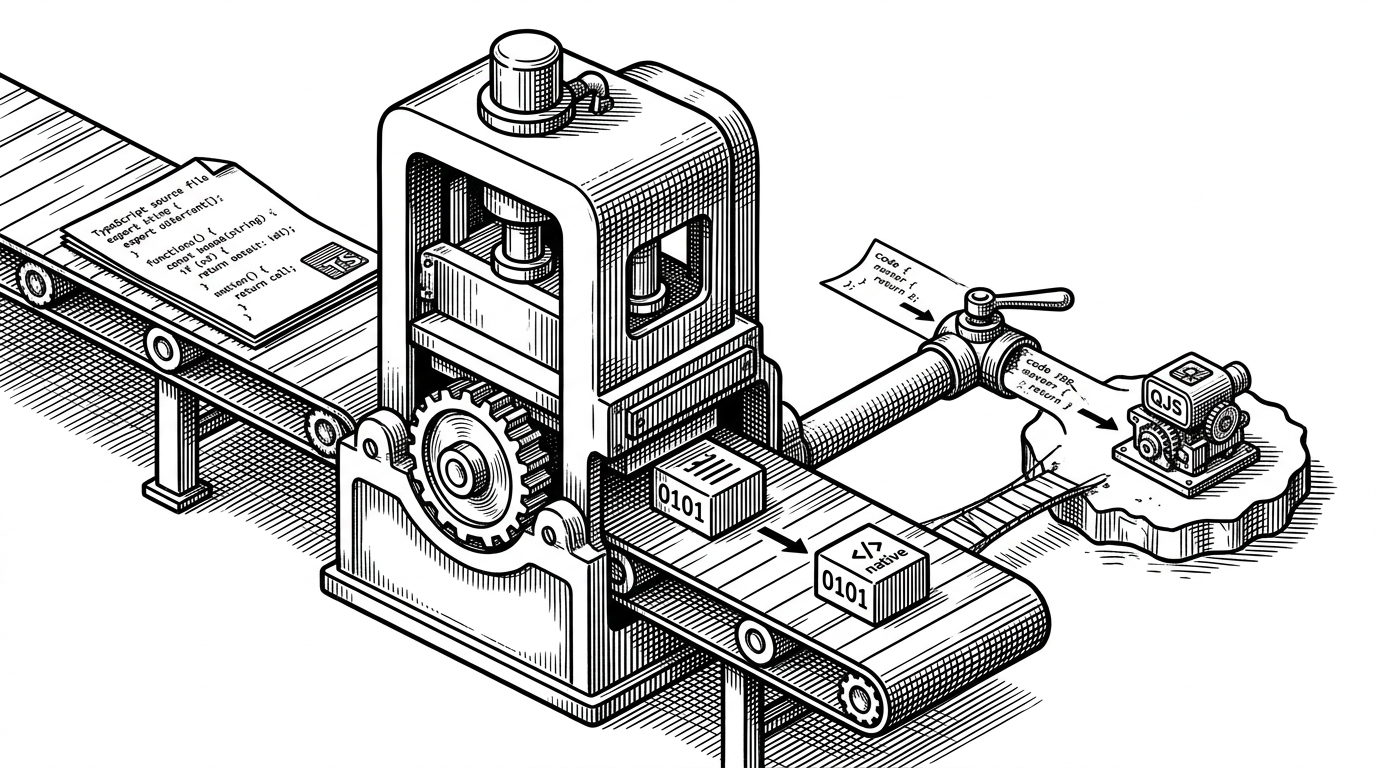
The diagram above is the whole playbook. The daemon starts with the device-tree compatible property, uses that to look up a config, then translates the result into files the system can actually consume. In the refactored packaging approach, that last step becomes even cleaner because the tweaks are copied into a Debian package, installed, and then the temporary mess disappears.
The new approach is simple: tweakster still performs device identification, but then it leverages Debian’s mature packaging system. It reads the device-specific config (using a completely new file format), copies the required tweaks into a newly created Debian package, and then builds and installs that package, cleaning temporary files afterwards.
Why this beats the usual alternatives
There are older ways to do this. You can ship device-specific packages, write custom init scripts, or push more logic into the bootloader. Those approaches work, but they age badly because they turn each new board into another place where the rules can drift.
| Approach | What it optimizes | Where it breaks down |
|---|---|---|
| Device-specific packages | Direct control over a known board | Package sprawl grows as hardware support expands |
| Custom init scripts and daemons | Fast, local fixes at boot | The logic becomes opaque and hard to retire cleanly |
| Tweaker | One hardware decision, one managed set of changes | Requires disciplined config, but keeps the system universal |
Tweaker's point is not that it eliminates hardware differences. It makes those differences explicit, narrow, and temporary. That is a better operating model for a distribution that wants to support more devices without turning every device into a special case forever.