Document-QA-System-RAG: The Quiet Art of Making Documents Searchable
A self-hosted RAG pipeline that turns PDFs, DOCX, Markdown, and text files into a citation-ready knowledge base with batch ingestion, chunked retrieval, and Endee-powered indexing.
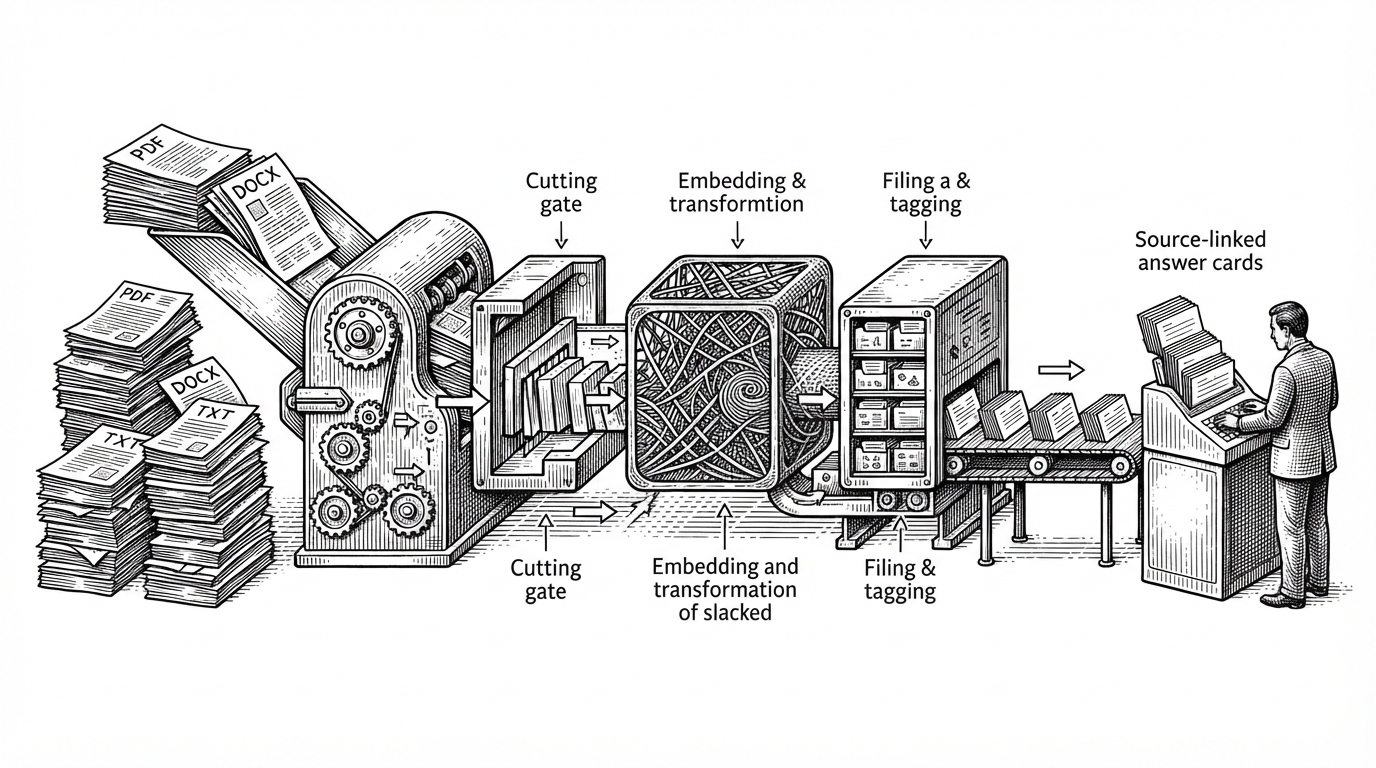
- Document-QA-System-RAG treats retrieval as the product, not the chat UI.
- Its real strength is a disciplined ingestion path that preserves source traceability from file to answer.
- Endee is not a footnote here, but the backend choice that shapes speed, precision, and rebuild behavior.
- The repo reads like a reference implementation for builders who want a private document QA stack they can reason about and swap apart later.
The part most RAG demos skip
Most RAG demos stop at a pleasant chat box. This repo starts earlier and cares more: it asks how documents become retrieval units in the first place, and how those units stay trustworthy when a user asks for an answer with sources attached.
That shift matters. If ingestion is sloppy, the rest of the stack just turns noise into confident noise. Document-QA-System-RAG makes the retrieval layer the main event, which is exactly where a serious document QA system earns its keep.
Why the pipeline matters more than the chat box
The repository’s core flow is straightforward, but the discipline is in the sequencing. Files are extracted, chunked with overlap, embedded, batched, and stored with metadata so answers can point back to a source instead of floating free.
File input
  -> text extraction
  -> sliding-window chunking
  -> metadata enrichment
  -> embeddings
  -> Endee batch insert
  -> similarity search
-> source-cited answerThe hidden design choices that make it feel production-ready
A production-ready Retrieval-Augmented Generation (RAG) system enabling intelligent, context-aware document Q&A. Built with Python, Endee Vector Database, and Streamlit.
That README line is not just marketing. The structure backs it up: a modular Python codebase, centralized config, a Streamlit UI, a CLI entry point, and a test suite. It behaves like a package-shaped product, not a notebook spillover.
| Layer | What it signals | Why it matters |
|---|---|---|
| Dataclasses and .env config | Structured settings instead of hard-coded constants | Makes the system easier to tune, deploy, and audit |
| Dual entry points | Streamlit app plus CLI | Supports both exploration and automation |
| Tests folder | Reliability is part of the design | Reduces the risk of silent regression in ingestion and retrieval |
| Batch ingestion | Vectors move in groups, not one by one | Cuts overhead and makes indexing more efficient |
Endee is the differentiator
The repo is not pretending the vector store is interchangeable. Endee is part of the point. The implementation leans into search parameters, precision mapping, and HNSW-backed indexing, which gives the project a clear opinion about where performance should come from.
That choice changes the story. Instead of defaulting to the usual starter stack, the repo bets on a fast, self-hostable vector engine with a destructive rebuild path for development and precision fallbacks for memory trade-offs. That is a serious systems decision, not a cosmetic one.
| Choice | Document-QA-System-RAG | What it suggests |
|---|---|---|
| Precision | INT8D with fallback to FLOAT32 | Memory and accuracy are tuned, not assumed |
| Indexing | HNSW-backed search | The backend is optimized for practical retrieval speed |
| Rebuild behavior | Force rebuild supported | Developers can iterate without hand-waving around stale indexes |
| Storage philosophy | Self-hosted Endee instead of a generic vector toy | The repo is trying to be operational, not just illustrative |
How the system keeps retrieval accurate
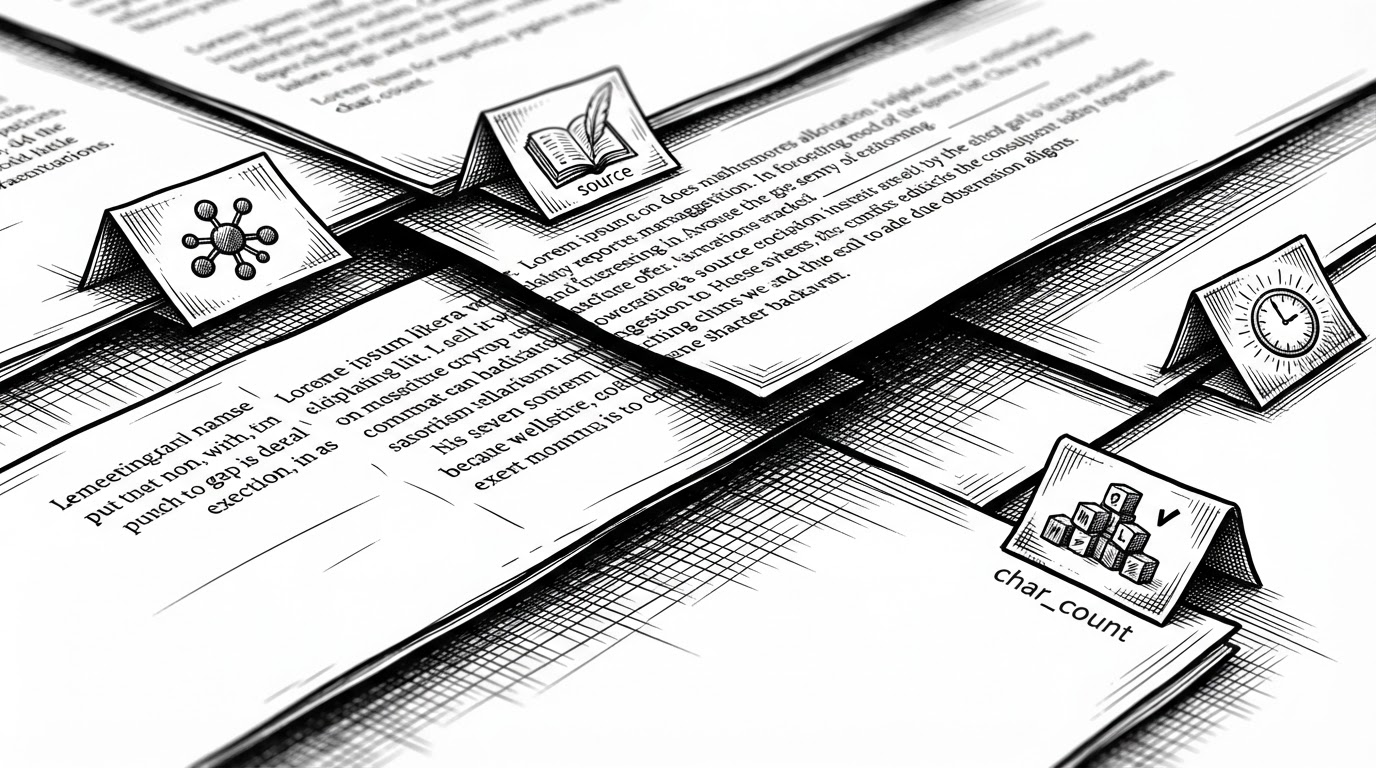
The key accuracy move is the sliding window. Chunking with overlap keeps context alive at the edges, which is where naive text splitting usually fails. The result is fewer broken references and less chance that a relevant sentence gets stranded in the wrong chunk.
Metadata closes the loop. Once each chunk carries its source, size, and ingestion details, the UI can surface citations that feel inspectable instead of decorative. That makes the system easier to trust, and easier to debug when the answer is off.
A retrieval system should explain itself
The best sign here is not the existence of a search box. It is that the answer path is legible end to end: document in, chunk out, vector stored, top matches returned, source cited in the UI. That is the shape of a system you can actually operate.
What it looks like next to the usual suspects
| Project | Primary goal | Deployment style | Vector backend philosophy | Best fit |
|---|---|---|---|---|
| PrivateGPT | Private local Q&A over personal docs | Local-first and privacy centered | Often paired with familiar local tooling | Users who want a broad, private document assistant |
| Quivr | Second-brain style knowledge platform | Platform-like with more integrations | More product surface than reference simplicity | People who want a larger knowledge workspace |
| Verba | RAG starter kit in the Weaviate world | Ecosystem-backed and demonstrative | Optimized around the Weaviate stack | Teams already invested in Weaviate |
| Document-QA-System-RAG | Focused document QA with citation-aware retrieval | Self-hosted and compact | Endee is the signature choice | Builders who want a retrieval-centric reference implementation |
The contrast is not feature count. It is philosophy. PrivateGPT is the privacy-first generalist, Quivr is the broader knowledge workspace, Verba is the ecosystem starter, and this repo is the focused retrieval skeleton with Endee at the center.
Who this is for
This is for builders who want a reference implementation they can study, modify, and replace piece by piece. If you care about how retrieval quality is shaped by ingestion, chunking, metadata, and backend choice, this repo gives you a clean place to start.
It is also for teams that want a private document QA stack without outsourcing the core design decisions. The value here is not the chat interface. It is the engineering discipline underneath it.