NoteIT: Note-IT AI: The Academic Studio That Lets Students Own the AI Layer
A research workspace that turns lectures, PDFs, and video into study materials, while encrypting user keys, proxying model calls, and falling back when the cloud gets in the way.
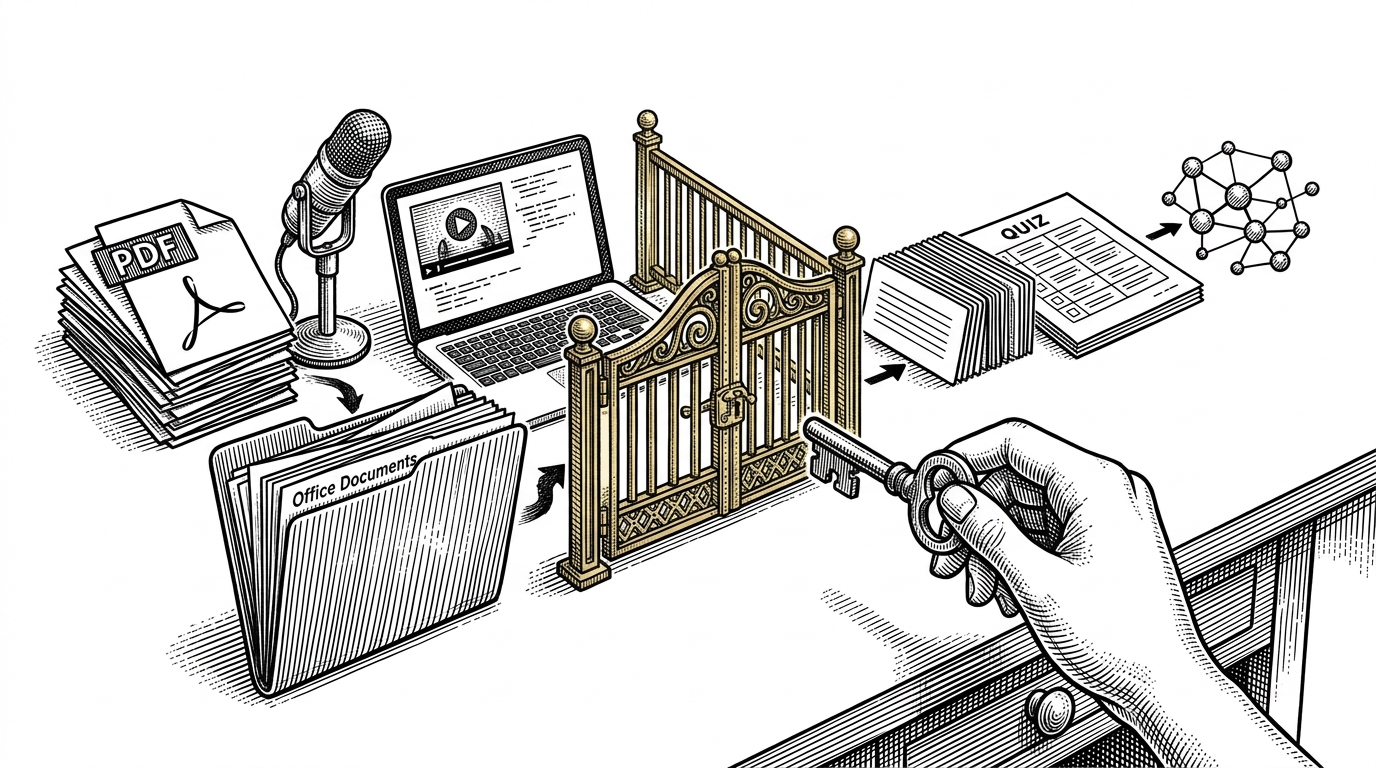
- Note-IT AI stands out because it treats access to AI as user-owned infrastructure, not a platform-owned convenience.
- Its real novelty is the combination of BYOK, encryption, proxy routing, and fallback behavior, which turns trust into a product feature.
- The app collapses lectures, PDFs, video, and office files into one normalized academic pipeline before generating notes, quizzes, and flashcards.
- The result is closer to a control plane for learning than a conventional note app.
Why This Is More Than a Note App
Most note apps store information. Note-IT AI tries to mediate intelligence. That difference matters because the app is not just a place where students park material. It is a workspace that decides how material enters, how model calls are made, and how output becomes study-ready.
That makes the project interesting for a different reason than the usual AI productivity tool. The architecture is the product thesis. Students do not just use the system. They keep control over the AI layer that powers it.
The Trust Model: BYOK, Encryption, and Proxy Calls
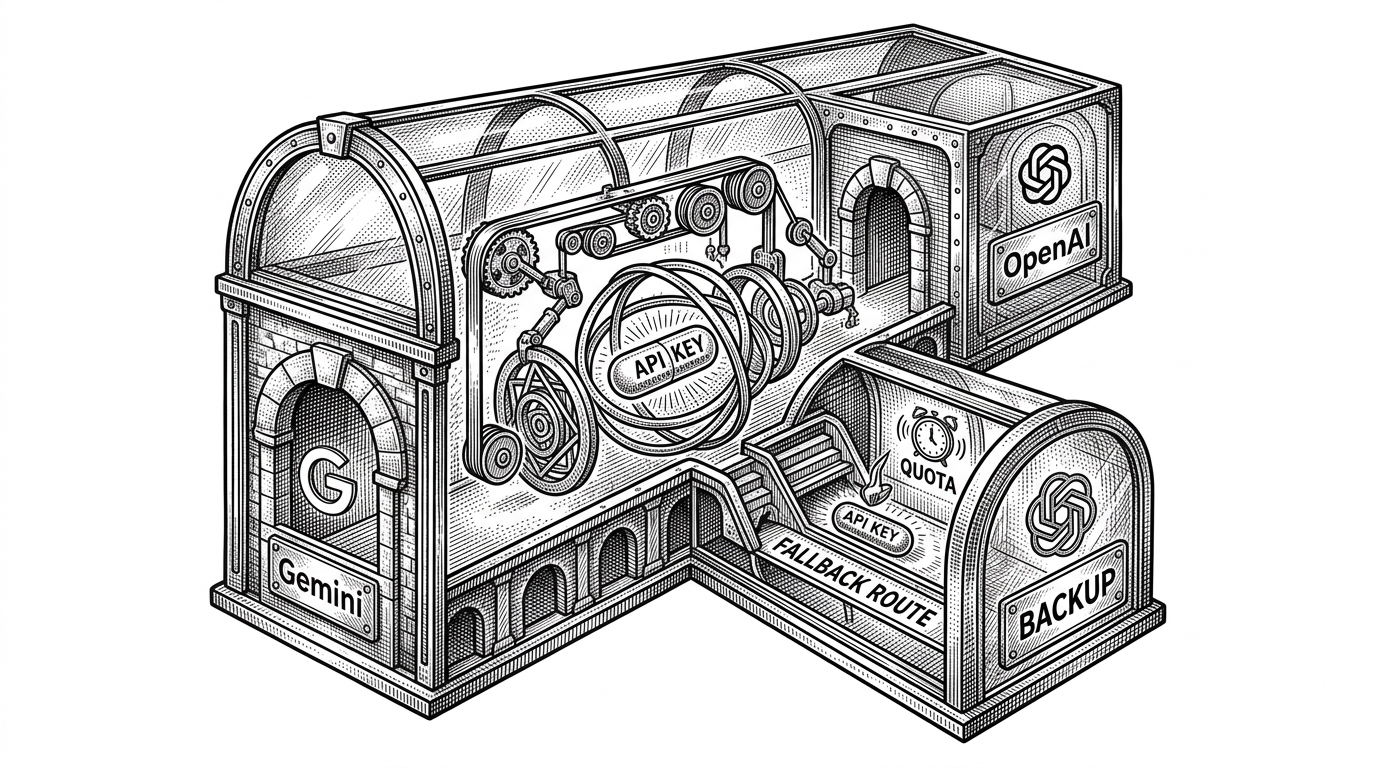
The repo’s most distinctive move is Bring Your Own Key. Instead of owning the model relationship for the user, Note-IT AI lets the user bring credentials and then encrypts them before storage. The backend acts as a secure proxy, so the client does not talk directly to the model service.
That changes the trust boundary. If you look at the code path described in the repo, API keys are encrypted with AES-256-GCM, stored with IV and auth tag, and then used through a mediated request flow. The app is not simply calling an LLM. It is governing how the call happens.
// Simplified from the repo's security model
const encrypted = `${iv}:${authTag}:${ciphertext}`;
const key = crypto.scryptSync(secret, salt, 32);
const cipher = crypto.createCipheriv('aes-256-gcm', key, iv);

// User key is stored encrypted, then routed through the proxy layer
// before model requests are executed.How One Lecture Becomes a Study Object
Note-IT AI collapses a messy academic world into one shared abstraction. YouTube links, PDFs, DOCX files, PPTs, web pages, and live lecture audio all feed into the same pipeline. The important part is not that the app supports many formats. It is that those formats stop mattering after ingestion.
Once inside the system, the source becomes a lecture or research object. That normalization step lets the rest of the product stay coherent. Notes, flashcards, quizzes, and knowledge graphs are not separate features bolted onto different import types. They are outputs of the same pipeline.
This is why the repo feels more like a studio than a notebook. A lecture is not just stored. It is processed, cleaned, and turned into study material the rest of the app can reason about.
The Reliability Layer That Keeps AI Outputs Usable
The app does not trust model output as-is. That is the right instinct. Large model responses are useful, but they are not reliable enough to feed directly into typed application state without cleanup.
The repo’s `extractJsonObject` logic and related parsing flow turn model responses into structured data such as quizzes and notes. That means the app treats the model like a noisy collaborator, not an oracle. It sanitizes first, renders second.
function extractJsonObject(text: string) {
  // Strip code fences and locate the first valid JSON object
  // so quiz and note payloads can be parsed safely.
  return parsed;
}

// If Gemini hits quota limits, the app can fall back
// to another configured provider when available.
The Knowledge Graph Is the Real Product
The repository is not only trying to summarize lectures. It is trying to track learning over time. That is where the `WeakTopic` model and mastery fields matter. The product moves from content capture to diagnosis.
A knowledge graph changes the frame. Instead of asking what the student uploaded, the system asks what the student understands, where confidence is weak, and which topics need reinforcement. That is a different class of product.
In that sense, Note-IT AI is not just a document processor. It is an attempt to model comprehension.
Why the Stack Matters
The stack is unusually current: React 19, Vite 6, Tailwind CSS v4, Framer Motion, Express, Firebase, Azure Blob Storage, and TypeScript. On paper, that sounds like a standard modern web app. In practice, it matches the ambition of the product.
The frontend is built for a fast, interactive studio. The backend handles parsing, proxying, and storage orchestration. Firebase provides identity and persistence. Azure Blob Storage handles larger assets, with local fallbacks to keep development sane.
| Dimension | Note-IT AI | Typical note app |
|---|---|---|
| Source ingestion | Normalizes PDFs, video, audio, docs, and web pages into one pipeline | Mostly text capture with limited import support |
| AI access | User-owned keys, encrypted storage, proxy routing | Platform-owned API access or bundled model calls |
| Reliability | Fallbacks and JSON sanitization around model output | Raw chat output with lighter validation |
| Learning model | Tracks mastery and weak topics | Stores notes and maybe tags |
| Product identity | Control plane for study workflows | General-purpose workspace |
How It Compares to Ordinary Note Tools
The comparison is less about features than category. Ordinary note tools help you organize information. General-purpose AI assistants help you ask questions. Note-IT AI sits between those two and builds a workflow around ownership, source normalization, and learning telemetry.
That means it is not trying to win on breadth. It is trying to win on structure. It wants the student to keep control of the inputs, the model relationship, and the resulting study state.
That is why the project feels closer to an AI control plane than a note-taking app.
The Bottom Line
Note-IT AI is compelling because it treats academic AI as infrastructure students can own. The app does not merely summarize content. It mediates access to models, secures credentials, normalizes source types, and pushes the results into a learning system that can track mastery over time.
That is a stronger thesis than “another AI note app.” It is a small but clear attempt to define what a sovereign study workspace could look like.