SmallCode: The Coding Agent That Treats Small LLMs Like a System to Be Engineered
A deep dive into the local-first agent that narrows tools, shrinks context, compiles prompt logic, and escalates only when the model actually needs help.
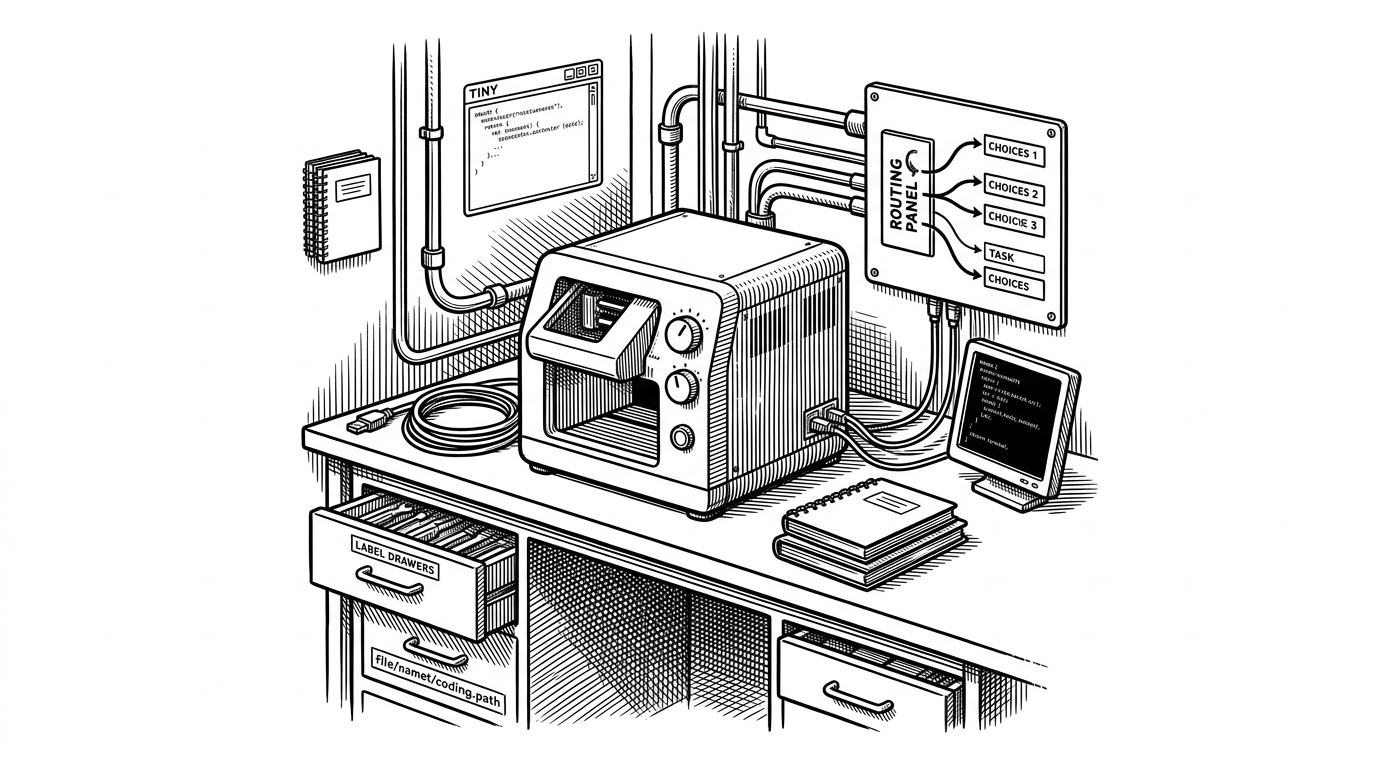
- SmallCode’s real idea is not a better chat loop, but a control system that makes small models usable under constraint.
- MarrowScript turns prompt logic into compiled behavior, which pushes retries, caching, and constraints out of prose and into software architecture.
- The repo narrows tools, trims context, and favors patch-first edits because small models fail more reliably when the surface area stays small.
- The governor closes the loop by watching for repeated failure and escalating only when local execution stops being efficient.
SmallCode’s wager is simple: a small local model should not be treated like a weaker version of Claude or GPT. It should be treated like a capable but brittle coworker. That changes everything about the agent around it.
The Bet: Small Models Need a Different Agent
The repo is built for the 8B to 35B class of models, the ones developers actually run on consumer hardware. That matters because the failure modes are different. Tool calls break format. Context drifts. Multi-step plans unravel.
SmallCode responds by reducing the model’s freedom before it starts doing work. It compresses context, narrows tool choice, and forces the system to recover from errors instead of pretending they will not happen.
SmallCode is a terminal-native coding agent designed from the ground up to extract useful work from local models (8B-35B) running on consumer hardware.
MarrowScript Turns Prompts Into Compiled Behavior
The most distinctive move in the repo is MarrowScript, a custom DSL for agent behavior. Prompts are not just strings. They are declared with constraints, retries, and caching, then compiled into executable code under src/compiled/.
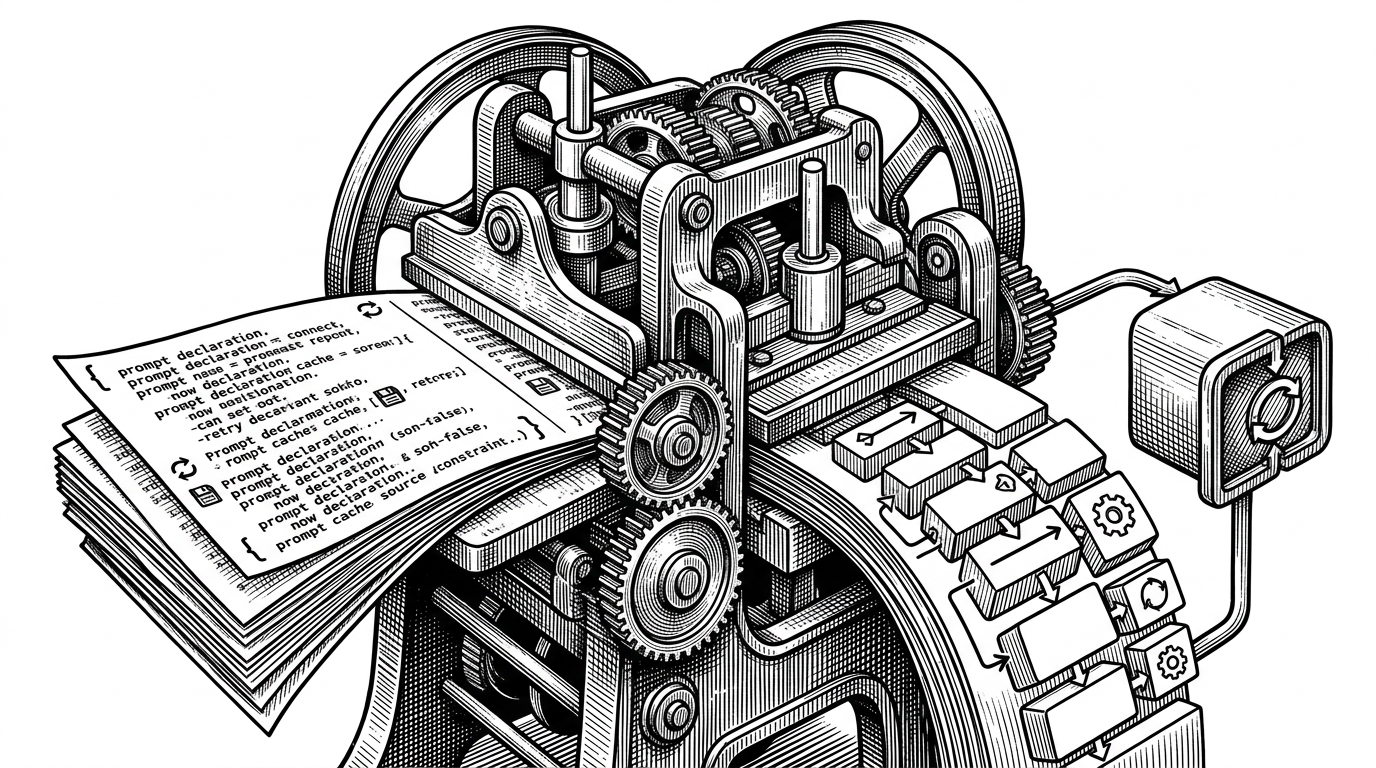
That is why the repo feels different from a wrapper around an API. The intelligence layer is not hidden in prompt spaghetti. It is formalized, compiled, and shipped as part of the system.
I was frustrated that every coding agent (OpenCode, Cursor, Claude Code) assumes you're running GPT-5.4 or Claude Opus. If you try them with a local model like Gemma or Qwen they fall apart.
Why the Agent Cuts Choice Down Before It Cuts Code
SmallCode’s tool strategy is built around the same premise. The system does not throw a huge tool surface at the model and hope for the best. It stages decisions.
The first move is routing. The model classifies the task, then receives only the relevant tools. The second move is shaping output. Token-aware rewriting trims noisy command output before it hits the model. The third move is editing discipline. Patch-based writes are safer than full-file rewrites because exact string replacement is easier to verify.
| Pattern | What it assumes | What usually breaks | SmallCode’s answer |
|---|---|---|---|
| Frontier-model-first agent | The model can hold lots of context and call tools cleanly | Local models drift, overreach, or format tool calls badly | Stage decisions and expose fewer tools at once |
| Full-file rewrite workflow | The model can regenerate a file accurately from scratch | Small models miss details and corrupt unrelated code | Use exact patches and read-before-write guards |
| Dump-context-and-pray | More context means better results | Noise swamps the model and wastes tokens | Summarize, rewrite, and budget aggressively |
| Single-shot tool choice | One pass should be enough | The wrong tool choice compounds failure | Use a two-stage router and narrow categories first |
The effect is not cosmetic. It is the difference between an agent that looks powerful in a demo and one that survives on weaker hardware in real sessions.
The Governor Watches for Failure, Then Changes Strategy
The governor is the control layer that makes the whole system feel disciplined instead of naive. It tracks whether tools are succeeding, notices repeated failures, and changes strategy when the local path stops working.
That can mean trying a different approach. It can also mean escalation. In other words, SmallCode does not insist that local execution solve every problem. It knows when to hand off.
That matters because failure handling is where many agents quietly collapse. They keep calling the same tool in the same way and call it autonomy. SmallCode treats repeated failure as a signal, not a personality trait.
What This Rewrites About Coding Agents
The cleanest comparison is not “SmallCode versus another feature list.” It is a clash of assumptions. Frontier-first agents assume abundant capability. SmallCode assumes scarcity and builds around it.
| Dimension | Frontier-model-first agents | SmallCode |
|---|---|---|
| Primary assumption | The model is the center of intelligence | The system must absorb model weakness |
| Tool surface | Many tools, broad freedom | Fewer tools, staged access |
| Context strategy | More context, more data | Budgeted context, aggressive trimming |
| Editing style | Often full-file regeneration | Patch-first, exact replacement |
| Failure policy | Retry and hope | Score, adapt, escalate |
| Target user | Cloud-first teams | Local-first, privacy-conscious, budget-limited developers |
That is why the repo matters. It is not claiming that small models beat frontier models at everything. It is showing that a different market exists: people who want local control, predictable cost, and an agent shaped for imperfect hardware.
Where the Project Is Going
If prompt logic can be compiled, tools can be tiered, and failures can be routed, the agent starts to look less like a chat interface and more like an adaptive operating layer. That is the bigger idea hiding inside SmallCode.
The project’s contribution is architectural. It reframes coding agents as systems of constraints, not just bigger prompt windows. For small models, that is not a compromise. It is the product.