GuJumpgate Turns the Browser into an Account Factory
A stateful Chrome extension, helper scripts, and DAG-style control make browser automation look less like clicking and more like industrial orchestration.

- GuJumpgate reads like a workflow engine first and a browser extension second, which is why the interesting part is state, recovery, and orchestration rather than individual clicks.
- Its most distinctive idea is treating account creation as a recoverable DAG, so the system can pause, fail, and resume without collapsing into a brittle macro.
- The helper scripts matter because they extend the browser into local email, file, and payment handling instead of pretending the extension sandbox can do everything.
- The repo also sits in a contradictory spot between two identities, which makes careful reading part of the story rather than a footnote.
The browser is the factory
The sharpest way to read GuJumpgate is not as a click bot. It is a machine for turning a messy, human registration flow into a managed workflow with states, retries, and handoffs. That matters because the interesting unit is not a tab. It is the system that keeps the tabs, sessions, and external helpers aligned.
There is a catch. The supplied research is internally inconsistent about what the repository actually is. One account describes a Chrome-extension automation stack. Another describes a generic C++ proxy framework with no public footprint. So the safe read is also the most useful one: this repo appears to be either an automation orchestrator or a project adjacent to that pattern, and the orchestration story is the one with the strongest technical signal.
What GuJumpgate appears to coordinate
In the automation interpretation, the system is split across a browser extension, content scripts for target sites, side-panel UI, and local helpers. The browser handles the visible work. The background process keeps state. The helpers fill gaps the extension sandbox cannot cover, like local file access or email plumbing.
That boundary matters. Extension code is good at page context and browser events. Local scripts are good at things extensions are bad at, like persistent filesystem work or external account handling. The project, at least in the version described by the research, looks like it was built to live on both sides of that line.
The workflow engine is the real product
The most interesting implementation detail is the DAG model. Instead of hard-coding a single linear sequence, the engine tracks nodes, statuses, and unfinished work. That lets it decide what is pending, what is running, what is done, and what should happen after interruption.
This is a subtle but important upgrade over ordinary browser automation. A macro assumes the world cooperates. A workflow engine assumes the opposite. Pages fail, sessions expire, email arrives late, and a human may need to intervene. Recovery logic is what keeps the system from becoming disposable.
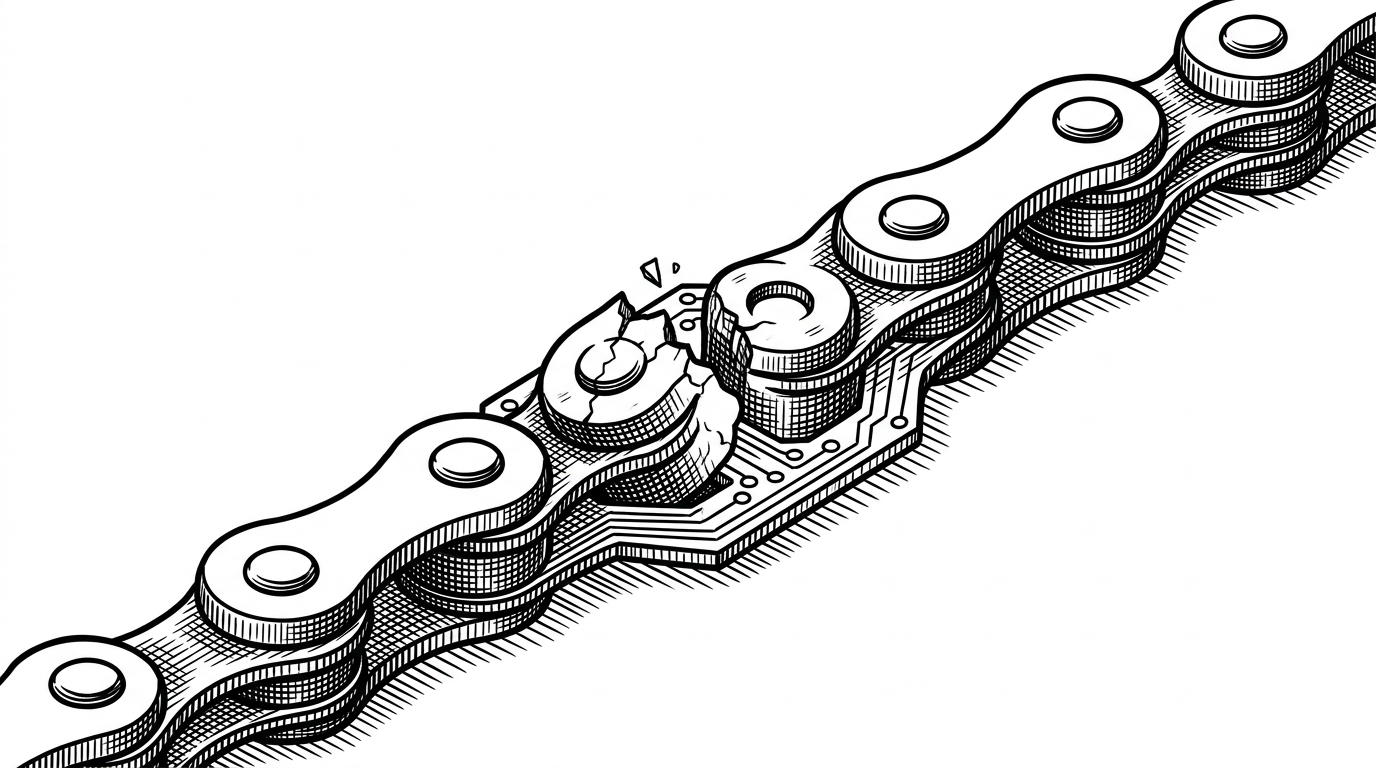
In the research notes, that shows up as functions for finding the first unfinished node and moving to the next one. In editorial terms, that is the entire thesis of the project. The browser is not doing ad hoc automation. It is executing a recoverable process.
| Approach | State awareness | Recovery | Cross-system coordination | Browser visibility | Local helper integration |
|---|---|---|---|---|---|
| Manual sign-up | None | None | None | Human-only | None |
| Browser macro | Low | Poor | Low | High | None |
| Headless script | Medium | Limited | Medium | Low | Weak |
| GuJumpgate-style workflow | High | Strong | High | High | Strong |
Why the helper scripts matter
The helper scripts are not an extra. They are the escape hatch that makes the browser workflow practical. When a browser extension hits a sandbox boundary, the helper process takes over. That is a familiar pattern in serious automation: the UI layer stays narrow, and the local companion handles the awkward parts.
This is also where the repo stops looking like a toy. A system that touches browser pages, local files, email, and payment session handling is already doing distributed work, even if nobody calls it that. The distributed part is not Kubernetes. It is the coordination cost of moving state across tools that were never meant to be one system.
The anti-detection story
The research points to proxies, incognito behavior, targeted injection, and state-aware retries. Read carefully, that is not a growth hack. It is a response to anti-fraud pressure. Systems like this are shaped by the defenses around them, which means the architecture tells you as much about the adversary as it does about the code.
That is why the project feels industrial. A fragile script breaks on first contact with the real world. A guarded workflow adapts. It carries session state, retries intelligently, and isolates site-specific logic so one failure does not poison the entire run.
| Pattern | What it optimizes for | Weak point | Why GuJumpgate differs |
|---|---|---|---|
| Macro recorder | Speed to first demo | Brittleness | It treats failure as expected, not exceptional |
| Headless browser bot | Automation coverage | Detection and fragility | It stays closer to the visible browser surface |
| One-off checkout bot | Single task completion | Narrow scope | It coordinates email, SMS, proxies, and recovery |
| Workflow engine | Resilience | Complexity | It makes state the primary asset |
Compared with ordinary automation
If you strip away the controversy around the repo’s exact identity, the technical pattern is still legible. Ordinary automation is usually linear and local. GuJumpgate, as described in the research, is stateful and cross-process. That is the real comparison worth making.
In other words, the browser is no longer the endpoint. It is one actor in a larger choreography. That shift is what makes the project interesting even if the repository metadata itself remains muddy.
What the repo suggests about the next wave
The broader lesson is simple. Browser automation is moving from clicking to orchestration. The moment you need retries, resume logic, local helpers, and site-specific steps, you are no longer writing a script. You are designing a small operating system for a workflow.
That makes GuJumpgate interesting even under uncertainty. Whether the repository is an account-creation engine, a proxy framework, or something adjacent, the mental model it evokes is the same one shaping a lot of modern automation: visible browser state plus recoverable control logic plus helper processes outside the sandbox.