DeepTutor: The Tutor That Hides Its Own Thinking
An open-source tutoring system that can spin up specialist agents, preserve a clean student transcript, and build a lasting memory of what each learner actually knows.
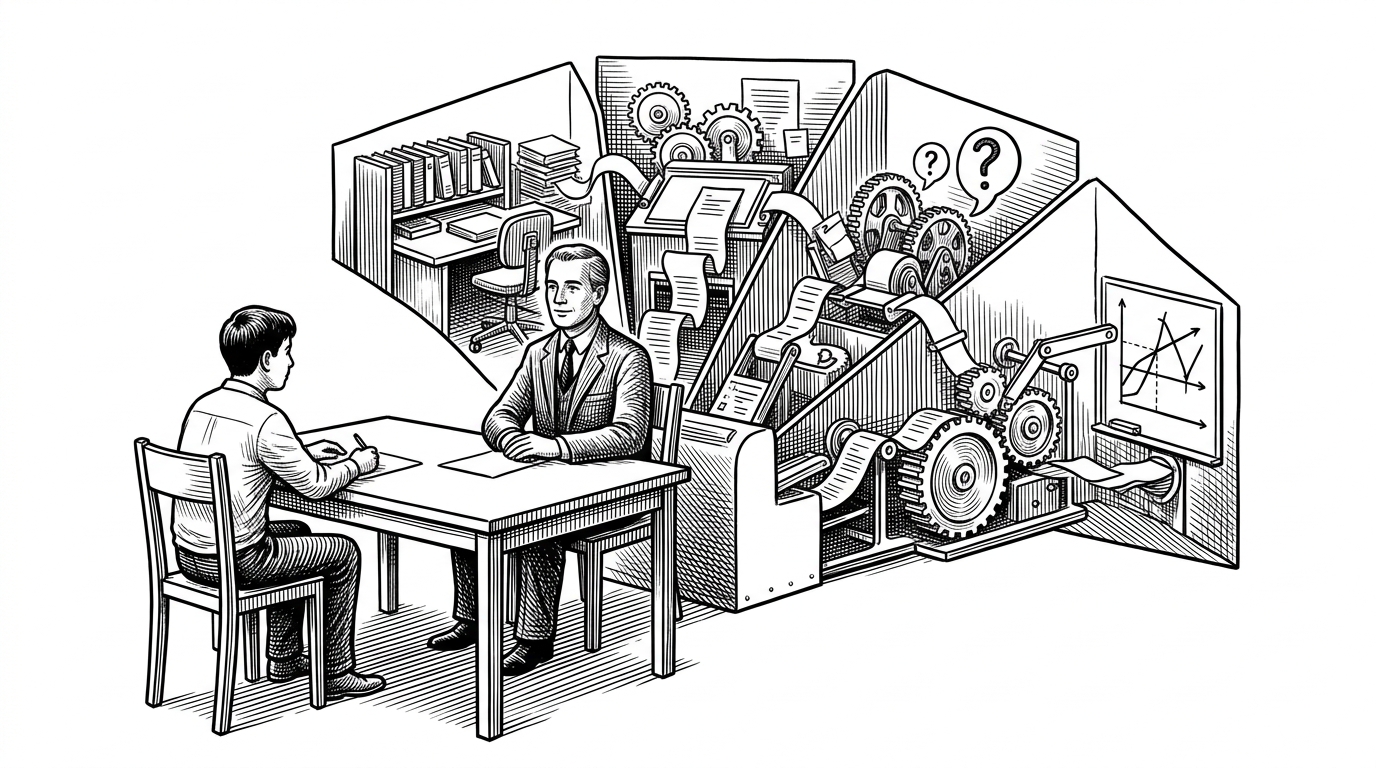
- DeepTutor’s real innovation is not that it answers questions, but that it can delegate work recursively without polluting the student-facing conversation.
- The system treats internal reasoning as a managed workflow, so sub-agent activity can be traced, forwarded, and then filtered out before persistence.
- Its three-layer memory model aims to turn tutoring into a durable learner profile instead of a disposable chat log.
- DeepTutor pushes beyond text responses by pairing tutoring with math animation and other task-matched outputs.
DeepTutor is interesting because it behaves less like a chatbot and more like a small tutoring operating system. The student sees one conversation. Under the hood, the system can call specialist agents, gather evidence, solve sub-problems, and synthesize the result back into a clean reply.
That design choice matters because tutoring is not just question answering. It is sequencing, memory, diagnosis, and sometimes a different representation entirely. DeepTutor is trying to make those layers explicit without forcing the learner to watch the plumbing.
The student sees one tutor. The system runs a team.
The repository centers on a Python backend with a FastAPI delivery layer, a multi-agent runtime, and specialized modules for research, solving, notebooks, and math animation. The shape is familiar at a distance, but the behavior is not. DeepTutor’s auto mode can decide that one turn needs research, another needs a worked solution, and a third needs a visual explanation.
We talked to countless students and kept hearing the same pain points. Existing AI tools are either too fragmented or fail to capture personal learning context effectively.
That is the right framing. DeepTutor is not trying to be a single-model answer box. It is trying to be a coordinator for learning work, where each capability can be invoked when the student needs it, not when the UI happens to allow it.
The real trick is not delegation. It is containment.
The most distinctive code path lives in the auto pipeline and its delegation layer. Auto mode analyzes the request, decides whether to answer directly, and if needed, spawns a child context for a specialist agent. The child inherits just enough state to do useful work, while the parent keeps ownership of the student conversation.
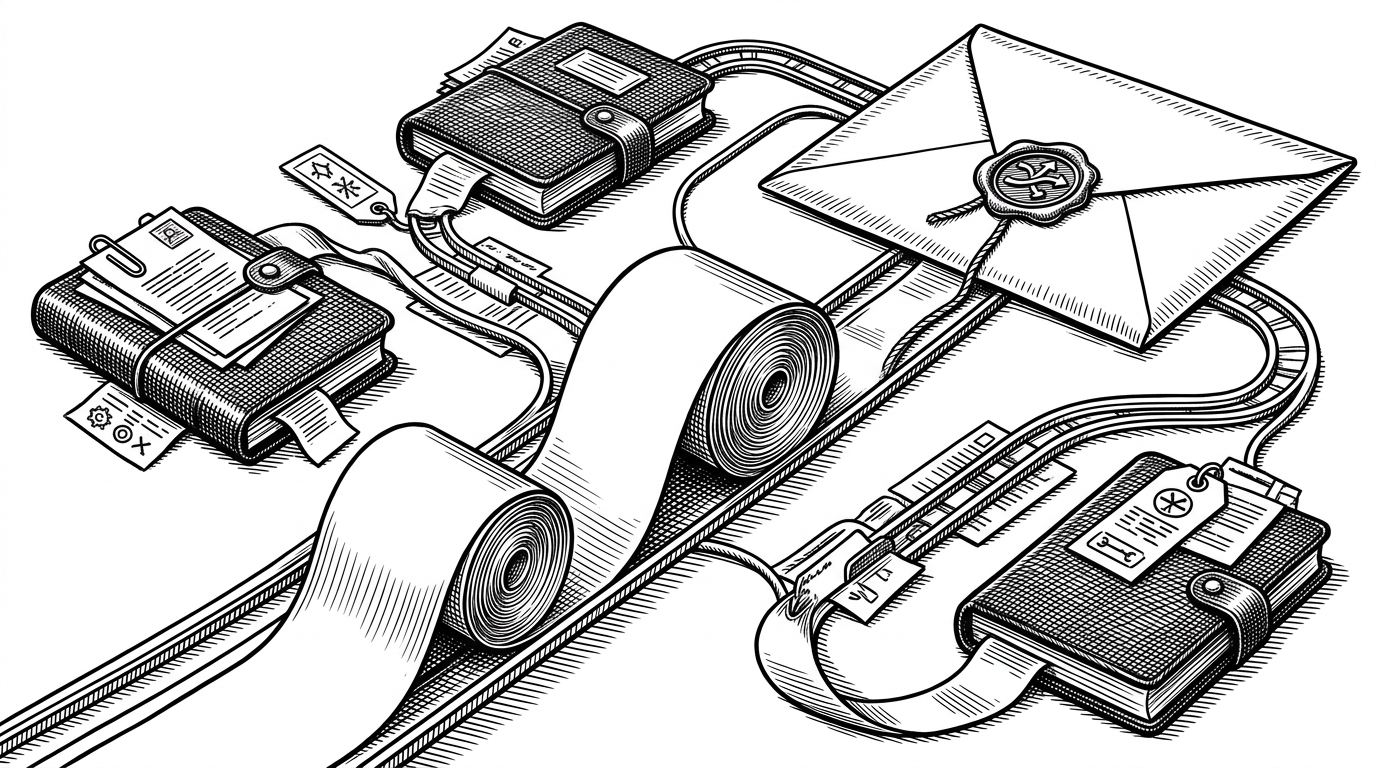
The important implementation detail is lineage. Sub-agent events are tagged with metadata such as parent call identifiers, so the system can keep track of who asked whom to do what. That lets DeepTutor show internal activity when it is helpful, but avoid turning the student transcript into a pile of tool chatter.
Why the transcript stays clean
A clean transcript is not cosmetic. It changes how the product behaves. If the system persisted every intermediate thought, tool call, and sub-agent detour, the learner would inherit a noisy history that is hard to review, hard to trust, and hard to resume.
| System behavior | Plain chatbot | DeepTutor |
|---|---|---|
| Sub-tasks | Usually hidden inside one model call | Delegated to specialist agents with lineage |
| Transcript | Mostly whatever the model produced | Filtered so internal work does not pollute the student record |
| Explainability | Narrative only | Process and result can be separated |
| Personalization | Often limited to recent turns | Designed to persist across sessions |
| Output types | Mostly text | Text, worked solutions, and math animation |
This is the non-pollution invariant in practice. DeepTutor is not just trying to be clever. It is trying to keep the learner’s visible history readable enough that the next session starts with signal, not residue.
Memory is the second product
The memory architecture is the second big idea. Instead of relying on a simple sliding window, DeepTutor organizes memory into layers: short-term context, session-level summaries, and a longer-term learner profile. That is a stronger fit for tutoring because learning is cumulative.
| Memory layer | What it stores | Why it exists |
|---|---|---|
| L1 | Immediate turn context | Keeps the current exchange coherent |
| L2 | Session summaries | Compresses a study session into something reusable |
| L3 | Long-term learner profile | Tracks what the student knows, forgets, and prefers |
The design suggests a more serious product ambition than a transient chat history. DeepTutor wants to remember the student as a learner, not just as a sequence of prompts. That is a meaningful shift if the system can keep its summaries accurate and its profile updates disciplined.
DeepTutor is not only for text
The math animator module shows that the tutoring loop can produce the right form of explanation, not only the right words. Sometimes the best answer is a diagram, a step-by-step derivation, or an animation that makes a proof legible. DeepTutor treats those as first-class outputs, not as decorative extras.
That widens the project’s category. A normal chatbot answers. A tutoring system diagnoses, chooses representation, and teaches. DeepTutor is trying to do all three while keeping the interaction clean.
From lab project to living platform
DeepTutor comes out of HKUDS, the Data Intelligence Laboratory at the University of Hong Kong, and the repository reads like a project built by people who care about systems as much as product surfaces. The codebase is organized, the runtime abstractions are explicit, and the release cadence suggests a team iterating quickly on a fairly ambitious thesis.
We've reached 20k stars after 111 days! Thank you for the incredible support — we're committed to continuous iteration toward truly personalized, intelligent tutoring for everyone.
The project’s pace matters because it hints at a larger strategy. DeepTutor is not just shipping features. It is tightening a platform model for learning, where orchestration, memory, and modality are all part of the same product shape.
Compared with a chatbot, DeepTutor is building an operating layer
| Category | Plain chatbot | Traditional RAG tutor | DeepTutor |
|---|---|---|---|
| Handling of sub-tasks | Weak | Better retrieval, but still mostly one-shot | Delegates to specialist agents |
| Transcript cleanliness | Noisy by default | Better grounded, still chat-centric | Actively filtered and preserved |
| Long-term memory | Usually shallow | Often document-centric | Learner-centric across sessions |
| Multimodal outputs | Limited | Usually text plus citations | Text, solutions, and visual explanations |
| Explainability of process | Low | Moderate | Higher because the work can be traced |
| Personalization over time | Minimal | Some retrieval-based adaptation | Designed around a living learner profile |
That is the category shift. DeepTutor is not trying to win a chatbot feature checklist. It is trying to become an operating layer for tutoring, where the system manages work, memory, and presentation on behalf of the learner.