txtai: The Case for the Monolithic AI Engine
While the industry chases complex microservice stacks, one project is quietly building a unified, "all-in-one" operating system for semantic search and autonomous agents.

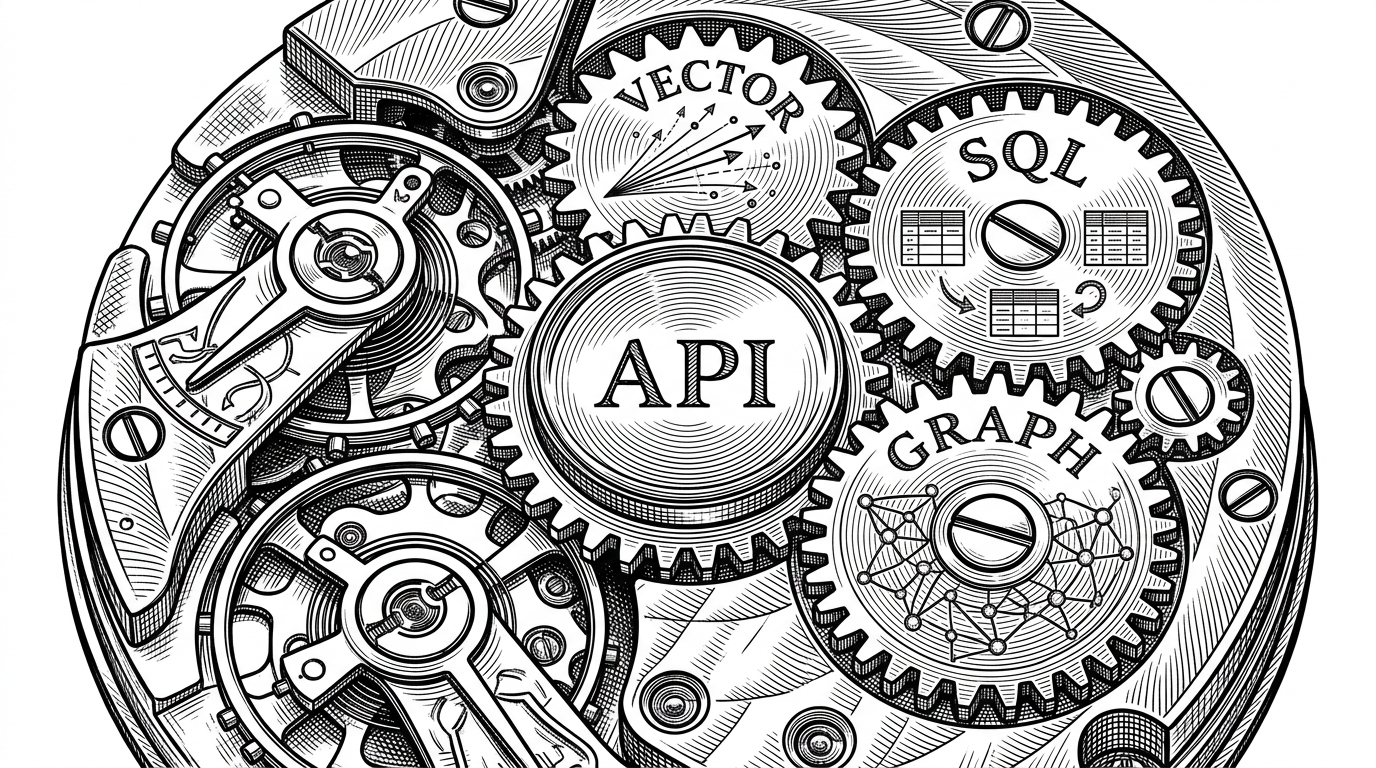
"The key component of txtai is an embeddings database, which is a union of vector indexes (sparse and dense), graph networks and relational databases."
- The library consolidates vector, relational, and graph storage into a single engine to eliminate complex synchronization logic.
- Embedded SQLite allows developers to perform hybrid searches using standard SQL queries with semantic similarity extensions.
- A unified architecture reduces operational overhead by replacing multi-service microstack deployments with a local-first Python library.
- Integrated workflows and agents transform static search indexes into active systems capable of executing multi-step autonomous tasks.
The Fragmentation Tax
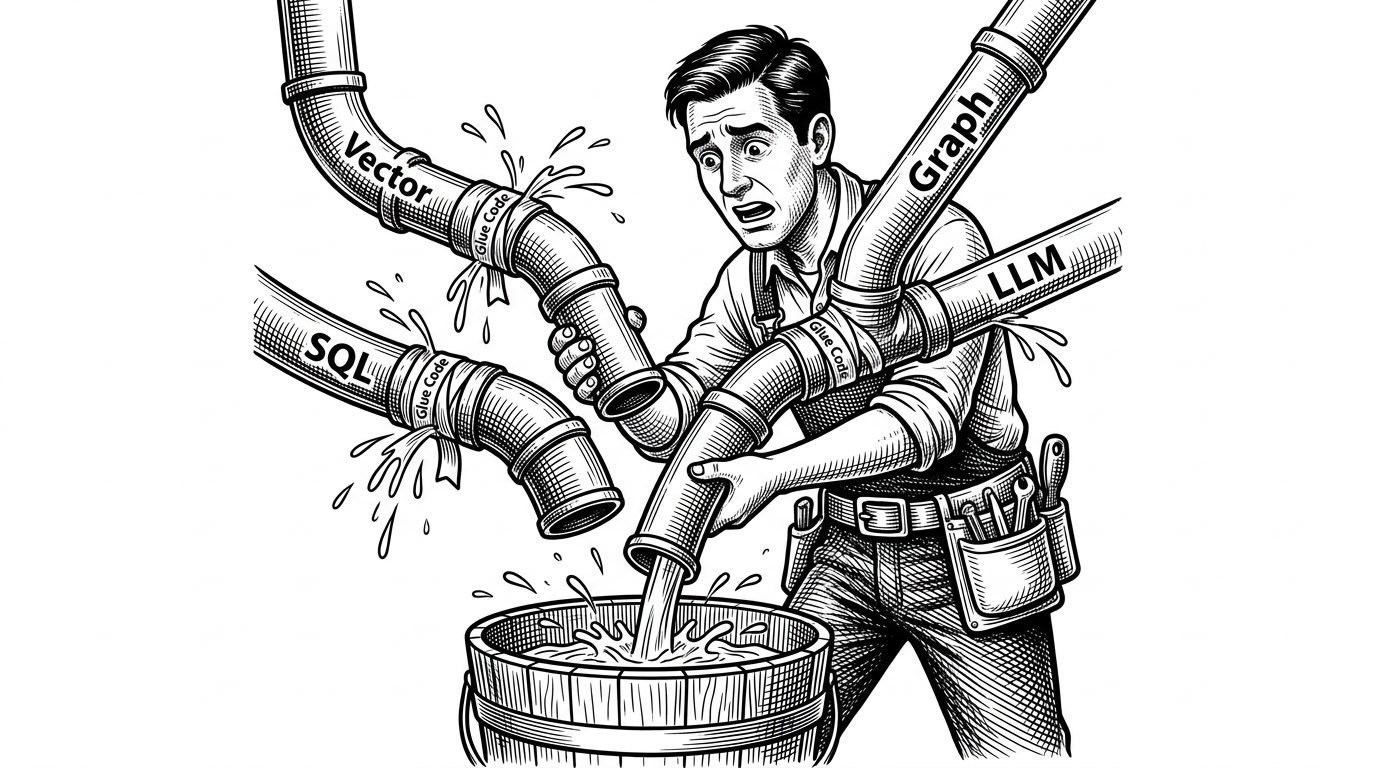
Building an AI-powered application usually means managing a sprawling microservice architecture. A standard Retrieval-Augmented Generation (RAG) pipeline requires a vector database for semantic search, a relational database for metadata, a graph database for entity relationships, and an orchestration framework to bind them together. Every network hop introduces latency. Every new database introduces cognitive load and failure points.
txtai rejects this fragmentation. Built by NeuML, it proposes a unified architecture where the database, the embedding model, and the orchestration logic live inside a single Python library. It is designed for developers who want the performance of a dedicated vector store without the operational tax of managing a distributed system.
The "Union" Pattern
At the core of txtai is the Embeddings database. Instead of acting as a simple wrapper around an Approximate Nearest Neighbor (ANN) index like Faiss, this primary class orchestrates multiple storage engines simultaneously. When a document is indexed, txtai seamlessly routes its vector representation to the ANN index, its metadata to a local SQLite database, and its entity relationships to a graph network.
This union pattern means developers interact with one API. There is no need to write synchronization logic to ensure the vector store and the relational database stay consistent. The library handles the lifecycle of the document end-to-end.
SQL: The Secret Weapon of Vector Search
Pure vector databases excel at finding semantic similarity but struggle with structured business logic. If a user needs to find documents similar to "machine learning" that were also published after 2023 and authored by a specific team, a standard vector index requires complex pre-filtering or post-filtering workarounds.
Because txtai embeds SQLite directly into its architecture, it solves this gracefully. Developers can write standard SQL queries that incorporate a custom similarity() function. The query parser intercepts the statement, executes the vector search against the ANN index, and joins the semantic results with the relational metadata in a single execution pass.
| Feature | The "Modern" Stack (LangChain + Pinecone + Postgres) | txtai |
|---|---|---|
| Deployment | 3+ separate services to manage and network | Single Python library (embedded) |
| Query Language | Custom DSLs and complex API calls | Standard SQL with similarity() extensions |
| State Management | Distributed, requires manual synchronization | Unified, handled automatically by the engine |
| Local-First | Often relies on cloud APIs by default | Native local execution, edge-friendly |
From Search to Agency
Storing and retrieving data is only half the battle. Modern applications need to act on that data. txtai extends its monolithic philosophy to orchestration through Workflows and Agents. A Workflow in txtai is a directed graph of atomic pipelines, allowing developers to chain tasks like transcription, translation, and summarization without pulling in heavy external frameworks.

"Agents automatically create workflows to answer multi-faceted user requests. Agents iteratively prompt and/or interface with tools to step through a process and ultimately come to an answer for a request."
By natively supporting the Model Context Protocol (MCP), txtai allows these local agents to expose their tools to external clients seamlessly. A single Python script can index a local directory, spin up a local LLM, and serve as an autonomous research assistant.

The Minimalist Manifesto
The AI industry often defaults to maximum complexity, assuming that enterprise scale requires a dozen distributed services. txtai proves that a single-node, embedded architecture can handle massive workloads with a fraction of the operational overhead. By combining the boring reliability of SQLite with the cutting edge of vector search and local LLMs, it offers a refreshing alternative for developers who just want to ship resilient software.