CS-Fundamentals: The GitHub Repo That Turns CS Prep Into a Searchable Syllabus
A curated placement-prep library that compresses networking, DBMS, OOP, OS, and system design into a single interview-ready workflow, then adds AI prompts to make the material conversational.
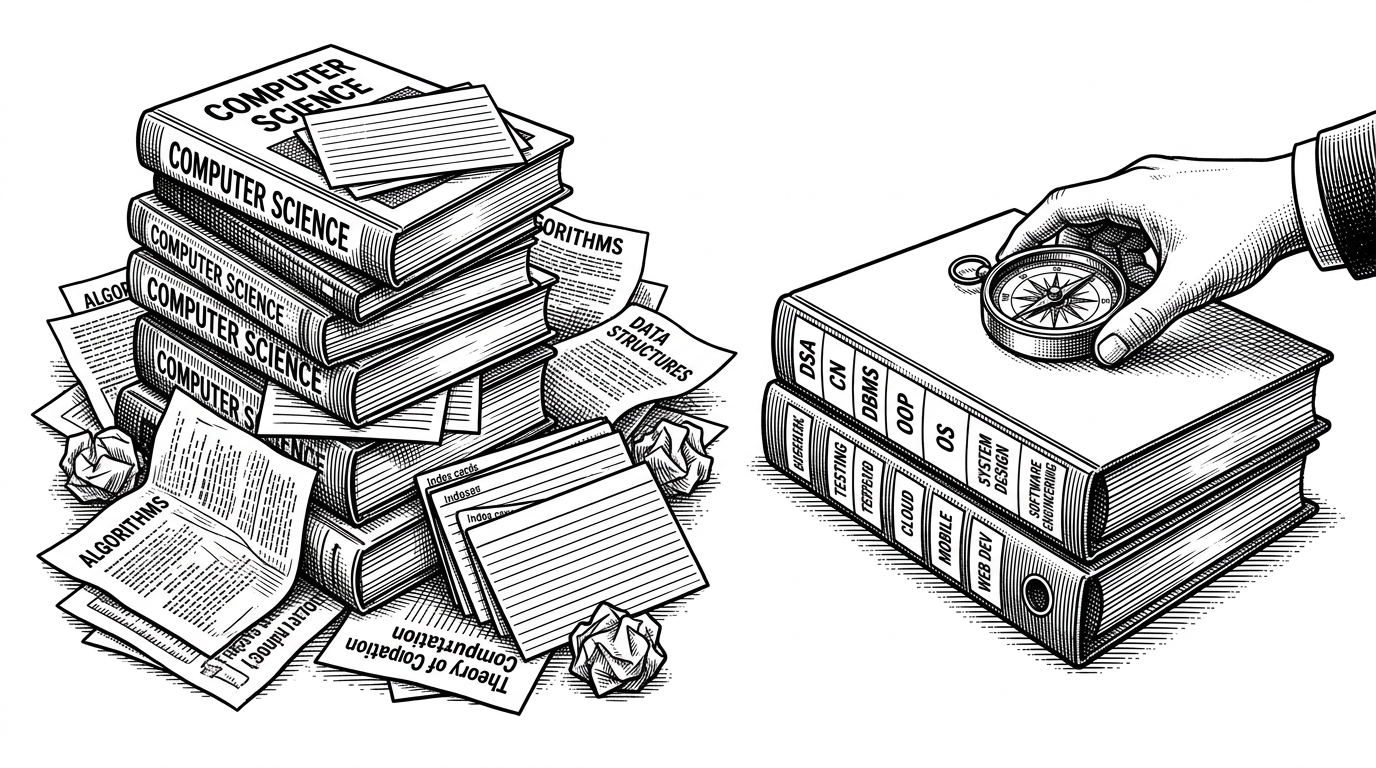
- CS-Fundamentals compresses placement prep into a syllabus-like workflow that rewards fast recall over endless browsing.
- Its subject folders matter because they mirror interview preparation, not generic file storage.
- The repo’s real leap is the AI prompt layer, which turns static notes into a mock-interview loop.
- Its value is not depth in one subject, but speed, structure, and portability across the whole CS interview surface area.
From Knowledge Dump to Interview System
Most GitHub repositories collect links. This one does something more useful: it turns a sprawling CS syllabus into a route through the material. That is why Krishnagangwal/CS-Fundamentals feels less like a shelf and more like a prep engine.
The project is built for a very specific job. It helps students and job seekers move from “I have to cover everything” to “I know what to review, in what order, and how to test myself.”
Why This Repo Feels Like a Syllabus, Not a Shelf
The folder structure mirrors how a student actually studies. Instead of grouping by format, the repo groups by subject: Computer Networks, DBMS and SQL, DSA, OOPs, Operating Systems, System Design, and Software Engineering. That makes the library legible at a glance, which matters when the real problem is not access to information but deciding what to do next.
| Storage mindset | CS-Fundamentals mindset |
|---|---|
| One folder for notes, PDFs, and links | One folder per subject, each with a prep purpose |
| Browse until something looks useful | Follow a path shaped by interview utility |
| File organization as housekeeping | File organization as curriculum design |
The Roadmap Pattern: Interview Frequency as a Navigation Layer
The roadmap files are the first sign that this repo is opinionated. A file like CN-Roadmap.md does not just list topics. It ranks them by importance, then moves the learner from high-level theory to commands and recall.
That is a practical move. When a repo marks something as very important, it is doing the triage work that students usually do badly or too late. The result is a map that favors interview probability over encyclopedic completeness.
| Traditional notes | CS-Fundamentals roadmap |
|---|---|
| Flat topic list | Topics sorted by interview frequency |
| Theory first, application later | Theory linked to commands and recall |
| You decide what matters | The repo signals what matters most |
What the roadmap is really doing
It compresses a huge subject into a smaller decision tree. That is especially visible in networking, where the material moves from OSI and TCP/IP into concrete actions like ping, netstat, and tracert. The roadmap is not just educational. It is behavioral.
The Cheat Sheet Logic: Dense, Fast, and Calculation-Friendly
The cheat sheets are built for last-mile retention. They use tables, compact comparisons, and formulas to make hard distinctions easy to scan under pressure. In networking, that means subnetting logic, IPv4 versus IPv6 differences, and switching models packaged for quick revision rather than long-form study.
| Concept | How the repo frames it | Why that helps in interviews |
|---|---|---|
| IPv4 vs IPv6 | Side-by-side comparison | Forces fast recall of the differences that get asked most often |
| Circuit vs packet switching | Dense comparison table | Makes trade-offs easy to state out loud |
| Subnetting | Formula-driven notes | Turns a conceptual topic into a calculation |
| Protocol models | Layered summaries | Keeps explanations short and structured |
This repository is a curated collection of placement and AI/ML resources gathered from various sources across the internet. I do not claim ownership of any individual document or resource.
OOP Across Languages, One Mental Model
The OOP section is useful because it treats object-oriented programming as a transferable model, not a language-specific trivia contest. That matters in interviews, where candidates are often expected to explain the same idea in Java, Python, C++, or JavaScript without losing the thread.
| Language-specific study | Cross-language OOP study |
|---|---|
| Learn syntax first | Learn the mental model first |
| Memorize language quirks | Map the four pillars across languages |
| Risk getting trapped in one stack | Stay fluent across interview contexts |
The AI Layer: Turning Static Notes Into Mock Interviews
The most modern part of the repo is the prompt layer. A file like 25-Job-Interview-Preparation-Prompts.md makes the library interactive in a very practical way. You are no longer just reading notes. You are using them to generate quizzes, follow-ups, and pressure tests.
That changes the study loop. Weakness in a topic becomes visible faster because the prompt forces you to answer, not just recognize. The repo becomes a tool for rehearsal, which is exactly what interview prep should be.
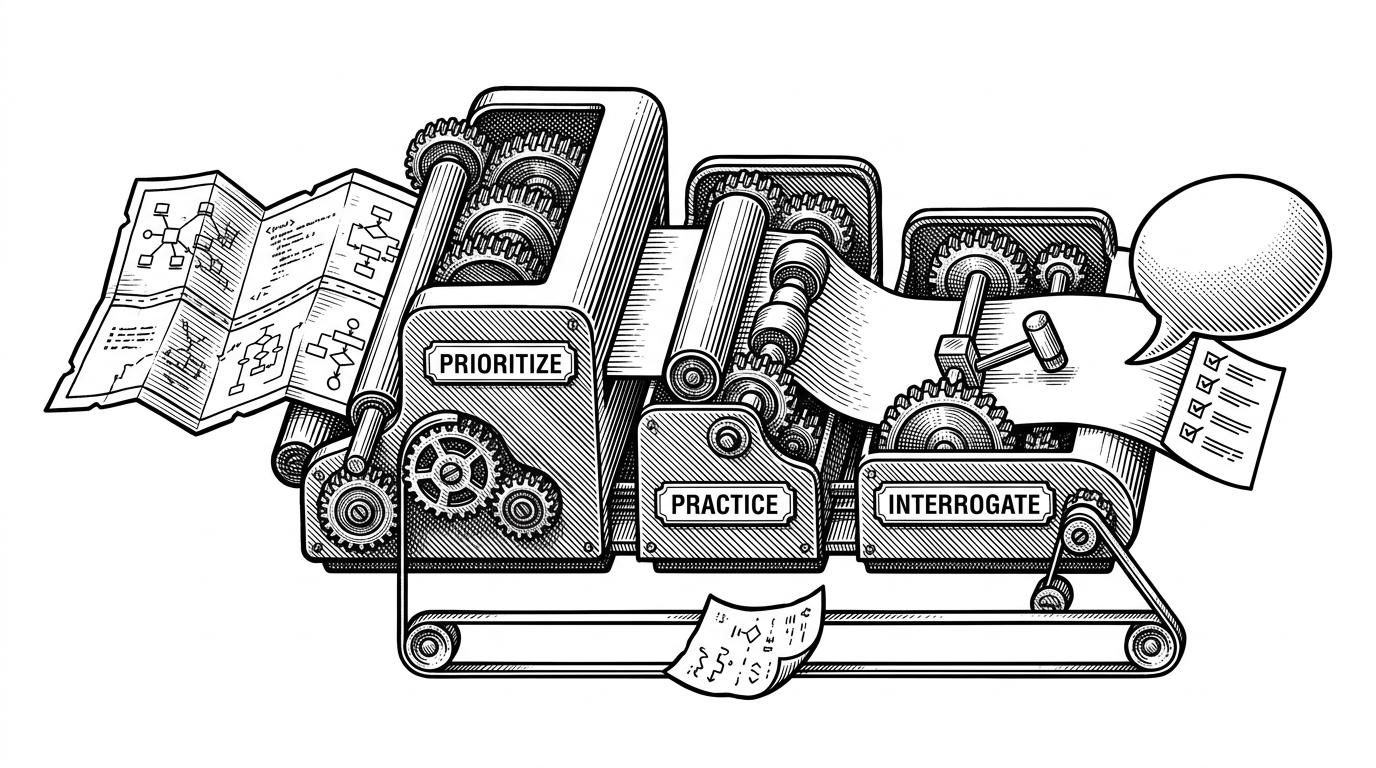
The workflow is simple: pick a subject, open the roadmap or cheatsheet, feed a weak area into a prompt, then let the model interrogate you until the gaps show up. That is the difference between passive revision and active preparation.
How It Compares to GFG, PrepInsta, and Deep Textbooks
| Resource | Breadth | Depth | Revision speed | Interview focus |
|---|---|---|---|---|
| GeeksforGeeks | Very wide | Medium | Fast | High |
| PrepInsta | Wide | Medium | Fast | Very high |
| teachyourselfcs.com | Narrower | Very deep | Slow | Low |
| OSTEP | Single subject | Very deep | Slow | Medium |
| CS-Fundamentals | Wide across core CS | Medium | Very fast | Very high |
The point is not that CS-Fundamentals replaces these resources. It sits between them. It is narrower and more opinionated than a giant platform, but much faster to use than a textbook-heavy curriculum. That middle position is why it works for placement prep.
Why the Curator Model Works
A single maintainer gives the repo consistency. The structure does not drift because every subject is being added into the same editorial frame. For a revision library, that stability is not a nice-to-have. It is the product.
That also explains why the repo scales well as a GitHub project. New material can be added as a modular file without breaking the larger system. The library grows, but the workflow stays familiar.
What This Repo Says About CS Education Now
CS-Fundamentals points to a broader shift in how students learn technical material. The winning format is no longer just the best textbook or the biggest forum. It is the curated, searchable, workflow-driven layer that helps a candidate act under time pressure.
That is the real value of the repository. It does not try to be everything. It tries to make the most important things easier to find, easier to review, and easier to say out loud when it counts.