FastX-Python: The Bus Booking CLI That Thinks Like a Web App
JWT sessions, role-based access control, and atomic wallet transfers turn a terminal reservation tool into a surprisingly disciplined marketplace engine.
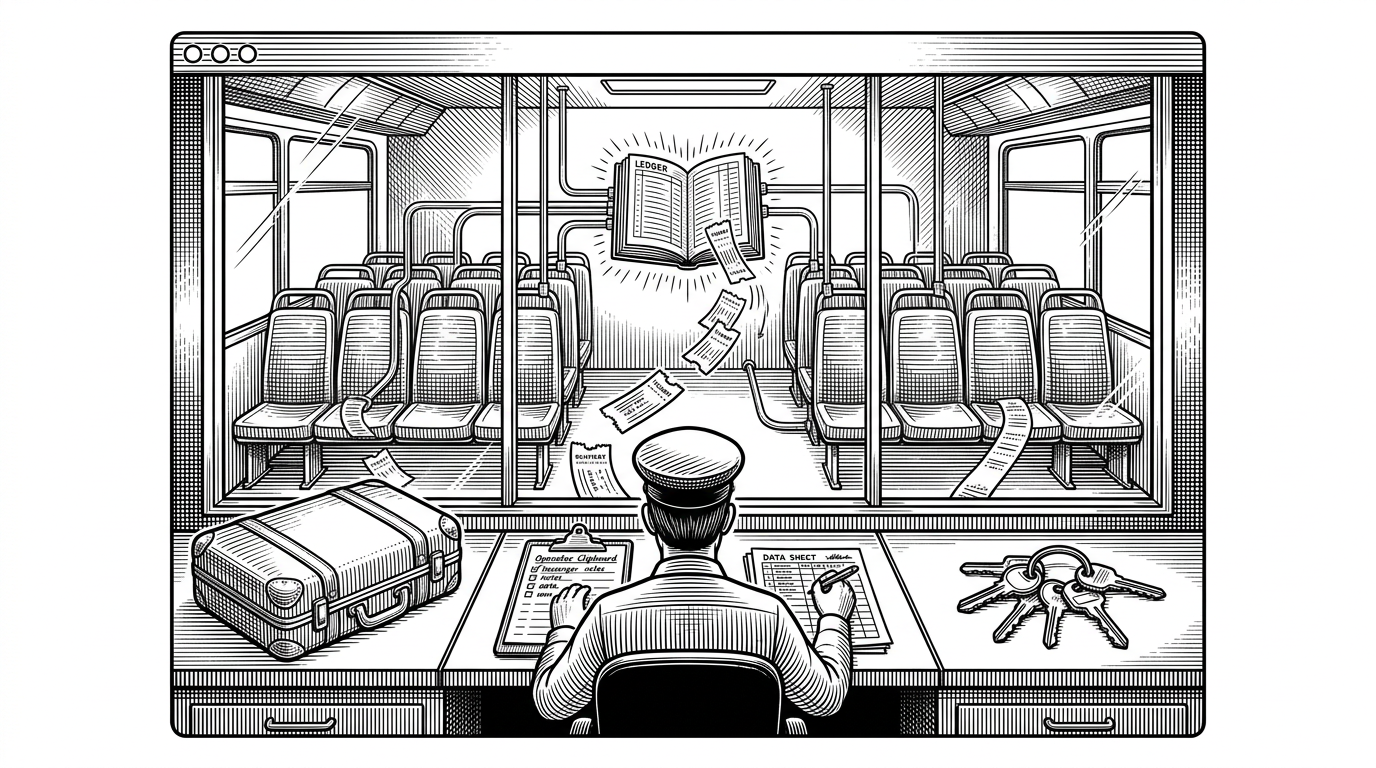
- FastX-Python is most interesting as a transaction engine disguised as a terminal app, not as a simple booking script.
- Its booking flow ties seat allocation, wallet movement, and rollback together so the app behaves like a closed-loop marketplace.
- JWT sessions and role decorators give the CLI web-style discipline without changing its terminal-first surface.
- The codebase looks architecturally mature in the service layer, even though the UI still depends on tight input and print loops.
A Terminal App With Backend Habits
FastX-Python is easy to misread. The surface is a terminal menu, but the design language underneath is closer to a web backend: JWT sessions, role gates, repositories, services, custom exceptions, and atomic commits. That combination makes the repo feel less like a demo and more like a deliberately structured application with a clear separation of responsibilities.
The real surprise is not that it books buses. It is that it treats booking as a system problem: authenticate the user, authorize the action, validate money and inventory, then either commit the whole change or unwind it cleanly.
The Marketplace Hidden Inside the Booking Flow
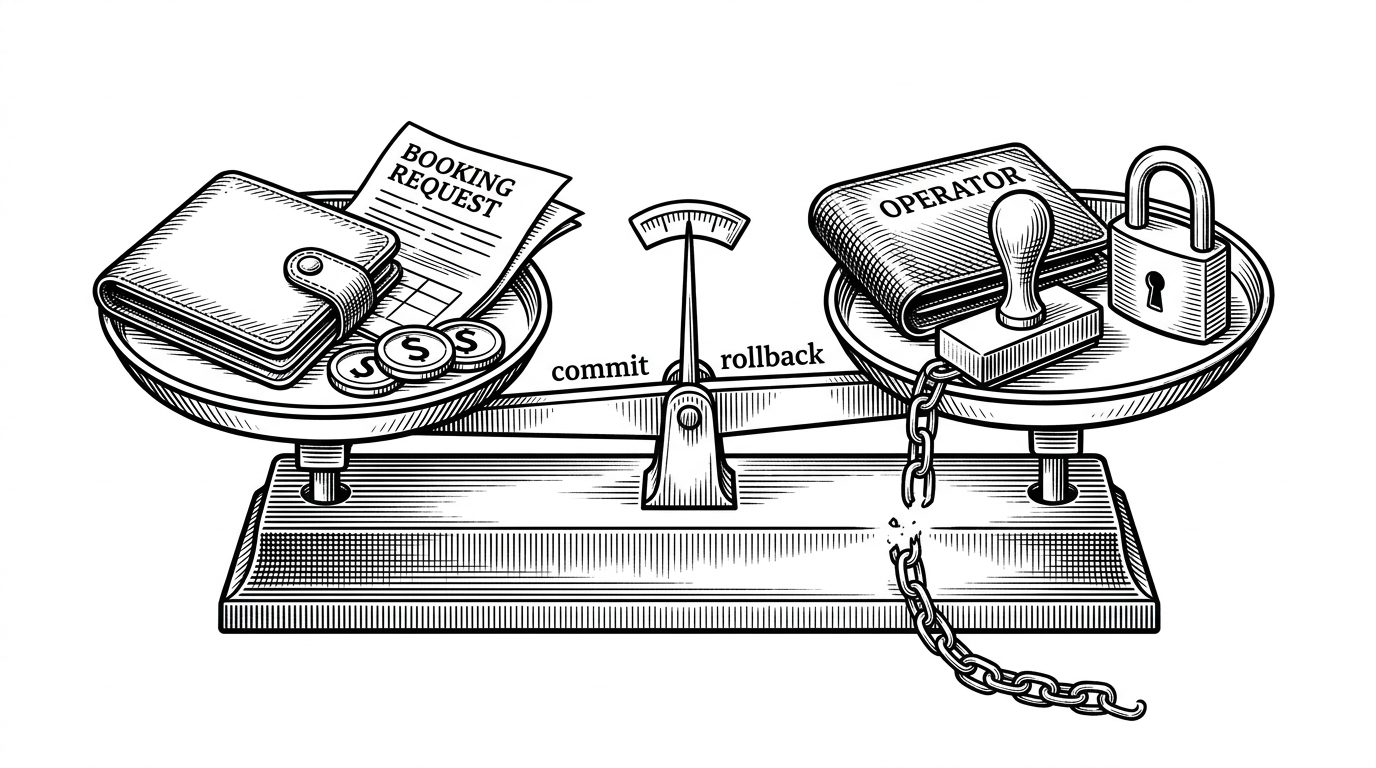
FastX-Python does not just reserve a seat. It moves money from the passenger wallet to the operator wallet, allocates inventory, and preserves consistency if any step fails. That turns a basic reservation flow into a closed-loop marketplace, where payment and fulfillment are part of the same transaction.
| Dimension | Typical CLI tool | FastX-Python |
|---|---|---|
| Authentication | Often omitted or stored in memory | JWT-based login stored in session.json |
| Session persistence | Lost when the process exits | Survives terminal restarts |
| Seat allocation | Simple record update | Checks availability and duplicate seat input before commit |
| Wallet transfer | Usually absent | Transfers funds from passenger to operator |
| Role control | Ad hoc conditionals | Decorator-based RBAC |
| Error handling | Print an error and continue | Domain exceptions plus rollback |
| Architectural separation | UI and logic often mixed | Controllers, services, repositories, and models are split apart |
How One Ticket Purchase Stays Consistent
The strongest technical idea in the repo is the booking pipeline in the passenger service layer. It checks for duplicate seat input, verifies seat availability, confirms the passenger has enough balance, moves money, allocates seats, and then commits the database transaction. If any check fails, it rolls back.
def book_ticket(...):
    # 1. validate seat list
    # 2. check availability
    # 3. check balance
    # 4. deduct passenger wallet
    # 5. credit operator wallet
    # 6. allocate seats
    # 7. commit
    # except: rollback
That sequence matters because it prevents partial success. A passenger does not lose money if seats are unavailable, and seats do not disappear if the wallet update fails. In other words, the app treats booking as one atomic business event.
Why the Model Layer Is Doing Real Work
The models are not passive data bags. `User` and `Bus` enforce constraints before bad state reaches persistence. Negative ticket prices are blocked, and wallet deductions fail before an overdraft becomes a database problem.
@property
def ticket_price(self):
    return self._ticket_price

@ticket_price.setter
def ticket_price(self, value):
    if value < 0:
        raise ValueError("Ticket price cannot be negative")
    self._ticket_price = value


def deduct_money(self, amount):
    if amount > self.wallet:
        raise InsufficientBalanceException()
    self.wallet -= amount
This is a subtle but important choice. The repo pushes business rules upward into the object layer, which makes the service code cleaner and reduces the chance that invalid state gets normalized by accident.
JWT, Session JSON, and the Strange Power of Persistent CLI Login
FastX-Python stores a JWT in `session.json`, which is unusual for a CLI. The result is persistent login across terminal restarts, a pattern that feels borrowed from web applications rather than born in a shell script. That makes the project easier to imagine as a future API server with the same auth core.
That choice is practical, but it also reveals intent. The developer is not only solving CLI login. They are building a reusable auth layer that can survive a UI change later.
Decorators as Access Gates
The controller layer uses decorators such as `@check_authentication` and `@role_allowed`. That turns access policy into something you can scan quickly, instead of hiding it inside repeated if statements.
| Pattern | What it feels like | Why it helps |
|---|---|---|
| @check_authentication / @role_allowed | Policy wrapped around the action | Permissions are visible at the call site |
| Ad hoc checks inside each method | Scattered guard clauses | Harder to audit and easier to miss |
| Mixed UI logic | Conditionals everywhere | Brittle as roles and actions grow |
It is a clean move because the interface reads like policy. A passenger cannot drift into operator actions by mistake, and the controller surface stays legible as the app grows.
What FastX-Python Gets Right, and What Still Feels MVP-Like
The repo gets a lot right: layered separation, domain exceptions, logging, and tests. Those are the signals of a codebase that values maintainability instead of just getting a demo working.
The main limitation is the interface layer. The project still leans on `input()` and `print()`, so the architecture is stronger than the UX plumbing. That is fine for an MVP, but it also marks the boundary between a disciplined backend and a terminal UI that still needs refactoring if it ever becomes a broader product.
| Strength | Why it matters | Current limit |
|---|---|---|
| Layered architecture | Business logic is easier to test and evolve | CLI plumbing is still tightly coupled |
| Atomic booking flow | Prevents partial state and lost money | Assumes the service layer keeps being the source of truth |
| RBAC and JWT sessions | Makes the app feel platform-like | Terminal UX is still manual and synchronous |